

Diabetes Care at Home in Lahore
Trained nurses and caregivers for sugar monitoring, insulin injections and diabetic foot care at home, following your doctor's plan, with nursing support available 24/7.

Diabetes is one of the most common long-term conditions in Pakistani homes, and most of its care happens away from the clinic: in the kitchen, at the dining table and in the daily routine. Shine Care provides diabetes care at home in Lahore, with trained nurses and caregivers who help your loved one keep sugar levels steadier and avoid complications.
We support people with type 1 and type 2 diabetes, newly started insulin users, elderly patients who forget doses, and diabetics with foot wounds, kidney problems or after a stroke. Many families we help are joint families where no one has time for regular checks, or children abroad who want reliable care for Ammi or Abbu in Lahore.
Signs Your Loved One Needs Diabetic Care at Home
- Sugar readings swinging between very high and very low
- Insulin has just been started and the family is unsure how to give it
- Doses are missed or repeated because of poor memory or eyesight
- Shaky hands, weak vision or arthritis make the insulin pen hard to use
- A foot wound, blister or crack that is slow to heal
- Recent hospital admission for very high or very low sugar
- Other conditions alongside diabetes, such as high blood pressure, kidney disease or a past stroke
- The family member who manages everything is away or exhausted
What Our Diabetes Home Care Includes
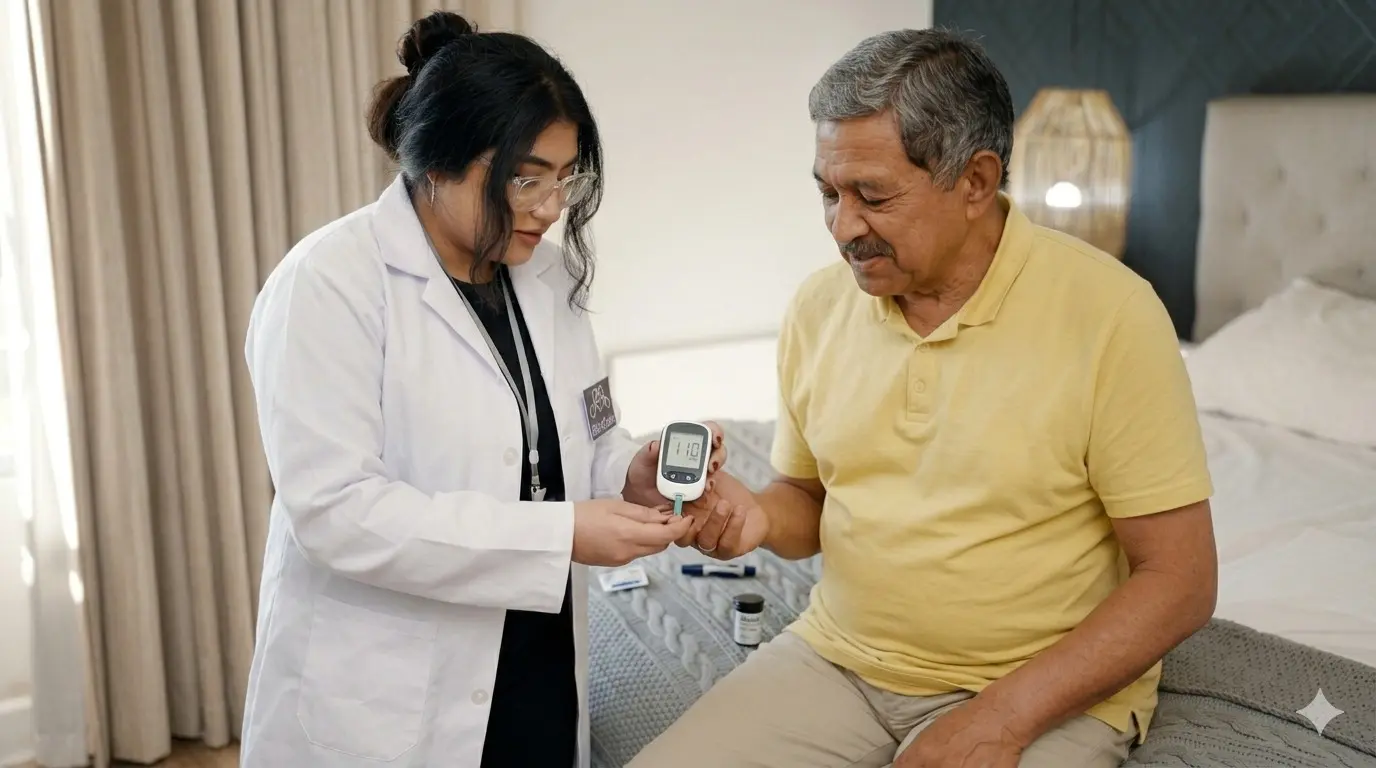
Blood sugar monitoring at home
- Checks at the times your doctor wants, such as fasting, before meals or at bedtime
- Correct glucometer technique and a clear logbook to take to every appointment
- Prompt reporting of readings outside the doctor's target range. See our blood sugar monitoring service
Insulin injections and medicines
- Insulin injection at home by a nurse, with the right type, dose and timing as prescribed
- Rotating injection sites to avoid hard lumps under the skin
- Tablets given on time, with no missed or doubled doses
- Checking insulin storage and expiry dates
Diabetic foot care
- Daily inspection for cuts, blisters, redness, swelling or colour change
- Gentle washing and drying, especially between the toes
- Nail filing rather than cutting, and advice on soft, well-fitting footwear
- Dressing of foot wounds as the doctor advises. See diabetic wound care
Meals, fluids and activity
- Meals and snacks at regular times, following the plan from the doctor or dietitian
- Practical help with everyday Pakistani food: roti and rice portions, sugar in chai, mithai at weddings and family gatherings
- Plenty of water, especially in the Lahore heat
- Daily walks or chair exercises as the doctor allows
Watching for complications
- Blood pressure checks, since many diabetics also have high BP. See hypertension care
- Watching for stroke warning signs in high-risk patients. See stroke care
- Noting swelling, reduced urine, blurred vision or numb feet for the doctor
Nurse, Caregiver or Patient Attendant: Who Does What?
Many diabetic patients need a nurse for insulin and checks, and a caregiver for meals, walks and daily support.
| Task | Nurse | Caregiver | Patient Attendant |
|---|---|---|---|
| Insulin and other injections as prescribed | Yes | Reminders only | No |
| Blood sugar checks with a glucometer | Yes | Can be trained to check and record | No |
| Recognising low sugar and acting on the doctor's plan | Yes | Trained to respond | Recognises and calls for help |
| Daily foot inspection | Yes | Checks and reports | Reports anything unusual |
| Wound and ulcer dressing | Yes | No | No |
| Meals and snacks on time, following the diet plan | Advises | Yes | Helps serve |
| Walks and light activity | Advises | Yes | Yes |
| Blood pressure and other vital signs | Yes | Basic BP with a digital machine, if trained | No |
A doctor or diabetes specialist diagnoses and decides treatment. A dietitian plans meals, and a physiotherapist helps with safe exercise and balance. For older patients with several conditions, see our elderly care at home.
What a Home Nurse Can and Cannot Do
Our nurses can
- Give insulin and other prescribed injections
- Check sugar, blood pressure and other vital signs, and keep records
- Dress diabetic wounds and care for feet
- Recognise low and high sugar and follow the doctor's written plan
- Teach your family safe daily diabetes care
Our nurses cannot
- Diagnose diabetes or decide its type
- Start, stop or change insulin or tablets without the doctor's instructions
- Cut corns or remove hard skin with blades
- Promise that diabetes will go away
For lab tests such as HbA1c, kidney function or cholesterol, we can arrange home sample collection. See lab sampling at home.
A Sample Daily Routine
Every plan follows your doctor's instructions and your loved one's habits. A typical day for a patient on insulin might look like this:
- 7:00 amFasting sugar check before tea or breakfast, written in the logbook.
- 7:30 amBreakfast, with morning insulin or tablets given at the time and in relation to food exactly as the doctor prescribed.
- 9:30 amBath, then a careful look at both feet, between the toes and the soles. Feet dried well and moisturised, not between the toes.
- 10:30 amA 20–30 minute walk in the lawn or a nearby park, early before the heat, if the doctor allows.
- 1:00 pmSugar check before lunch if the doctor has asked for it, then lunch with sensible portions of roti or rice.
- 3:00 pmRest. Water offered regularly, especially in summer.
- 5:00 pmTea without added sugar, and a light snack if the diet plan includes one.
- 8:00 pmDinner and evening medicines or insulin as prescribed.
- 10:00 pmBedtime sugar check for patients on insulin, so a night-time low can be caught early.
Guidance for Your Family
- Glucometer use: clean dry hands, the side of the fingertip, and strips that are in date
- Low sugar kit: keep glucose tablets or juice near the patient, as the doctor advises
- Insulin storage: unopened insulin in the fridge door, never frozen, never left in a hot car
- Feet: no walking barefoot, even indoors, and check shoes for stones before wearing
- Sick days: do not stop insulin during fever or vomiting without asking the doctor
- Ramadan and weddings: plan with the doctor in advance
When to Go to Hospital Immediately
Call Rescue 1122 or go to the nearest emergency department if your loved one has:
- Low sugar with confusion, drowsiness, a fit, or inability to swallow. Do not give food or drink by mouth
- Very high sugar with vomiting, stomach pain, fast breathing, a fruity smell on the breath or drowsiness
- Chest pain, breathlessness or heavy sweating, since heart attacks can feel different in diabetics
- Signs of stroke: drooping face, weak arm or leg, slurred speech
- A foot that turns black, or redness spreading up the leg with fever
- Severe weakness, very little urine or dry mouth in hot weather
Care Options
- Visit-based nursing: for insulin, sugar checks, dressings or BP monitoring
- 12-hour day or night shift: a caregiver to manage meals, medicines and walks, or a nurse for patients needing frequent checks
- 24-hour care: for diabetics who are bedridden, have serious complications or are recovering after hospital
Charges depend on the type of staff and the hours needed. Call or WhatsApp us and we will explain the options.
Areas We Serve in Lahore
From our office in Gulberg III, we provide diabetes care at home in Lahore across DHA, Gulberg, Model Town, Johar Town, Bahria Town, Cantt, Garden Town, Faisal Town, Wapda Town, Allama Iqbal Town and nearby areas. See all our home nursing services in Lahore.
How to Book
- Call or WhatsApp us on +92-344-922-6778.
- Share your loved one's current prescriptions, insulin type and recent sugar readings.
- We suggest a nurse, caregiver or both, and plan visit times around the doses.
- Care begins, with a sugar log and regular updates for the family.
For reliable background on the condition, see the WHO diabetes fact sheet.
Frequently Asked Questions
Yes. Visit-based nursing for insulin is common, especially for elderly patients or those with poor eyesight or shaky hands. We plan the visit times around the doses your doctor has prescribed.
Only if the doctor has written clear instructions, such as a sliding scale, for that situation. Otherwise the nurse records the reading and informs you and the doctor. Dose changes are the doctor's decision.
Yes. Our nurse can show a family member how to check sugar, use the insulin pen or syringe, rotate injection sites and spot low sugar, then watch them practise until they are confident.
Follow the instructions on the box. Unopened insulin is usually kept in the fridge door, never in the freezer. The pen in use is often kept at room temperature for a limited time, away from direct sun and heat. Never leave insulin in a parked car. Ask your pharmacist about cooling pouches if power cuts are long.
Yes, our nurses dress diabetic foot wounds at home as the doctor advises. A wound that is getting bigger, smells, turns black or comes with fever needs the doctor urgently. See our diabetic wound care service.
No. Home care does not cure diabetes. What good care can do is help keep sugar levels steadier, catch problems early and lower the risk of complications, alongside the treatment your doctor prescribes.
Some can and some should not. Speak to the doctor well before Ramadan, because medicine timing and doses often need changing. If fasting is allowed, sugar checks become even more important.
With your consent, we can share her sugar log and notes on WhatsApp after each visit, and inform you straight away about any very high or low readings.
Steadier Sugar, Safer Days
Tell us about your loved one's diabetes and medicines. For diabetes care at home in Lahore, we will suggest the right nurse or caregiver and plan visits around their doses.