

ICU-Trained Nurse at Home in Lahore
At Shine Care Home Nursing, we have noticed that patients who have recently recovered from a severe illness or those with chronic health conditions often require more than home-based care; they need advanced, hospital-standard care in a safe and familiar setting. Your home ICU-trained nurses in Lahore. We are therefore proposing home-based, intensive care services by sending you the best nurses with ICU training.
Are you looking after a loved one who had a major operation, is living with a severe neurological disorder, or experienced an actual response to the end-of-life? We have highly trained ICU professionals who are prepared to attend to some of the most demanding medical cases on a round-the-clock basis.
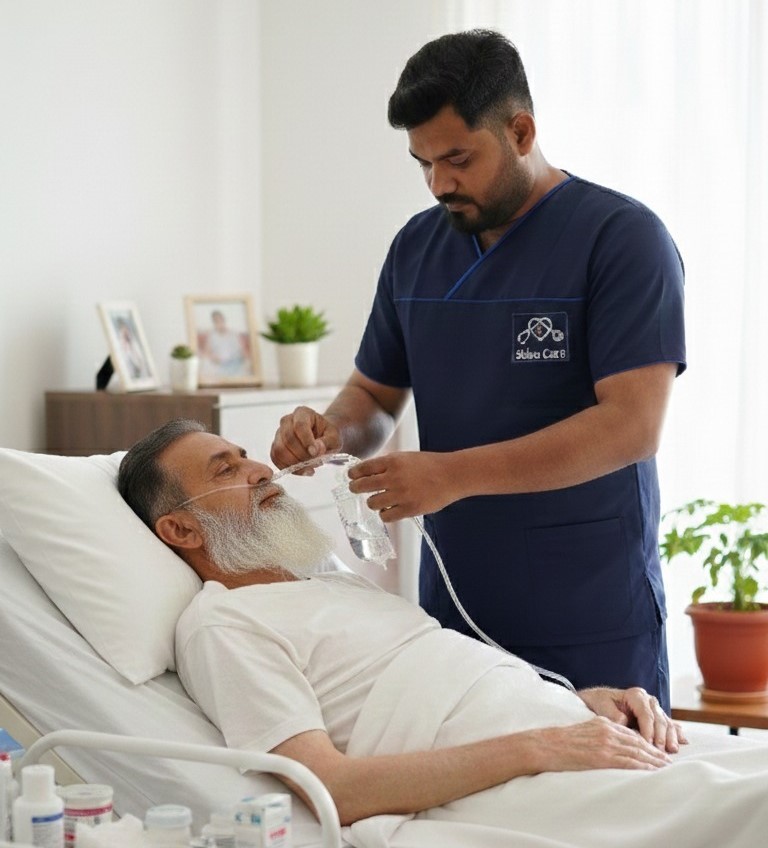
What is ICU at home?
ICU at home is a highly qualified service that brings intensive care home to your house. It is aimed at taking on patients in need of constant observation, intensive treatments, and effective nursing assistance who feel more comfortable about being treated in the comfort of their own homes.
ICU Nurse Near You: How We Arrange ICU Care at Home
When a patient is coming home on a ventilator, BiPAP or with a tracheostomy, the family usually has a day or two to arrange everything. This is how it works with us:
- Share the discharge summary and current ICU orders with our team.
- We confirm the equipment needed (ventilator, suction machine, patient monitor, oxygen) and can arrange it on rent.
- An ICU-trained nurse is assigned for 12-hour shifts, or two nurses for 24-hour cover.
- The nurse charts vitals, oxygen saturation, suctioning and feeding, and calls the treating doctor if readings move outside the limits the doctor set.
An ICU nurse at home manages ventilator and BiPAP settings as prescribed, tracheostomy suctioning and dressing, NG or PEG feeding, IV lines and bedsore prevention. ICU care at home does not replace emergency care: if breathing, consciousness or blood pressure suddenly worsens, call 1122 or go to the nearest emergency department.
Shine Care’s ICU-trained nurses are experienced in managing:
- We collaborate with the consulting physicians and family caregivers to develop a holistic, patient-focused care plan, which addresses the medical and emotional needs of the patient.
- Most of our ICU nurses are professionally skilled to work under an emergency situation, to operate life-saving devices and medicine given at the instruction of physicians, and to show compassion and respect to both a patient and their particular family, which is what it means to be an ICU nurse.
Our ICU-Trained Nurses Experts in Critical Care
Checking the vital signs constantly: heart rate, oxygen saturation, blood pressure Feeding and infusion of IV fluids, injections, and medications Regulation of the ventilator, oxygen therapy, and suction machines Change of the tracheostomy and PEG tube The inclusion of care in the family care protocols Negotiating with physicians regarding ongoing treatment modifications Training and coaching of family members Change of dressing and wound monitoring and infection control Emergency management and resuscitation EMR and line of military reporting.
Duties of ICU Nurses at Home:
- Should it be needed, rotating ICU teams and standby medical assistance can also be arranged at Shine Care, as well as real-time coordination with consulting physicians in order to allow taking medical decisions as soon as possible.
24/7 ICU Monitoring at Home
Home-based ICU surveillance. We have 24/7 ICU services for patients who need constant attention. Our nurses are continuously working in 12- or 24-hour shifts (depending on the condition of the patient), whether it is intensive recovery in the short run or chronic care that is involved.
Medical equipment support
- We know that high-dependency care needs the appropriate equipment.
- As such, we are offering ventilators and BiPAP machines.
- Multi-parameter patient monitors, Infusion pumps, Suction machines, Oxygen cylinders and concentrators, Hospital beds, and mobility aids.
- All equipment is well-maintained, and our nurses are well-trained to use such equipment safely.
- Home installations and troubleshooting are also provided through Shine Care, providing technical support.
Advantages of ICU at Home
Comfort & Familiarity
Patients feel more relaxed in their home environment, which can positively impact recovery and emotional well-being.
Lower Infection Risk
Hospitals expose patients to various infections. At-home ICU care significantly reduces the risk of hospital-acquired infections.
Personalized One-on-One Attention
Unlike hospital ICUs, where one nurse may care for several patients, our service ensures dedicated one-on-one nursing care.
Cost-Effective
ICU at home is often more affordable than prolonged hospital admissions, especially when factoring in travel and ancillary costs.
ICU-Trained Nurse at Home in Lahore, Home ICU Nurse in Lahore, ICU Nurse for Home Care in Lahore, Private ICU Nurse at Home Lahore, Intensive Care Nurse for Home in Lahore, Critical Care Nurse at Home in Lahore, Hire ICU Nurse at Home in Lahore, ICU Nursing Services at Home Lahore, 24/7 ICU Nurse at Home in Lahore, Experienced ICU Nurse for Home Lahore, ICU Qualified Nurse at Home in Lahore, Home Care ICU Nurse in Lahore, ICU Nurse for Ventilator Patient at Home Lahore, Post-ICU Care Nurse at Home Lahore, Certified ICU Nurse for Home Care Lahore, ICU Patient Home Nursing in Lahore, At-Home ICU Nurse Services in Lahore, Male ICU Nurse at Home in Lahore, Female ICU Nurse at Home in Lahore,
ICU Trained Staff Nurse for Home Lahore, Home Nurse with ICU Experience in Lahore, ICU Patient Care at Home in Lahore, Affordable ICU Nurse at Home Lahore, Best ICU Nurse at Home in Lahore, Professional ICU Home Nurse in Lahore, ICU Home Nursing Agency in Lahore, ICU Nurse for Elderly at Home in Lahore, Pediatric ICU Nurse at Home Lahore, Neuro ICU Nurse at Home in Lahore, Cardiac ICU Nurse for Home Care Lahore, Registered ICU Nurse for Home in Lahore, ICU Level Care at Home in Lahore, Emergency ICU Nurse at Home Lahore, Long-term ICU Nurse at Home Lahore, Short-term ICU Nurse at Home Lahore, ICU Nurse for Tracheostomy Care at Home Lahore, ICU Nurse for Post-operative Care at Home Lahore, Lahore mein Ghar ke liye ICU Nurse,
Ghar par ICU Nurse ki Sahulat Lahore, ICU Trained Nurse Ghar ke liye Lahore, Home Patient ICU Nurse in Lahore, Reliable ICU Nurse for Home in Lahore, ICU Trained Nurse for Homebound Patients Lahore, Advanced ICU Care at Home in Lahore, ICU Nurse for Palliative Care at Home Lahore, 12-hour ICU Nurse at Home in Lahore, Night Shift ICU Nurse at Home Lahore, Day Shift ICU Nurse at Home in Lahore, Mobile ICU Nurse in Lahore, On-call ICU Nurse at Home Lahore, Home Nursing Services in Lahore, Patient Care Services at Home in Lahore, Home Health Care Services Lahore, Private Nurse at Home in Lahore, Male Nurse for Home Care in Lahore, Female Nurse for Home Care in Lahore, 24-hour Nurse at Home in Lahore, Home Patient Attendant in Lahore, Medical Staff for Home Care Lahore,
Elderly Care at Home in Lahore, Post-operative Care at Home Lahore, Ventilator Support at Home Lahore, Tracheostomy Care at Home Services Lahore, IV Drip at Home in Lahore, Injection Services at Home Lahore, Wound Dressing at Home in Lahore, Physiotherapy at Home in Lahore, Doctor on Call Service in Lahore, Medical Equipment on Rent in Lahore, Oxygen Cylinder at Home in Lahore, Hospital Bed for Rent at Home Lahore, Palliative Care at Home Services Lahore, Stroke Patient Care at Home in Lahore, Dementia Care at Home in Lahore, Alzheimer's Care at Home Lahore, Parkinson's Patient Care at Home Lahore, Cancer Patient Care at Home in Lahore, Post-Surgical Care at Home Lahore, Newborn Baby Care at Home in Lahore,
Mother and Baby Care at Home Lahore, Home Caregiver Services in Lahore, Geriatric Care at Home in Lahore, Disabled Patient Care at Home Lahore, Bedridden Patient Care at Home in Lahore, Home Health Aide in Lahore, Nursing Agency in Lahore, Home Care Agency in Lahore, Lahore mein Ghar par Medical Sahulat, Ghar par Doctor ki Service Lahore, Patient Attendant for Home in Lahore, Long-term Home Care in Lahore, Short-term Home Care in Lahore, Respite Care at Home in Lahore, Companion Care at Home in Lahore,
In-Home Skilled Nursing Care Lahore, Chronic Illness Management at Home Lahore, Medication Management at Home Lahore, Catheter Care at Home in Lahore, Blood Pressure Monitoring at Home Lahore, Diabetes Care at Home in Lahore, How much does home nursing services cost in Lahore?, Is an ICU nurse a registered nurse?, How many registered nurses are there in Pakistan?, What is nursing?, Home nursing services in Lahore, Home care nursing jobs in Lahore, Patient care services in Lahore, Home Nursing services near me, Home care services in Pakistan, Female nurse for home care,
care, home, services, nursing, lahore, health, icu, support, patients, nurses, healthcare, patient, comfort, service, needs, nurse, staff, quality, recovery, families, management, pakistan, monitoring, attention, hospital, team, emergency, caregivers, pakheal, doctor, compassionate, wound, city, doorstep, professionals, physiotherapy, family, oxygen, ones, shine
home care, home nursing services, icu care, home care services, icu-trained nurses, medical care, home lahore, home nursing, icu care services, wound care, loved ones, shine care, patient care, home nursing care, nursing care, home nurse, emotional support, critical care nurses, city health care, palliative care, nursing services, medical needs, care plans, quality care, ana-care® home healthcare, vital signs, home nurses, elderly care, care services, icu nurses, healthcare needs, zainab tower, model town, critical care, icu-trained nurse, nursing staff, trained nurses, icu-trained staff, care plan, medical attention
lahore, nursing, icu, nursing care, patients, healthcare, nurses, home care, patient care, pakistan, 24/7, medical care, palliative care, wound, caregivers, physiotherapy, copyright, all rights reserved, critical care, health, mind, oxygen, nursing staff, elderly care
critical care, critically ill, ventilators, monitoring, care home, monitoring of vital signs, hospitalisation, pressure sores, caregiving, caregiver, icus, intravenous, nursing home, end-of-life, hospital, urinary catheters management, urinary catheterization, vital signs, intensive care unit, pressure ulcers, health, chronic condition, chronic illness, palliative care
Get the care you need
Share your care needs and location. We’ll arrange the right professional care for you.