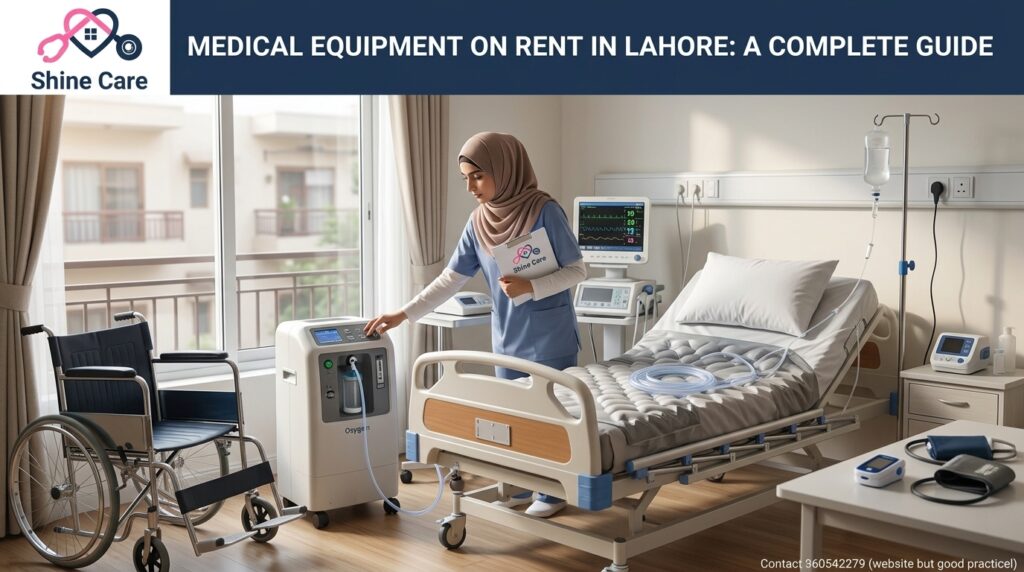
Bringing a patient home after a hospital stay, surgery, a serious illness, or a long course of treatment often comes with a question nobody quite expects: what equipment does the house actually need now? A parent recovering from a hip replacement might need a proper hospital bed. A family managing a chronic respiratory condition might need oxygen support. An elderly relative with reduced mobility might simply need a wheelchair and a safer bathroom setup. Medical equipment on rent in Lahore exists precisely for these situations, giving families access to the right equipment without the pressure of buying something that may only be needed for a few weeks or months.
This guide walks through what’s available, how to choose sensibly, and what to check before renting anything for a family member’s care at home.
Why Families Choose Medical Equipment Rental in Lahore
Recovery periods are often temporary, even when they feel endless in the moment. A patient recovering from surgery might need a hospital bed for six weeks, not six years, which makes renting considerably more practical than an outright purchase.
Buying medical equipment upfront also carries real cost, particularly for items like hospital beds, oxygen concentrators, or patient monitors. Renting spreads that cost differently and avoids tying up a large amount of money in equipment that may only be needed for a defined period.
There’s also the question of what happens afterward. A purchased hospital bed or wheelchair, once no longer needed, becomes a storage problem in a home that wasn’t built to store medical equipment long-term. Renting sidesteps this entirely — the equipment goes back once recovery is complete.
Flexible rental periods mean families aren’t locked into a rigid commitment, and access to equipment exactly when it’s required — rather than searching to purchase during an already stressful time — provides genuine practical relief. For many households managing home patient care in Lahore, rental is simply the more sensible starting point.
Medical Equipment Available for Home Patient Care
Electric Hospital Bed
An electric hospital bed allows a patient or caregiver to adjust the bed’s height and incline using powered controls, which matters considerably for patients who need frequent position changes but have limited strength to manage a manual crank. This suits patients recovering from major surgery, managing limited mobility, or requiring specific positioning for breathing or comfort. Setup and proper use should follow guidance from the equipment provider and the patient’s treating doctor.
Manual Hospital Bed
A manual hospital bed offers similar positioning adjustments through a hand crank rather than electric controls, making it a more affordable option for patients whose caregivers can manage manual adjustment. It works well for stable, lower-complexity recovery cases where frequent repositioning isn’t as critical.
Anti-Bedsore Air Mattress
This specialized mattress uses alternating air pressure to redistribute weight and reduce the risk of pressure sores, particularly important for bedridden or immobile patients. Anyone spending extended periods in bed, especially those unable to reposition themselves independently, generally benefits from this equipment, though proper use should be guided by a nurse or treating doctor familiar with the patient’s specific skin and mobility risks.
Wheelchair
A wheelchair supports safe mobility for patients who can’t walk independently, whether temporarily during recovery or as an ongoing need. Choosing the right size and type depends on the patient’s build, strength, and whether they’ll be self-propelling or require assistance, which is worth discussing directly with the equipment provider.
Walker
A walker provides steady support for patients who can walk but need extra stability, commonly used during recovery from surgery, injury, or general mobility decline. Proper walker height adjustment matters for both safety and comfort, and this should be set up correctly before regular use begins.
Commode Chair
A commode chair offers a safer, more accessible toileting option for patients who struggle to reach a standard bathroom safely, particularly useful overnight or for patients with significant mobility limitations. This equipment often makes a meaningful difference in a patient’s dignity and independence during recovery.
Oxygen Concentrator
An oxygen concentrator provides a continuous supply of concentrated oxygen for patients with respiratory conditions requiring supplemental oxygen. This equipment should only be used according to the flow rate and duration prescribed by the patient’s treating doctor, and settings should never be adjusted without qualified medical guidance.
Oxygen Cylinder
An oxygen cylinder offers a portable or backup oxygen source, often used alongside a concentrator or for patients needing oxygen support during transport or in situations where a power supply isn’t available. As with any oxygen equipment, use should strictly follow the doctor’s prescribed instructions.
BiPAP Machine
A BiPAP machine supports patients with specific respiratory conditions requiring non-invasive breathing assistance. This is equipment that should be selected, configured, and used strictly under qualified medical supervision, since settings need to match the patient’s specific respiratory needs precisely.
Ventilator
A ventilator provides mechanical breathing support for patients unable to breathe adequately on their own. This is critical-care equipment, and its use, setup, and ongoing monitoring should always be managed under the direct guidance of a qualified doctor and appropriately trained nursing staff.
Nebulizer Machine
A nebulizer converts liquid medication into a fine mist for inhalation, commonly used for patients with asthma, COPD, or other respiratory conditions. Medication type and dosage should always follow the prescribing doctor’s instructions.
Suction Machine
A suction machine clears mucus, saliva, or other secretions from a patient’s airway when they can’t do so naturally, relevant for tracheostomy patients, post-surgical recovery, or patients with swallowing difficulties. Proper suctioning technique matters for safety and should be learned directly from a nurse or healthcare provider.
Patient Monitor
A patient monitor tracks vital signs such as heart rate, oxygen saturation, and blood pressure continuously, useful for patients requiring closer observation during recovery from surgery or a serious illness. Interpretation of readings for medical decision-making should always involve a qualified nurse or doctor.
Cardiac Monitor
A cardiac monitor specifically tracks heart rhythm and rate, relevant for patients with cardiac conditions requiring ongoing observation at home. As with general patient monitors, any concerning readings should be discussed with the patient’s treating doctor rather than acted on independently.
Feeding Pump
A feeding pump delivers nutrition at a controlled rate for patients unable to eat normally, commonly used alongside a feeding tube. Feeding schedules and rates should be set according to the treating doctor’s or dietitian’s specific instructions.
Infusion Pump
An infusion pump delivers IV fluids or medication at a precisely controlled rate, relevant for patients requiring ongoing intravenous treatment at home. This equipment should be operated only by trained nursing staff following the prescribing doctor’s instructions.
Syringe Pump
A syringe pump offers precise, slow, controlled delivery of medication, often used for patients needing small, exact doses over time. As with infusion pumps, this should be managed entirely by qualified nursing staff under medical direction.
IV Stand
An IV stand provides simple, practical support for hanging IV fluid bags or infusion equipment at the correct height, a small but genuinely necessary piece of equipment for patients receiving IV treatment at home.
Bedside Table
A bedside table keeps essentials like water, medication, and personal items within easy reach for a patient who’s spending significant time in bed, supporting both comfort and a sense of independence during recovery.
Choosing the Right Medical Equipment for a Patient
The starting point should always be the doctor’s recommendation, since equipment needs follow directly from the patient’s diagnosis and current condition rather than general assumptions about what “might help.” Mobility level matters considerably too — a patient who can walk with support needs different equipment than one who’s fully bedridden.
The expected recovery period shapes whether renting makes sense and for how long, while the home environment itself — room size, doorway width, availability of a stable power supply — affects what equipment can realistically be used safely. Some situations also call for trained nursing support alongside equipment, particularly for anything involving oxygen therapy, feeding tubes, or IV treatment.
Equipment compatibility matters when multiple devices need to work together, such as a hospital bed alongside an air mattress or monitoring equipment. Above all, patient comfort and safety should guide every decision, rather than choosing equipment based purely on cost or convenience.
Renting vs Buying Medical Equipment
| Factor | Renting | Buying |
|---|---|---|
| Upfront cost | Lower initial commitment | Higher one-time investment |
| Short-term use | Well-suited, especially for defined recovery periods | Often unnecessary expense for temporary needs |
| Long-term use | Can become costly over extended periods | More cost-effective for ongoing, permanent needs |
| Maintenance | Typically handled by the rental provider | Family’s responsibility, with guidance available |
| Storage | No storage concerns once returned | Requires space at home indefinitely |
| Flexibility | Easy to adjust or return as needs change | Fixed once purchased |
| Suitability for changing needs | Well-suited, since equipment can be swapped or upgraded | Less flexible if the patient’s condition changes |
How Long Can Medical Equipment Be Rented?
Rental periods generally range from short-term arrangements covering just a few days, to weekly or monthly rentals for longer recovery periods. The right duration depends entirely on the patient’s specific situation and the doctor’s guidance on expected recovery time.
Availability and exact rental duration options should be confirmed directly with the provider, since this can vary based on the specific equipment type and current stock.
Preparing a Safe Patient-Care Room at Home
Safe equipment placement means positioning items like a hospital bed or oxygen concentrator where they’re easily accessible without blocking movement around the room. Clear walking space matters significantly for reducing fall risk, particularly for patients using a walker or wheelchair.
Electrical safety deserves real attention, especially with multiple devices — oxygen concentrators, monitors, pumps — potentially running simultaneously, ideally without overloading a single outlet. A clean environment reduces infection risk, which matters more for patients recovering from surgery or managing a weakened immune system.
Bed positioning should allow easy access from multiple sides for repositioning or care tasks, and the room should remain genuinely accessible for nurses or caregivers moving around the patient. Keeping equipment manuals and instructions available on hand helps address minor questions quickly, without needing to call the provider for routine operational details.
Medical Equipment and Home Nursing Support
Medical equipment on its own doesn’t provide care — it supports the care that trained professionals or informed family members deliver. A hospital bed or oxygen concentrator becomes genuinely useful when paired with proper understanding of how to use it safely, and for equipment involving oxygen therapy, feeding tubes, IV treatment, or continuous monitoring, professional nursing support often makes the difference between equipment that helps and equipment that sits unused or misapplied.
[Internal Link: Home Nursing Services in Lahore] can provide this layer of professional support, particularly for patients whose care involves more complex equipment. For patients requiring closer, more intensive monitoring, [Internal Link: ICU Nurse at Home in Lahore] combines specialized nursing experience with the kind of equipment covered in this guide. Equipment should never be treated as a replacement for proper medical assessment or professional nursing care where that level of support is genuinely needed.
What to Check Before Renting Medical Equipment
Before renting anything, check the equipment’s actual condition, confirm cleaning and maintenance practices the provider follows, and ask what accessories are included versus charged separately. Delivery availability for your specific area matters practically, alongside whether setup guidance comes with the equipment or needs to be arranged separately.
Understand the rental terms clearly — duration, renewal process, and return conditions — before committing. Ask what support is available if the equipment develops a technical issue during use, and confirm that what you’re renting actually matches what the treating doctor has recommended, rather than assuming similar-sounding equipment is interchangeable.
Medical Equipment Delivery in Lahore
Shine Care coordinates medical equipment delivery across various parts of Lahore, including DHA, Gulberg, Model Town, Johar Town, Bahria Town, Cantt, Faisal Town, Wapda Town, Valencia, Askari, Bedian Road, and Barki Road. Delivery availability may depend on the exact location, equipment type, and current stock, so it’s worth confirming directly for your specific situation before finalizing a rental.
Why Choose Shine Care for Medical Equipment Rental in Lahore?
Working within home healthcare in Lahore has meant understanding, quite directly, what families actually need when a patient comes home from the hospital — not just equipment, but genuine guidance on what fits a specific situation. Patient-focused support shapes how equipment recommendations get made, starting with an honest conversation about the patient’s condition rather than a generic product list.
A range of medical equipment rental options covers everything from basic mobility aids to more specialized respiratory and monitoring equipment. Families get real guidance on what equipment suits their situation, along with confirmation of current availability before committing to anything. Delivery and setup support is available where arranged in advance, and coordination with home nursing services happens directly when a patient’s situation calls for that additional layer of professional care.
A Note Before You Decide
This guide is intended to help families understand what’s generally involved in medical equipment rental for home patient care. It is not medical advice, and equipment selection should always be guided by the patient’s treating doctor or a qualified healthcare professional, particularly for any equipment involving oxygen therapy, respiratory support, or IV treatment. Settings, dosages, and clinical use of critical-care equipment should never be determined independently by a family member.
Frequently Asked Questions
A wide range of equipment is available, including hospital beds, wheelchairs, oxygen concentrators, patient monitors, and more specialized items like infusion pumps and ventilators, depending on the patient’s specific medical needs.
For short-term or temporary needs, renting is generally more cost-effective than purchasing outright, since it avoids a large upfront cost for equipment that may only be needed for a limited period.
Monthly rental arrangements are commonly available, though exact duration options should be confirmed directly based on the specific equipment and current availability.
Yes, when selected appropriately for the patient’s condition and used according to professional guidance, medical equipment can support safe, organized care at home.
Yes, equipment choices should always be guided by the patient’s treating doctor, particularly for anything involving respiratory support, monitoring, or IV treatment.
Yes, hospital beds and anti-bedsore air mattresses are commonly rented together, particularly for bedridden or immobile patients at higher risk of pressure sores.
Yes, equipment and professional nursing support can be arranged together, which is often the safer approach for patients requiring more complex care.
Check the equipment’s condition, maintenance practices, included accessories, delivery availability, setup support, and rental terms before committing.
Delivery is coordinated across various parts of Lahore, though availability may depend on the exact location, equipment type, and current stock.
Contact the provider directly as soon as an issue is noticed, so it can be addressed or the equipment replaced promptly rather than continuing to use potentially faulty equipment.
Conclusion
The right medical equipment, chosen thoughtfully and used under proper guidance, can make a genuine difference in how organized and manageable home patient care actually feels for a family. Whether it’s a hospital bed for post-surgical recovery, an oxygen concentrator for ongoing respiratory support, or a simple wheelchair for daily mobility, the goal is always the same: supporting the patient’s comfort and safety in line with what their doctor has recommended.
Contact Shine Care to discuss your medical equipment requirements, check current availability, and confirm suitable rental and delivery options in Lahore.