Every summer, Lahore’s temperatures climb into the mid-40s and often beyond. For most healthy adults it is uncomfortable. For elderly parents, and for anyone with heart disease, kidney disease, diabetes, or dementia, a Lahore heatwave is a genuine health emergency waiting to happen. Every year, hospitals across the city fill up in June and July with elderly patients whose kidneys have shut down, whose blood pressure has crashed, or who have arrived confused and unresponsive — and the underlying cause is usually the same: dehydration and heat stress that started quietly at home and was noticed too late.
This guide walks families through heatwave care elderly Lahore realities — how to spot early dehydration, how to arrange the home environment, when medications need adjusting, and when a mild symptom is actually the beginning of heat stroke. Nothing here replaces your doctor’s advice, but it will help you protect the person you love through the hardest weeks of the year.
Why Elderly Patients Are So Vulnerable
Elderly people do not handle heat the way younger adults do, for reasons that families need to understand before they can prevent problems:
- Reduced thirst sensation. Elderly patients often do not feel thirsty even when they are significantly dehydrated. Waiting for them to ask for water is waiting too long.
- Reduced sweating efficiency. The body cools itself by sweating. Elderly skin sweats less, so the same environmental heat causes more internal heat build-up.
- Reduced kidney reserve. Elderly kidneys are less able to concentrate urine and conserve water, so dehydration develops faster.
- Chronic medications. Diuretics (for BP and heart failure), some diabetes drugs, and certain psychiatric medications all worsen dehydration.
- Cognitive changes. Elderly patients with mild memory problems may forget to drink, forget they have already been to the bathroom, or become confused about the time of day.
- Reduced mobility. A frail elderly patient cannot easily reach the fridge or the kitchen every time they need water.
These factors combine. An elderly parent on BP medication, with mild memory issues, living in a room where the AC has broken, can go from “fine” at breakfast to hospitalised by evening.
Who Does What at Home During a Heatwave
Managing heatwave risk in an elderly patient at home is a team effort:
- Physician / Endocrinologist / Cardiologist: May need to adjust medications for the heatwave weeks — sometimes reducing diuretics, adjusting insulin, or changing timing of BP drugs. Any medication change is a doctor decision.
- Home Nurse: Handles clinical work — vitals monitoring, IV fluids if prescribed for outpatient rehydration, checking urine output, identifying early heat stress. For unwell elderly patients, a scheduled visit from a trained home nurse during the peak heat weeks is often the difference between a small problem caught early and a hospital admission.
- Caretaker / Patient Attendant: Keeps the daily hydration routine on track, notices small changes in mood and energy, ensures the AC or cooler is running properly, prepares appropriate light meals.
- Family: Manages the household environment, arranges backup power and water supply, and coordinates the care plan.
For families whose elderly parent lives alone or with an equally elderly spouse, arranging structured care for elderly specifically for the peak heatwave weeks — June through mid-August — is worth the extra cost. This is not the time to leave a frail parent unsupervised through 45-degree afternoons.
Setting Up the Home for Heat Protection
The Coolest Room in the House
Identify the room in the house that stays coolest during the day — usually north-facing, with the fewest windows to the west, and away from the kitchen. Set this up as the patient’s daytime base:
- AC in working order, serviced before summer starts
- Fan as backup for load-shedding
- Curtains that block direct sunlight during peak hours (typically 11 AM to 5 PM)
- Comfortable seating with a small side table for water and medications
- Access to a bathroom without needing to walk through hot areas of the house
Backup for Load-Shedding
Load-shedding at 2 PM in June is not an inconvenience for an elderly patient — it is a genuine risk. Options families use:
- UPS with capacity for at least one fan and a light
- A generator large enough to run the AC in one room during scheduled cuts
- Solar panels with battery backup, increasingly common in Lahore
- A wet cotton sheet hung near an open window (traditional and surprisingly effective for short periods)
- Cool damp cloths on the neck, wrists, and behind the knees
Whatever the plan is, test it before the heatwave arrives. The first day of a real heatwave is not the day to discover that the generator has not been serviced since last summer.
Water Access
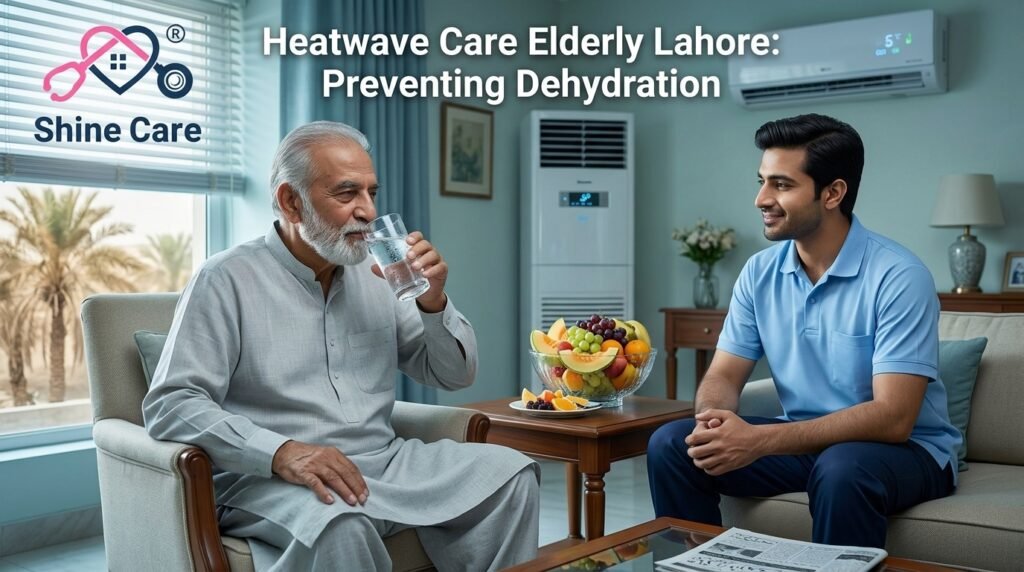
Place a bottle of water within arm’s reach of wherever the patient sits or lies. Refill it every couple of hours. Elderly patients are much more likely to sip from a bottle beside them than to get up and walk to a filter.
Hydration: The Central Discipline
Adequate hydration is the single most important thing that prevents heat-related emergencies in the elderly. It is also one of the hardest things to get right without a plan.
How Much Water Does an Elderly Patient Need?
For most stable elderly patients, 1.5 to 2 litres of fluid a day is a reasonable target — but this is highly patient-specific. Patients on fluid restriction (heart failure, kidney disease, dialysis) have a lower doctor-set limit that must not be exceeded. Always follow the doctor’s specific target.
What Counts as Hydration?
- Water — the main source
- Fresh lemon water with a pinch of salt — during peak heat, this replaces some of what sweating loses
- Lassi (unsweetened or lightly sweetened), yogurt-based drinks
- Coconut water — good potassium content
- Broths, yakhni, watery soups
- Water-rich fruits — watermelon, muskmelon, oranges, cucumber
- Herbal teas (not too hot)
What to Limit
- Sugary sodas — they trigger further thirst without adequately hydrating
- Excessive tea and coffee — mild diuretic effect
- Rooh Afza and similar sweet syrups — fine occasionally, not the main fluid
- Alcohol (usually not an issue but worth mentioning)
The Practical Rhythm
Small amounts frequently, not large amounts occasionally. A glass of water every hour is much easier for elderly patients to tolerate than a big bottle at lunch. A caretaker or family member should quietly track the total — a simple mark on a chart or a bottle with a marker helps.
Diet Adjustments for Heat Days
Heavy meals in extreme heat are hard on both digestion and body temperature regulation. General rules:
- Lighter meals more often, rather than one large lunch
- Cool foods — yogurt, salads, chilled cucumber, watermelon, chilled soup
- Less deep-fried, less spicy, less oily food
- Avoid meals at the hottest time of day when possible
- Fresh, seasonal fruits and vegetables — very high water content
For diabetic elderly patients, the fluid balance and sugar balance both matter. Discuss with the doctor whether the medication dose or timing needs adjustment during heat weeks. Structured diabetes care at home usually includes summer-specific medication review as part of the routine.
Medication Adjustments
Several common medications interact badly with dehydration. During heatwave weeks, the doctor may adjust:
- Diuretics — the “water tablets” for BP and heart failure. Sometimes reduced during heatwaves, but only on doctor advice.
- ACE inhibitors and ARBs — BP medications that can worsen kidney function in dehydration.
- NSAIDs — painkillers like ibuprofen and diclofenac, which stress the kidneys.
- Metformin and some other diabetes drugs — extra caution needed during dehydration.
- Sedatives, sleeping tablets, some psychiatric medications — can reduce alertness to thirst.
Do not change or stop any medication yourself. Book a doctor review in early June if your parent takes any of these — a small adjustment now prevents a large problem later. Coordinated hypertension care during heatwave weeks is particularly important because BP fluctuates more in heat and dehydration.
Recognising Early Dehydration
Dehydration in the elderly is often silent. The classic signs (dry mouth, thirst) are unreliable. Watch instead for:
- Dark yellow, concentrated urine — one of the earliest signs
- Reduced number of trips to the bathroom, or no urine output for many hours
- Skin that is slow to spring back when pinched (though less reliable in the elderly)
- Feeling dizzy on standing up, especially first thing in the morning
- Persistent fatigue and low energy
- New muscle cramps
- Sunken eyes
- Faster pulse than usual at rest
- New irritability, confusion, or unusual quietness in a normally alert patient
The last point is particularly important. In elderly patients, the first sign of dehydration is often a change in mental state — quieter than usual, mildly confused, less engaged. Any acute change in an elderly patient’s alertness deserves urgent attention, and dehydration is one of the most common and treatable causes.
The Heat Illness Spectrum
Heat-related illness is not one condition — it is a progression from mild to severe. Understanding this helps families act at the right moment.
Heat Cramps
Muscle cramps, especially in the legs and abdomen, during or after activity in heat. Sign that the patient has lost significant salt and water. Rest in a cool place, sip water with a pinch of salt, stretch the muscle gently.
Heat Exhaustion
More serious. Heavy sweating, weakness, cold clammy skin, fast weak pulse, nausea, dizziness, headache, muscle cramps. The patient is still sweating, which is a sign the body is still trying to cool itself.
Move the patient to a cool room, loosen clothing, apply cool cloths to the neck and wrists, offer sips of cool water. Contact the doctor. If symptoms are not clearly improving within an hour, take to the hospital.
Heat Stroke
Life-threatening. Body temperature above 40°C (104°F). Hot flushed skin that may be dry (sweating has stopped) or still sweating. Rapid strong pulse initially, then may become weak. Severe confusion, altered consciousness, seizures, coma.
This is a medical emergency. Call 1122 immediately. While waiting, move to the coolest place available, remove excess clothing, apply cool wet cloths to as much skin as possible, use a fan, and offer sips of water only if the patient is fully conscious. Do not give sedatives or paracetamol expecting them to reduce the temperature — heat stroke fever does not respond to these.
When to Get Professional Support at Home
Not every elderly patient needs a full home nurse for the summer. But some do:
- Patients with prior hospital admissions during heatwaves
- Patients on multiple medications including diuretics
- Patients with mild memory problems who cannot reliably manage their own hydration
- Patients living alone or with only elderly spouses
- Diabetics with poor sugar control
- Patients with kidney disease
- Patients recovering from recent illness or hospital discharge
For patients in these categories, a scheduled home nurse for morning and evening checks during peak heat weeks is a sensible investment. Vitals, urine output, and general condition can be reviewed and any deterioration caught early.
For families balancing work and elderly care, general health at home arrangements that include heatwave-specific protocols — extra hydration checks, cooler room monitoring, medication timing review — provide sustainable support through the whole season rather than a scramble each time the AQI or temperature spikes.
Special Situations
Dementia Patients
Elderly patients with dementia are at particular risk because they may not remember to drink, may refuse water, or may become agitated in the heat. Simple structural approaches help — leaving a favourite cup within reach, offering fluids at every interaction, monitoring urine output through the bathroom or catheter.
Bedridden Patients
Bedridden patients often cannot ask for water and cannot control their environment. The caretaker must offer fluids on a schedule and monitor urine output through the catheter bag or diaper weight. Bed positioning near a working AC and away from direct sunlight matters.
Patients on Home Oxygen
Oxygen concentrators generate heat and can raise the room temperature slightly. Keep the concentrator in a well-ventilated corner and ensure the AC or fan is running.
Post-ICU Patients
Patients recently discharged from ICU often have residual weakness in temperature regulation. Extra vigilance during heatwave weeks pays off.
Patients on Fluid Restriction
Heart failure and kidney disease patients on prescribed fluid limits must not exceed them, even in heat. Coordination with the specialist is essential — sometimes the limit is briefly widened during heat, sometimes not. Do not guess.
Common Mistakes Families Make
Waiting for the Patient to Say They Are Thirsty
Elderly patients often do not feel thirsty until they are significantly dehydrated. Offer fluids on a schedule regardless.
Assuming AC Is Enough
AC helps enormously but does not compensate for inadequate fluid intake. A cool patient can still become dehydrated.
Giving Rooh Afza or Sugary Drinks as the Main Fluid
Occasional sweet drinks are fine. As the main hydration, they worsen the situation and are hard on diabetics.
Not Testing Backup Power Before Summer
The generator that has not been serviced since October may not start on the first hot day. Test in April.
Ignoring Small Changes in Mental State
“He is just a bit quiet today, it is the heat” is often the first sign of dehydration — and the moment to act, not to explain away.
Not Getting a Medication Review in Advance
Book a pre-summer doctor visit if your parent is on diuretics, BP drugs, or diabetes medications. Small adjustments now prevent big problems later. For patients who find travel to the clinic tiring, a doctor home visit is often the practical way to get this review done.
Red Flags: When to Get to the Hospital Now
Contact the doctor immediately or take the patient to the nearest emergency room / call 1122 if any of the following happen:
- Body temperature above 39°C (102°F) with confusion, altered consciousness, or hot dry skin
- Seizures
- Sudden collapse or fainting
- No urine output for many hours in a well-hydrated patient
- New confusion, agitation, or difficulty waking
- Very fast pulse with weakness or dizziness
- Vomiting that is preventing any fluid intake
- Chest pain
- Sudden difficulty in breathing
- Signs of stroke — one-sided weakness, slurred speech, facial droop
For patient-friendly background on protecting elderly people from heat, the WHO Q&A on heat and health is a reliable reference. For your parent’s specific care plan, always follow the treating doctor’s instructions.
FAQs
For most stable elderly patients, 1.5 to 2 litres a day spread across small frequent sips is a reasonable target. Patients on fluid restriction (heart failure, kidney disease, dialysis) must follow their doctor’s specific limit — do not exceed it. Any adjustment during heat weeks should be a doctor decision.
Usually yes, and both are useful during heatwaves. Watch the sugar content of anything added — plain lemon water with a pinch of salt is safest. Coconut water is generally fine but discuss with the doctor for patients on potassium-affecting medications.
A ceiling fan alone is often not enough in Lahore summer for elderly patients. When the room temperature crosses about 32–33°C, fans stop being effective and can actually push hot air onto the patient. Some form of cooling — AC, evaporative cooler, or a cool damp cloth — is usually needed.
Not in the peak hours (11 AM to 5 PM). Very early morning or after sunset is usually safe for short walks in the shade. Avoid direct sunlight and hot pavements.
For high-risk elderly patients — those with prior heat-related hospitalisations, multiple medications, or mild memory issues — a scheduled home nurse for morning and evening visits during peak heat weeks is a very sensible investment. It costs far less than a single hospital admission.
Try alternatives — lassi, coconut water, watery fruits, chilled soup, milk. Small sips more frequently rather than a large glass at once. If refusal persists more than a day, contact the doctor — persistent refusal can be a sign of something else going wrong.