
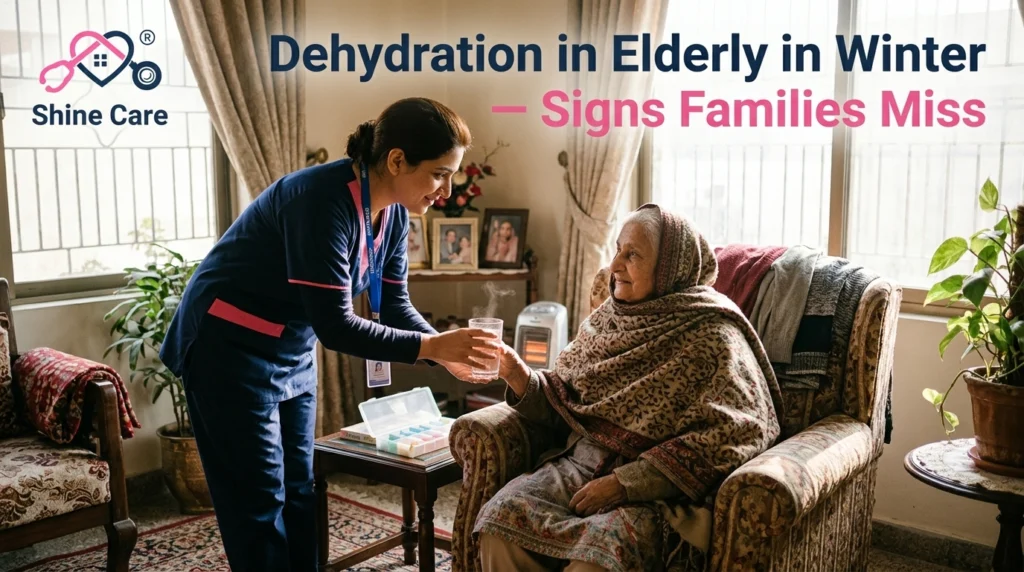
Winter dehydration is a paradox families rarely expect. The weather is cool, nobody is sweating, the elderly parent seems settled under a warm quilt — so why would they be short of fluids? Yet across Lahore, Islamabad, and Rawalpindi, dehydration in elderly patients peaks every winter. The physiology is clear once you see it: thirst signals weaken with age, elderly bodies have less reserve to begin with, and the small daily cues that drive fluid intake in summer — feeling hot, being outside, sweating — all disappear. The parent who drank eight glasses a day in June now drinks two in December and feels no different for it. Until something goes wrong.
This guide is for Lahore families recognising and preventing dehydration in elderly parents through winter. It covers the signs families routinely miss, the quiet causes that build across weeks, and the simple daily routines that prevent the hospital admission everyone wants to avoid.
Why Elderly Bodies Dehydrate Differently
Four changes make dehydration a bigger risk in elderly patients:
- Thirst mechanism blunts. By the seventies and eighties, the brain’s thirst signal is noticeably weaker. An elderly patient does not feel thirsty the way a thirty-year-old does, even when the body genuinely needs fluid.
- Kidneys concentrate urine less efficiently. Older kidneys lose some ability to hold on to water, so more fluid is lost through urine than in younger adults.
- Total body water is lower to start with. Elderly bodies have proportionally less water, so the same amount of fluid loss creates a bigger deficit.
- Medicines contribute. Diuretics (furosemide, bendroflumethiazide), certain blood pressure pills, and specific other medicines increase fluid loss. Many elderly patients are on at least one of these.
Add winter behaviour to this baseline — less walking, warmer indoor temperatures from heaters, less visible activity, less sense of thirst — and dehydration becomes a quiet accumulating problem.
The Signs Families Routinely Miss
Classical dehydration signs — sunken eyes, dry mouth, loose skin — are late. By the time these appear, the patient is already significantly dehydrated. The earlier signs are easier to dismiss as “just getting older”:
- Daytime drowsiness that is new. The patient who used to read the newspaper after breakfast is now dozing at 11 a.m. Dehydration slows the brain before it dries the skin.
- Mild confusion or “being forgetful today”. Families dismiss this as early dementia. Sometimes it is dehydration — hydration is one of the first things to check when an elderly patient has a new confused day.
- Constipation getting worse. Not drinking enough is one of the commonest causes of constipation in elderly Pakistanis. The family assumes it is diet; often it is fluids.
- Dizziness on standing. Orthostatic hypotension is worsened by dehydration. A new tendency to feel faint when getting up should trigger a hydration check.
- Dark concentrated urine. The urine colour is a direct reflection of hydration status. Clear or pale yellow is well-hydrated; dark yellow or amber is not.
- Headache in the afternoon. A dull headache that develops across the day, especially one that improves after drinking water, is often dehydration.
- Reduced appetite. Dehydration suppresses appetite. The elderly patient who is eating less may not be eating less because of illness — they may be eating less because they are dry.
- Weight loss over a short period. A drop of 2-3 kg in a week in an elderly patient without a clear reason often reflects fluid loss rather than true weight loss.
- Weakness and tiredness. Non-specific, easy to dismiss as “winter blues”, but worth taking seriously in a patient who is drinking less than before.
The Quiet Causes
Why does the elderly parent drink less in winter? Several factors compound:
- Cold water is unappealing. Nobody wants to drink cold water in a chilly Lahore winter evening. Warm water, warm soups, and warm beverages matter more in winter.
- Toilet trips at night are avoided. Many elderly patients deliberately drink less in the evening to avoid getting up at night. This is logical for them and dangerous for hydration.
- Bathroom access is harder in winter. Cold floors, cold toilet seats, and reluctance to leave a warm bed all discourage normal fluid intake.
- The glass is empty but nobody refills it. In busy households, the bedside water glass sits empty for hours. The patient does not get up to refill it.
- Chai replaces water in the daily count. Chai is a drink, but the caffeine has a mild diuretic effect, and the actual water content is lower than an equivalent glass of water.
- Dementia or cognitive changes. Patients who are forgetful may not remember to drink, and the thirst signal is already weak.
- Swallowing difficulty. Patients with dysphagia drink less because swallowing is uncomfortable or risky.
Each of these is manageable at home with a thoughtful routine and the kind of consistent nursing care that elderly Pakistani households benefit from through the winter months.
How Much Water Does an Elderly Patient Need?
A reasonable target for most elderly patients is 1.5 to 2 litres of total fluid per day, including water, chai, soups, milk, lassi, and the water content of fruit and vegetables. For patients on diuretics, the figure may need to be higher under medical advice. For patients with heart failure or advanced kidney disease, there is sometimes a fluid restriction set by the doctor that overrides the general target — follow the treating doctor’s specific advice for those cases.
What 2 litres actually looks like through a day:
- One glass with each medicine time (usually 3 glasses).
- One glass at breakfast, one at lunch, one at dinner.
- One cup of chai in the morning, one in the afternoon.
- A bowl of daal, soup, or yakhni once a day.
- Water-rich fruits or vegetables through the day.
Counted this way, 2 litres is reachable without the patient feeling like they are drinking water constantly.
A Winter Hydration Routine That Works
Consistency matters more than any single intervention. A simple daily routine:
On Waking
A small glass of warm water before chai. This replaces the fluid lost overnight — elderly patients wake moderately dehydrated every morning, and the first drink of the day has an outsized effect.
With Each Meal
A glass of water at the table. Not a sip; an actual glass. Warmed slightly in winter if the patient prefers it.
With Each Medicine Dose
Water with every medicine. For patients on 4-5 medicines a day, this alone adds a meaningful fluid volume.
Mid-Morning and Mid-Afternoon
Chai with a small snack. One biscuit with a cup of warm milk or chai creates a small structured hydration moment.
One Warm Soup or Broth Daily
Yakhni, chicken soup, daal, sabzi broth. A bowl of warm liquid food in winter is both comforting and hydrating. Elderly Pakistani patients often accept soup more readily than cold water.
Evening
Fluids stop earlier rather than later to minimise nighttime toilet trips. Last proper fluid intake around 7-8 p.m. for most patients. A small sip is fine later if needed.
Beside the Bed
A small flask of lukewarm water on the bedside table overnight. The patient who wakes at 3 a.m. with a dry mouth can sip rather than ignore it.
Monitoring Hydration at Home
A few simple home checks catch dehydration early:
Urine Colour Chart
Keep a simple chart on the bathroom wall showing urine colours from pale to dark. The patient or carer can glance at urine against the chart. Pale yellow is good; amber or darker is a signal to drink more today.
Daily Weight
Weighing the patient at the same time each morning, in similar clothing, tracks fluid balance over days. A drop of more than 1 kg across 2-3 days without a dietary reason often reflects fluid loss.
Mouth and Tongue Inspection
A moist tongue and mouth suggest adequate hydration. A dry tongue, sticky saliva, or cracked lips suggest fluid loss.
Skin Pinch
Less reliable in elderly patients because loose skin is normal, but still worth a quick check. Pinch the skin on the forehead or over the sternum (not the back of the hand); if it stays tented for more than a second or two, hydration is likely poor.
Pulse and Blood Pressure
Rising pulse and falling blood pressure (especially a significant drop on standing) are later signs. A trained home nurse near me visit documenting these daily during winter gives families a trend rather than a single snapshot.
When to Call a Doctor
Mild dehydration is corrected at home. Significant dehydration needs medical help. Call the family doctor or go to the emergency department if any of the following develop:
- Marked confusion or drowsiness that is new.
- Unable to keep down fluids because of vomiting.
- Diarrhoea lasting more than 24 hours in an elderly patient.
- Very dark urine or no urine for 8-12 hours.
- Rapid pulse that does not settle.
- Significant drop in blood pressure.
- Dizziness so severe that standing is unsafe.
- Fever alongside reduced fluid intake.
In emergency, intravenous fluids given in a hospital day-care setting or a short admission correct severe dehydration quickly. For moderate cases, a trained home visit with documentation and oral rehydration often avoids the hospital admission.
For general background reading, the NHS dehydration guide is a useful family resource.
Special Situations
Diabetic Elderly Patients
Uncontrolled high blood sugar causes extra urine output and dehydration. A diabetic patient with a sudden increase in thirst and urine frequency may be experiencing a sugar spike alongside dehydration — check blood glucose and seek medical help if levels are very high.
Patients With Dementia
Dementia patients may not remember to drink and may not recognise thirst. Scheduled fluid offers through the day — not just leaving a glass of water on the table — are essential. A trained attendant offering a small glass every hour across the day usually solves this.
Patients on Diuretics
Furosemide, bendroflumethiazide, and similar diuretics increase urine output. Patients on these need consistent fluid intake and periodic blood tests to check kidney function and electrolytes. The treating doctor may adjust diuretic dose if dehydration becomes a pattern.
Patients After Illness
An elderly patient recovering from flu, gastroenteritis, or any febrile illness is at high dehydration risk for the week or two afterwards. Extra fluids and daily monitoring during recovery are important.
Bedbound Patients
Patients who cannot reach a glass need fluids brought to them. Small sips offered consistently through the day, by a trained attendant or family member, are the model. For patients on feeding tubes, fluid orders are set by the treating team and should be followed precisely.
Where Home Nursing Helps
Winter hydration seems simple in principle but drifts in practice over months. Trained home support addresses several specific scenarios:
- Scheduled fluid offers through the day for elderly patients living alone or with limited daytime help.
- Documented daily intake log that the family doctor can review at the next visit.
- Recognition of early dehydration signs that families often miss.
- Monitoring of weight, pulse, blood pressure, and urine colour as part of routine visits.
- Coordination with the family doctor when something is drifting.
- Assistance with hygiene-related fluids — teeth brushing, mouth rinses, and oral hygiene that keep patients willing to drink.
Our elderly care at home rotations include daily hydration monitoring as part of standard winter care. For post-hospital patients at higher risk, our post-surgical care service combines hydration monitoring with wound care, mobility help, and medicine management. Thoughtful health at home through a Lahore winter is usually a collection of small consistent inputs rather than any dramatic intervention.
Coverage Across Lahore
Shine Care covers all major Lahore residential areas — DHA Phases 1 to 8, Gulberg, Model Town, Garden Town, Johar Town, Wapda Town, Faisal Town, Bahria Town, Lake City, Valencia Town, Lahore Cantt, Askari, Shadman, Allama Iqbal Town, Township, and surrounding belts. For overseas Pakistani families coordinating care from abroad, daily WhatsApp updates during active-care weeks make winter management easier.
Frequently Asked Questions
How can I tell if my father is drinking enough?
Urine colour is the simplest check — pale yellow is good, darker yellow is not. A simple fluid chart on the fridge counting glasses and cups through the day keeps the household aware.
Is chai or coffee hydrating?
Mildly dehydrating because of caffeine, but the overall fluid content means they contribute positively to daily hydration. Just not as good as water.
Can we give ORS (oral rehydration salts) at home?
Yes for mild-to-moderate cases. One sachet in a glass of water, sipped across an hour, is a good option when a patient has been drinking too little. For patients with heart failure or kidney disease, ask the treating doctor first.
Why does my mother’s BP drop when she stands up now?
Could be dehydration, could be medicine side effects, could be an inner ear issue. In winter when fluid intake drops, dehydration is one of the commonest causes. A few days of improved hydration often improves the orthostatic drop; if not, speak to the family doctor.
Does Shine Care provide home visits for hydration monitoring?
Yes. For elderly patients on winter risk — those on diuretics, those living alone, those with dementia — our trained attendants or nurses can visit daily or on scheduled days to monitor intake, document vital signs, and flag early signs of dehydration. Call 0344-9226778 to arrange.
What is the cost of home visits for daily hydration and elderly support?
Varies with visit frequency and staff category. A short scoping call lets us send a clear written quote. No hidden charges.
Which Lahore areas do you cover?
All major residential areas as above. For urgent cases we usually arrange a first visit within 4 to 6 hours in central Lahore.
Call Shine Care
If you are concerned about an elderly parent drifting through a Lahore winter with fading appetite, growing fatigue, or any of the signs above, call Shine Care at 0344-9226778. A few scheduled home visits across the colder months often prevent the hospital admission that otherwise becomes the family’s first clue that something was wrong.