

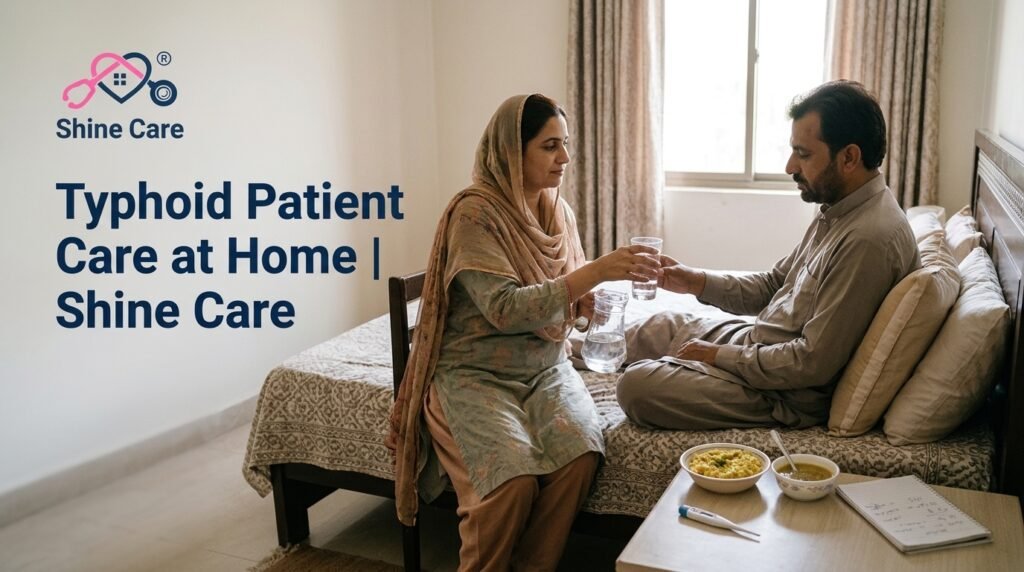
A fever that leaves someone too tired to eat can quickly turn an ordinary family routine into a worrying day. The priorities are simple, but the illness is not: follow the prescribed treatment, offer safe fluids and tolerable meals, and notice deterioration early. Home recovery is appropriate only when the treating doctor considers the person stable enough and gives a clear follow-up plan.
The treatment plan comes before the meal plan
Typhoid is a bacterial infection, not a problem that soup, juice or rest can cure. Antibiotics need to be selected by a doctor. Resistance is a particular concern in Pakistan, so do not borrow a relative’s prescription or change treatment because a neighbour recovered on something else. Take medicines exactly as directed and ask what to do if a dose is vomited. The CDC guidance on typhoid treatment explains why timely antibiotics and completing prescribed treatment matter.
Keep the prescription, test results, allergies and follow-up instructions together. Ask the doctor when to expect improvement and when persistent fever needs reassessment. Feeling better is not permission to stop antibiotics early.
Offer fluids little and often
If the person can swallow safely, offer frequent small drinks rather than insisting on a large glass. Use safe drinking water. When diarrhoea or vomiting is causing fluid loss, ask a clinician or pharmacist about oral rehydration solution and mix a sachet with exactly the water volume printed on its packet. Do not make it stronger or weaker.
Watch whether the person is passing urine, whether it has become unusually dark, and whether drinking is becoming difficult. Record vomiting and loose stools. Someone with heart failure, kidney disease or a prescribed fluid restriction needs an individual drinking plan rather than a general instruction to drink more.
Fruit juice, fizzy drinks and energy drinks should not replace proper rehydration. If the person is drowsy, choking or unable to swallow, do not force oral fluids; seek urgent medical help.
Build meals around tolerance, not food myths
Offer small portions of freshly prepared food. Familiar options such as soft khichri, dal, porridge, well-cooked rice, soup, eggs or other tolerated protein can make eating less demanding. Adjust texture and portion size to appetite and the doctor’s advice. There is no need to ban every solid food or insist on a milk-only diet.
Use safe water for cooking and washing ingredients. Choose pasteurised dairy, cook food thoroughly and avoid raw or poorly handled food. If a meal increases nausea or discomfort, try a smaller serving or another tolerated option. Do not keep restricting food without asking for help when intake remains poor.
Keep one simple daily recovery record
A short record makes patient care easier to coordinate between relatives:
- Temperature and when it was measured.
- Medicines given, missed doses and vomiting after doses.
- Approximate drinks, meals, urine and bowel changes.
- New pain, unusual sleepiness or difficulty standing.
- Questions for the next medical review.
A caregiver or patient attendant can prepare meals, help with washing and record observations. A nurse can provide nursing care within their competence and the doctor’s orders, including assessment and prescribed clinical tasks. The doctor diagnoses, chooses antibiotics and decides whether hospital care is needed. A physiotherapist addresses movement or rehabilitation needs when appropriate; they do not replace medical treatment for infection.
Do not wait at home for these warning signs
Seek emergency care for severe or worsening abdominal pain, a swollen or rigid abdomen, blood in vomit or stool, black tarry stool, fainting, new confusion, difficulty waking or breathing difficulty. Repeated vomiting, inability to retain fluids, very little urine or rapid deterioration also require urgent assessment. Do not wait for the next nurse visit or for a fever chart to look worse.
Wash hands with soap and water after toilet use and before preparing food. The recovering person should avoid preparing food for others until their clinician says it is safe; follow any testing or clearance advice.
Planning support in Lahore
Before discharge, agree who will stay with the person, who will collect medicines and how transport to hospital will be arranged. Families can review home nursing support in Lahore and discuss a suitable home nurse service and care assessment. Confirm the actual staff role, shift arrangements and escalation plan before booking; a home visit is not an emergency department.
Frequently asked questions
Can someone with typhoid recover without admission?
Some uncomplicated cases can be managed at home after medical assessment. Persistent vomiting, complications or deterioration may make hospital treatment necessary.
Is khichri the only suitable food?
No. Offer small, safe, freshly cooked meals that the person tolerates. Include suitable protein and avoid an unnecessarily restrictive diet.
Should we arrange an IV drip for weakness?
Not automatically. A clinician must assess hydration and prescribe IV treatment when needed. A drip is not a substitute for effective antibiotics.
What if fever returns after apparent recovery?
Contact the treating doctor promptly. Do not restart leftover antibiotics or assume that the previous treatment should simply be repeated.
Medical note: This article provides general information, not a diagnosis or an individual treatment plan. Follow the treating clinician’s advice.