

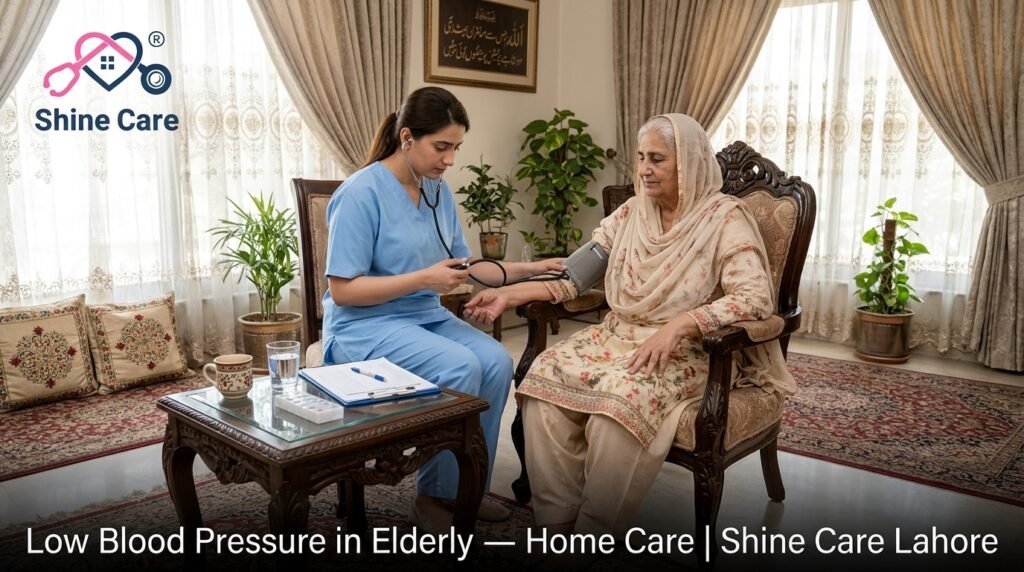
High blood pressure gets most of the attention in Pakistani households — it is the most common cardiovascular risk factor, and almost every elderly adult takes something for it. Low blood pressure, by contrast, is often ignored or celebrated. “My pressure is only 100 over 60, mashallah, my heart is young.” Yet in elderly patients, persistently low blood pressure, or sudden drops in it, cause a specific and under-recognised set of problems. Dizziness. Falls. Fractures. Confusion. Reduced kidney function. Reduced heart output. Sometimes it is the blood pressure medication the patient has been on for twenty years that is now too strong for their current weight and age. Sometimes it is dehydration from a long summer or a bout of diarrhoea. Sometimes it is a new heart condition, blood loss, or infection. The difference between appropriate low-normal pressure and genuinely low blood pressure matters, and so does what the family does about it.
This guide covers low blood pressure in elderly patients at home in Lahore — how to recognise it, what helps, when to call the doctor, and how structured home nursing supports management. Nothing here replaces direct advice from the treating physician for a specific patient.
What “Low Blood Pressure” Actually Means
Normal adult blood pressure is around 120/80 mmHg. Low blood pressure (hypotension) is generally considered below 90 systolic or 60 diastolic. But in elderly patients:
- Some patients are naturally lower and are fine at 100/60
- Others who usually run 150/90 can be symptomatic at 120/70
- Change from the patient’s usual matters more than any single number
- Symptoms matter — asymptomatic low pressure in a well patient is different from symptomatic low pressure
- Specific patterns — low on standing, low after meals, low at specific times — have specific causes
A written record of the patient’s usual pressure helps interpret new readings.
Types of Low Blood Pressure Seen in Elderly
Orthostatic (Postural) Hypotension
Blood pressure drops on standing from sitting or lying. Common in elderly. Specific definition — drop of 20 mmHg systolic or 10 mmHg diastolic within 3 minutes of standing. Causes dizziness, light-headedness, falls.
Postprandial Hypotension
Pressure drops after meals, especially large or carbohydrate-heavy meals. Common in elderly diabetics. Specific pattern — dizziness or fainting 30 minutes to 2 hours after eating.
Chronic Low Blood Pressure
Persistently low readings, usually from a combination of factors — medications, dehydration, reduced cardiac output, specific medical conditions.
Acute Hypotension
Sudden drop. Specific causes include blood loss, severe infection, heart problems, severe allergic reaction, specific medication effects. Emergency.
Common Causes in Pakistani Elderly
- Blood pressure medications — ACE inhibitors, ARBs, diuretics, beta blockers, calcium channel blockers, alpha blockers (for prostate). Combinations particularly. Doses set years ago that no longer fit the patient.
- Dehydration — reduced fluid intake, summer heat, diarrhoea, vomiting, diuretics
- Infection — specifically UTI, chest infection, sepsis
- Blood loss — GI bleeding (often slow and occult), specific women’s issues in post-menopausal patients
- Heart problems — specific arrhythmias, heart failure, aortic valve disease
- Anaemia — common and under-recognised
- Adrenal insufficiency — in patients on long-term steroids or with specific conditions
- Diabetes — specifically with autonomic neuropathy affecting blood pressure control
- Parkinson’s disease — specific autonomic dysfunction
- Kidney function changes
- Thyroid dysfunction — under-active thyroid
- Prolonged bed rest — deconditioning of blood pressure control
- Specific sedating medications — antidepressants, antipsychotics, specific pain medications
- Ramadan or fasting — dehydration and electrolyte shifts
Often more than one factor combines. A diabetic elderly patient on three blood pressure medications, slightly dehydrated after a long summer day, who just ate a heavy lunch — may not have one single cause but a combination.
Symptoms That Should Prompt Checking BP
- Dizziness or light-headedness, especially on standing
- Falls — specifically unexplained ones
- Fainting or near-fainting
- Blurred vision transiently
- Fatigue and weakness
- Confusion (can be an early sign)
- Nausea
- Reduced urine output
- Cold, clammy skin
- Rapid shallow breathing (in severe cases)
- Specific “ghabrahat” or feeling faint
Urgent attention needed if the patient has very low BP (below 80 systolic) with any of — severe dizziness, confusion, cold clammy skin, chest pain, severe weakness, vomiting, black stools, severe fever. These may indicate shock, blood loss, severe infection, or cardiac event. Call 1122 or go to hospital.
How to Measure BP Correctly in Elderly
- Correctly sized upper arm cuff — not a wrist monitor for initial assessment
- Patient seated and rested for 5 minutes before the first reading
- Arm supported at heart level
- Specific measurement on both arms initially
- For suspected orthostatic hypotension — specific protocol: measure lying, then standing after 1 and 3 minutes
- Two or three readings a few minutes apart, average them
- Written record of time, reading, and any symptoms
- Compare to the patient’s known baseline
Specific home BP monitors should be calibrated against a clinic reading occasionally. Specific brands and models vary — our team can advise.
Immediate Response to Dizziness or Low BP at Home
- Sit the patient down if standing, or lie them flat if severe
- Raise legs if lying flat
- Measure BP, pulse, oxygen saturation if available
- Give water to drink if alert and able to swallow
- Check for specific triggering factors — standing up quickly, recent meal, recent medication, specific symptoms
- Document the readings and symptoms
- Call the family doctor for advice
- Monitor response over 15 to 30 minutes
- If not improving or severely symptomatic — hospital
What Helps — Non-Drug Measures
Hydration
- Adequate fluid intake through the day — most elderly drink too little
- Specific target depends on heart and kidney conditions — generally pale yellow urine is a good indicator
- Warm fluids in winter when thirst is reduced
- Oral rehydration solutions if specific losses (diarrhoea, vomiting, fever)
- Specific additional salt where the doctor permits — most elderly have been told to reduce salt, but genuine hypotensive patients may need slight relaxation of restriction
Standing Technique
- Sit up first, pause
- Dangle legs off the bed for 30 seconds
- Stand slowly, with support
- Avoid sudden posture changes
- Compression stockings may help
Meal Pattern
- Small frequent meals rather than large
- Avoid very carbohydrate-heavy meals that trigger postprandial drops
- Specific rest for 30 to 60 minutes after meals
- Avoid standing immediately after a large meal
Activity
- Regular gentle exercise improves cardiovascular control
- Avoid prolonged standing
- Specific calf exercises (heel raises) support venous return
- Avoid very hot showers or saunas
Specific Precautions
- Good lighting in bedroom and bathroom
- Non-slip bathroom mats
- Grab rails
- Night-light for bathroom trips
- Specific supportive footwear
- Walking stick if dizziness is a factor
Medication Review
The single most useful intervention for many elderly with low BP is a medication review by the family doctor. Common adjustments:
- Reducing the dose of one of several BP medications
- Stopping a specific drug if the patient’s pressure no longer needs it
- Changing timing so doses do not peak together
- Adjusting diuretic dose or timing
- Specific review of alpha blockers used for prostate
- Reviewing sedatives and specific antidepressants
- Checking for specific duplicate prescriptions
Many elderly take blood pressure medications set years ago at a younger weight and higher baseline. As they age, lose weight, and their natural blood pressure moderates, the same dose becomes too strong. Annual medication review catches this.
When to See the Doctor
- Any new symptoms of low BP
- Recurrent dizziness
- Falls
- New symptoms with known low BP
- Low BP with fever, signs of infection
- Low BP with blood in vomit, stool, urine
- Low BP with chest pain or breathlessness
- Specific pattern that seems new — orthostatic appearing suddenly, postprandial becoming severe
- Specific response to medication adjustments not working
- Regular review annually even if the patient is stable
What the Doctor Investigates
- Detailed history — pattern, triggers, symptoms, medications
- Examination — pulse, lying and standing BP, hydration status, specific signs
- Blood tests — electrolytes, kidney function, haemoglobin, specific hormonal tests, infection markers
- ECG — specifically for arrhythmia
- Specific cardiac tests if indicated — echocardiogram, Holter monitor
- Urine tests
- Specific endocrine tests if adrenal or thyroid cause suspected
Where Home Nursing Supports Low BP Management
Many elderly with low BP are managed by family alone. Specific situations where trained nursing care helps:
- Patients with multiple conditions and complex medication regimens
- Specific need for daily BP monitoring with documentation
- Recent falls where structured supervision is needed
- Specific need for standing-up training and rehabilitation
- Working families where day-time support is needed
- Overseas family coordinating a parent’s care
- Patients recently discharged after an episode (hospital admission for falls, dehydration, infection)
- Specific acute illness where fluid balance and medication adjustment is critical
- Specific chronic conditions (Parkinson’s, diabetes with autonomic involvement) needing regular monitoring
Our typical engagement for low BP management includes trained attendant daily cover, scheduled BP monitoring, medication administration, daily log for the family doctor, specific fall prevention measures at home, specific coordination around meal and medication timing, and family coaching on correct standing technique. For families searching for a reliable home nurse near me for an elderly parent prone to dizziness and falls, the structured daily monitoring is the main benefit. For families looking at broader health at home arrangements, low BP management is one strand of a bigger plan that often includes diabetes control, chronic disease monitoring, and medication oversight.
About Shine Care
Shine Care provides home nursing, trained attendants, visiting doctor services and medical equipment across Lahore. For elderly patients with low BP and related issues, our teams integrate monitoring, medication oversight, fall prevention, and specific coordination with the family doctor. Coverage spans DHA Phase 1 to 10, Gulberg, Model Town, Garden Town, Johar Town, Faisal Town, Wapda Town, Valencia Town, Bahria Town, Lake City, Cantt, Askari and most Lahore residential areas.
For related services on this site, see our main home nursing services in Lahore page, elderly care at home, visiting doctor at home, home blood sampling, registered nurse in Lahore, and patient attendant.
Call or WhatsApp 0344-9226778 to arrange support for an elderly parent with low BP in Lahore.
Frequently Asked Questions
Is low blood pressure dangerous in elderly?
Can be. Specific chronic mild low BP in a symptom-free patient may be fine. Symptomatic low BP causes falls, confusion, and specific complications. Sudden low BP is an emergency.
Should my mother stop her blood pressure medication if her reading is low?
Not without the doctor’s advice. Specific adjustments by the doctor are safer than stopping abruptly. Rebound issues can occur.
How much water should an elderly person drink in a day?
Depends on heart, kidney conditions. Generally pale yellow urine is a good indicator. Specific amount set by the family doctor for the individual patient.
Does Shine Care provide scheduled BP monitoring at home?
Yes — trained attendants and nurses provide daily BP monitoring with documentation. Call 0344-9226778.
How soon should a doctor see an elderly patient with new dizziness?
Within a few days for new dizziness. Same-day for severe dizziness, falls, or specific concerning symptoms.
Can overseas family arrange this care for a parent in Lahore?
Yes — overseas coordination is routine. Daily WhatsApp updates on BP readings, medications, specific events. Remote payment handled.
This article is a general guide. All medication and specific treatment decisions remain with the treating family doctor or physician. For severe low BP, confusion, fainting, or any emergency symptoms — call 1122 or go to hospital. External reference: NHS — Low Blood Pressure.