A caesarean section is major abdominal surgery. It is also the moment a new baby arrives — and Pakistani families often forget the first part in the excitement of the second. Everyone crowds around the newborn. The mother, meanwhile, has a fresh six-inch wound in her abdomen, is running on almost no sleep, is trying to breastfeed, and is expected to be up and about within days because “she is fine, alhamdulillah”. Too often, that neglected first part becomes the reason for a wound infection at week two, a mother who is exhausted and tearful at week three, and a slow physical recovery that stretches for months.
This guide walks families through c-section recovery care Lahore realities — what proper recovery actually looks like, what warning signs to watch for, and how to balance care of the new baby with care of the mother who is also, right now, a surgical patient. Nothing here replaces your obstetrician’s specific instructions. It fills in the practical gaps between discharge and full recovery.
What Recovery Actually Involves
A C-section is not “just delivery, but different”. It is delivery plus surgery. The recovery has two parallel tracks that both need attention:
- Post-surgical recovery: Wound healing, pain management, mobility, prevention of infection and blood clots, watching for complications.
- Postpartum recovery: Uterine involution (returning to pre-pregnancy size), lochia (post-birth bleeding), breastfeeding establishment, hormonal adjustment, emotional recovery.
Both happen at the same time in a woman who is also feeding a newborn every 2–3 hours around the clock. This is why a properly-supported chilla for a C-section mother is not indulgence — it is medically necessary.
Who Does What in the First 40 Days
Recovery from a C-section is not a one-person job:
- Obstetrician / Gynaecologist: Owns the surgical recovery. Reviews the wound, checks bleeding, decides when the mother is fully healed, and manages any complications. Follow-up visits usually at 1 week, 2–4 weeks, and 6 weeks.
- Paediatrician: Owns the baby’s care.
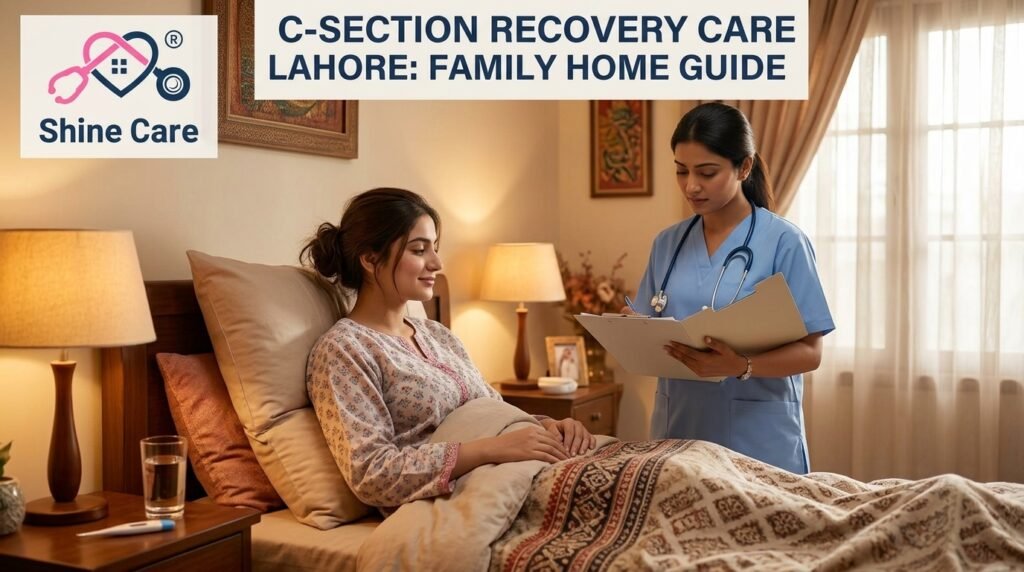
- Home Nurse: For families who arrange one, provides skilled clinical care — wound checks, injections if prescribed (blood thinners are common after C-section), vitals, and early identification of infection. A good home nurse in the first 2 weeks lets the mother rest instead of being the one running around.
- Caretaker / Maasi: Handles household work so the family can focus on mother and baby.
- Family: Provides emotional support, coordinates the routine, and — perhaps most importantly — allows the mother to actually rest. Well-meaning visitors who ask the new mother to serve tea are a recovery hazard.
For families in Lahore where the mother does not have close relatives to help — or where the relatives are elderly and cannot physically support her — arranging structured health at home support during the first weeks is a very sensible investment. This is not a status symbol; this is what allows recovery to actually happen.
The First Week Home
The first week is where most complications develop, and where most families make the mistakes they later regret.
Rest — Properly
Not “resting in between things”. Actual rest. The mother should be spending most of the day either in bed or in a comfortable chair, getting up only for essential activity — bathroom, short walks around the room, feeding the baby. Not cooking. Not cleaning. Not walking through the house to greet visitors. Not driving.
Short Walks Are Good
Short does not mean none. Very early mobilisation — walking to the bathroom, walking around the bed, gentle walks around the room — is what prevents blood clots and helps the bowels wake up after surgery. The surgeon usually encourages walking within hours of the surgery.
Position for Comfort
The wound is at the lower abdomen. Sitting up straight from lying flat pulls on it. Instead, roll to the side first, push up with the arm, and sit at the edge of the bed. A pillow held gently against the abdomen while coughing, laughing, or sneezing reduces pain by supporting the wound.
Wound Care
Keep the wound clean and dry. Follow the specific dressing instructions from the surgical team. Watch for warning signs (see below). Do not apply oils, ghee, or any traditional remedies to the incision — the surgeon prescribes what is safe.
Pain Management
Take the prescribed painkillers on the schedule, not “only when it becomes unbearable”. Pain that is well-controlled lets the mother move, feed the baby, and sleep. Pain that is uncontrolled leaves her immobile, exhausted, and vulnerable to clots. Paracetamol and specific opioids are usually safe with breastfeeding at prescribed doses — the doctor confirms.
Bladder and Bowels
Early urination after catheter removal is important. Constipation after C-section is very common — the combination of surgery, painkillers, and reduced fluid intake slows the bowels. Adequate fluids, high-fibre food, prescribed stool softeners, and short walks all help.
Vaginal Bleeding (Lochia)
Yes — even after a C-section. The uterus still needs to shed its lining and shrink back. Bleeding for 2–6 weeks is normal, reducing in amount and colour (bright red first days, brown, then yellowish). Sudden increase, large clots, or foul smell needs a doctor.
Wound Care in Detail
The C-section wound is usually a horizontal cut at the lower abdomen. Sometimes a vertical cut. Care varies with the specific closure the surgeon used:
What Normal Healing Looks Like
- Some mild soreness and tenderness that gradually reduces
- A small amount of clear or slightly bloody discharge in the first days
- Redness right along the wound edge that improves over the first week
- Gradual formation of a thin firm scar
- Some numbness or itching as nerves heal — can last months
What Warning Signs Look Like
Contact the doctor the same day for any of the following:
- Spreading redness that gets bigger day by day
- Pus or thick discharge with a bad smell
- Wound edges separating or opening
- Increasing pain instead of decreasing
- Warmth over the wound that keeps spreading
- Fever above 38°C
- Feeling generally unwell — chills, aching, exhausted beyond normal tiredness
Wound infections after C-section are more common than families realise — most respond well to prompt antibiotics but can become serious if ignored. Structured post-surgery care at home for the first 1–2 weeks usually includes daily wound review, precisely to catch these signs early.
Bathing
Follow the specific instructions from your surgeon. Usually short showers are allowed after a few days, avoiding soaking or scrubbing the wound. Full tub baths and swimming are avoided until fully healed. Pat the wound dry gently after a shower.
Clothing
Loose cotton kurtas or nightsuits that do not press against the wound. Post-partum abdominal binders may be recommended for support — the surgeon decides when they are safe to wear.
Managing the Baby While Recovering
Newborn feeding does not wait for the mother’s recovery. Some practical adjustments help:
Breastfeeding Positions After C-Section
- Side-lying position: Mother and baby lie on their sides facing each other. Keeps pressure off the wound.
- Football hold: Baby tucked under the mother’s arm on a pillow, avoiding the abdomen entirely.
- Cradle hold with pillow support: The traditional position, with a firm pillow between the baby and the abdomen.
Getting Up With the Baby
For the first days, someone else should bring the baby to the mother for feeds rather than the mother getting up to a distant cot. A cot next to the mother’s bed simplifies this considerably.
Bathing the Baby
Not the mother’s job for the first weeks. Someone else bathes the baby.
Getting Help at Night
Night feeds are exhausting even for a healthy mother. For a C-section mother, adequate night support — a family member or a trained baby nurse who can bring the baby to her, handle burping and settling — is what allows sleep to happen.
Nutrition
The traditional Pakistani post-partum diet has real strengths — it is protein-rich, calorie-dense, and warming. For a C-section mother, some additions matter:
- Enough protein for wound healing — eggs, meat, fish, daal, cheese, dahi
- Iron-rich foods for blood recovery — greens, lentils, red meat, jaggery
- Adequate fluids — water, lassi, coconut water, soups. Constipation prevention is real.
- Fibre — whole grains, vegetables, fruits
- Calcium — for breastfeeding demand — milk, dahi, cheese, sesame
- Prescribed iron and calcium supplements — not skipped
Traditional panjeeri, gonde ke ladoo, and warming foods are supportive if not eaten in excess. What matters most is that the mother actually eats — many mothers in Pakistani households eat last, get interrupted, and end up under-nourished. Someone else should be responsible for making sure her plate is full and her water glass is refilled.
Managing Other Conditions
Some pregnancy-related conditions continue to need attention after C-section:
- Pre-eclampsia and gestational hypertension: Blood pressure needs monitoring for at least 6 weeks after delivery. Sudden severe headache, blurred vision, or upper abdominal pain in a mother who had pregnancy-related BP problems needs urgent review. Structured hypertension care during the postpartum weeks is essential for these mothers.
- Gestational diabetes: Blood sugars are checked around 6 weeks postpartum to confirm they have normalised. Structured diabetes care may be needed if levels remain elevated or if the mother had significant diabetes during pregnancy.
- Anaemia: Very common after C-section, especially if blood loss was significant. Iron supplements are usually continued for weeks or months.
- Thyroid issues: Can appear or worsen postpartum. Check thyroid function if the mother feels persistently unwell.
Emotional Recovery
Baby blues in the first 2 weeks — mood swings, tearfulness, feeling overwhelmed — are extremely common and usually settle. Persistent low mood, hopelessness, or difficulty bonding with the baby beyond two weeks is different, and needs medical support.
C-section mothers sometimes carry an additional emotional layer — a sense of “not having really given birth”, or disappointment about not having a vaginal delivery. This is worth acknowledging. A C-section is a full birth. Nothing about it is less. But feelings do not always follow logic, and giving those feelings space rather than dismissing them is part of good care.
What Not to Do in the First 6 Weeks
- Lifting anything heavier than the baby
- Driving (usually until at least 6 weeks, and the surgeon confirms)
- Vigorous exercise
- Sit-ups, crunches, or heavy abdominal work
- Sexual activity until cleared at the 6-week visit
- Household chores that involve bending, stretching, or lifting
- Long trips or travel
- Excessive stair climbing
This is not fragility — this is normal post-surgical restriction. The tissues underneath the visible scar continue to heal for months after the skin looks fine.
Gradual Return to Activity
Recovery is not sudden. A typical pattern:
- Weeks 1–2: Mostly rest. Short walks around the room. Feeding, sleeping, gentle movement.
- Weeks 3–4: Longer walks in the house or garden. Sitting up more. Light activities.
- Weeks 5–6: Gradual increase in daily activity. Longer walks, some housework, but no heavy lifting.
- After 6 weeks: With surgeon’s clearance, gradual return to exercise. Start gentle — walking, gentle yoga. Full return to previous activity often takes 3–6 months.
Listen to the body. Pain, spotting that returns after stopping, or excessive fatigue after activity are signs to slow down again.
When to Contact the Doctor
Contact the obstetrician the same day for any of the following:
- Wound signs of infection — spreading redness, pus, opening, foul smell
- Fever above 38°C
- Heavy bleeding — soaking a pad in an hour, or large clots
- Foul-smelling vaginal discharge
- Severe or increasing pain in the abdomen
- Redness, swelling, or warmth in one leg — possible DVT
- Sudden shortness of breath or chest pain — possible pulmonary embolism
- Severe headache, especially with visual changes or upper abdominal pain
- Painful, red, warm patches on the breast with fever — possible mastitis
- Difficulty urinating or new burning urination
- Persistent low mood, thoughts of self-harm, or difficulty bonding with the baby
Red Flags: When to Go to the Emergency Room
Do not wait, do not phone first — go to the emergency room / call 1122 immediately for:
- Very heavy bleeding — flooding, or large clots
- Sudden severe shortness of breath
- Chest pain
- Collapse or fainting
- Severe headache with visual changes and confusion
- Seizure
- Wound completely opening
- Severe abdominal pain with fever and vomiting
- Bluish colour around lips or fingers
For patient-friendly background on C-section recovery, the NHS guide to caesarean recovery is a reliable reference. For your specific care plan, always follow your obstetrician’s advice.
Arranging a Trained Home Nurse After C-Section
Not every mother needs one, but for many families in Lahore, a trained home nurse for the first 2 weeks after a C-section is one of the highest-value arrangements they will make. What a good postpartum nurse provides:
- Daily wound checks and dressing changes if needed
- Injectable blood thinner administration if prescribed (common after C-section)
- Vitals monitoring — temperature, BP, pulse
- Early identification of wound infection, mastitis, or DVT
- Breastfeeding support
- Baby care support in coordination with a baby nurse or family
- Coordination with the obstetrician
Combined with structured doctor home visits for the postnatal review, this arrangement means the mother does not have to travel to the hospital during the most vulnerable weeks. For working families where both parents are busy, or where extended family is not local, this becomes the practical backbone of good recovery care in the home.
FAQs
The skin usually heals well within 2 weeks. The deeper tissues continue healing for 6–8 weeks and beyond. Full return to pre-pregnancy strength usually takes 3–6 months. The surgeon clears the mother stage by stage.
Short walks around the room start within hours of surgery. Walking around the house comes over the first days. Longer walks build up over the first 2–4 weeks. Vigorous walking waits until the surgeon clears it.
Most painkillers prescribed after C-section — paracetamol, some opioids at prescribed doses, some anti-inflammatories — are safe with breastfeeding. Confirm with the obstetrician for your specific prescription. Do not stop painkillers because of breastfeeding worry without asking — undertreated pain harms recovery.
Often yes — many surgeons recommend a supportive binder for comfort and early support. Confirm with your surgeon when it is safe to start and for how long each day. Do not wear one continuously without medical advice.
Contact the obstetrician the same day. Most wound infections respond well to prompt antibiotics. Delayed treatment can lead to deeper infections requiring hospital care. Do not wait to see if it settles overnight.
For mothers with close family support, extended maternity leave, and a smooth recovery, family may be enough. For working families, first-time mothers, mothers of twins, mothers with complicated deliveries or existing medical conditions, a home nurse for the first 1–2 weeks makes a substantial difference to recovery quality. It is not a status marker; it is practical recovery care.