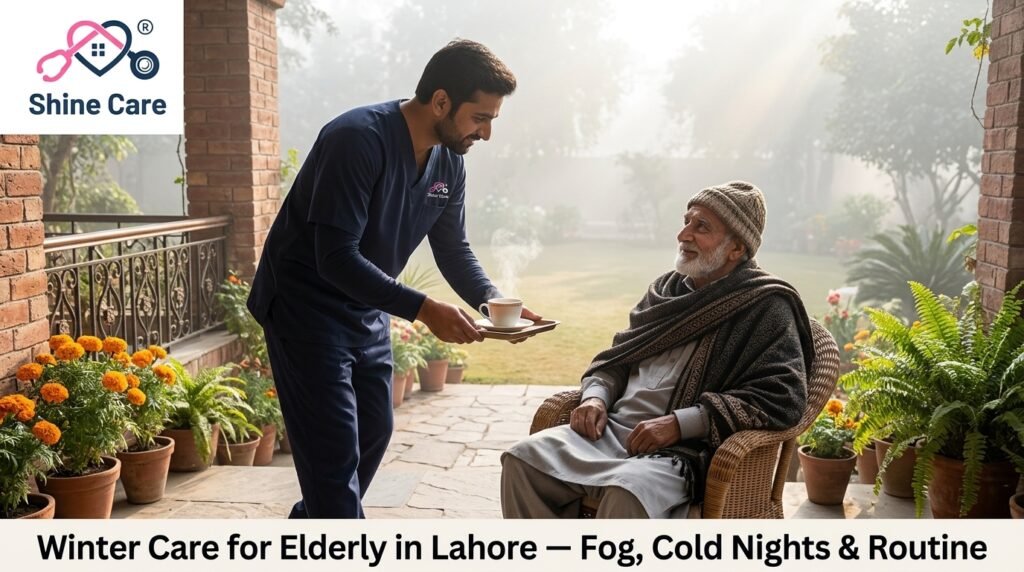
Lahore winters are not kind to elderly bodies. Fog settles over Model Town and Johar Town for weeks. Overnight temperatures drop to single digits with occasional dips close to freezing. Smog mixes with the cold air to produce weeks of hazardous air quality. Load-shedding leaves rooms icy. Elderly joints stiffen, lungs flare, blood pressure spikes, falls become more frequent, and chest infections run through households that managed well all summer. In Lahore ICU admissions among elderly, December to February consistently out-paces any other time of year. Most of the admissions come from four preventable problems — chest infections, falls, cardiovascular events, and hypothermia — all worsened by cold and all largely addressable at home.
This guide covers winter care for elderly parents in Lahore — the daily routine, the environmental set-up, the warning signs, and the role of trained home nursing in getting an older family member safely through the three worst months of the year. Nothing here replaces the family doctor’s specific advice for your parent.
Why Winter Is Harder on Elderly
- Blood pressure rises in cold — raises stroke and heart attack risk
- Cold triggers chest tightness in COPD and asthma
- Chest infections more common and more severe
- Dehydration under-recognised — elderly feel less thirsty in cold
- Joints stiffer — arthritis flares, mobility drops
- Falls increase on slippery morning surfaces and in dark cold rooms
- Depression worsens with reduced sun exposure
- Vitamin D levels drop further
- Immune response is less effective at low body temperatures
- Smog overlaying cold creates double respiratory stress
- Reduced sun exposure limits daily movement
- Social isolation increases when visitors stop coming
- Load-shedding leaves heating off at the worst times
- Hypothermia is a real risk — temperature drops below 35°C are more common than Pakistani families realise
Setting Up the Winter Environment at Home
Temperature
- Keep the main living areas at 18 to 20°C minimum
- Bedroom slightly cooler for sleep but not below 18°C
- Avoid very hot rooms — overheating causes dehydration and dry air
- Gas heaters — safe only with ventilation to prevent carbon monoxide
- Electric heaters — safer but power-dependent
- Hot water bottles — comfort but risk of burns on fragile skin, especially in diabetics
- Thick curtains, draft excluders, closed doors to unused rooms
- Carpets or rugs where safe (not loose rugs that cause falls)
Air Quality
Lahore smog overlaps the winter months. For elderly with heart or lung conditions, poor air kills more than cold:
- HEPA air purifier in the main living room and bedroom
- Keep windows closed during smog peaks
- No incense, no cooking smoke in the elderly person’s room
- No cigarette smoking in the house
- Humidifier in rooms where heating dries the air
- Dust reduction — regular wet cleaning rather than dry dusting
- No open coal or wood heating
Lighting
- Good indoor lighting — mornings and evenings are dark
- Night-lights in bedrooms, corridors, bathrooms
- Reading lamp near the chair
- Clear paths from bed to bathroom
Load-Shedding Preparation
- UPS or inverter for essential equipment — oxygen concentrator, BiPAP, nebuliser
- Backup oxygen cylinder if the patient is on continuous oxygen
- Charged phones for emergency contact
- Battery-powered or rechargeable torches at bedside
- Warm clothing accessible even in dark
- Thermometer for both patient and room
Daily Routine Through Winter
Morning
- Do not rush out of bed in cold — sudden posture change plus cold spikes blood pressure
- Warm drink before rising
- Warm clothes before leaving the quilt
- Blood pressure check — levels often higher than summer
- Medications on schedule
- Warm breakfast
- Short walk indoors if outdoor smog is heavy, or outdoor walk when air quality allows (usually mid-morning in Lahore)
Midday
- Main meal — hot, protein-rich, satisfying
- Sunlight exposure if air quality permits — 15 to 20 minutes of sitting in sun on verandah or courtyard
- Afternoon rest
- Hydration — regular water, warm drinks, soups
Evening
- Early light dinner — heavy late meals disturb sleep in elderly
- Medications
- Social contact — visitors, phone calls, television in moderation
- Prayer time
- Early winding down
Night
- Warm bedroom but not stuffy
- Layered bedding — easier to adjust than one heavy quilt
- Night-light for toileting
- Water glass by the bed
- Easy access to a bell or phone to call family
- Elderly patient’s room should not be at the coldest end of the house
Nutrition in Winter
- Hot foods preferred — soups, dal, slow-cooked dishes
- Adequate protein — eggs, chicken, fish, dal, pulses
- Seasonal vegetables and fruits
- Dried fruits in moderation — dates, raisins, almonds
- Jaggery (gur) traditional winter food, useful in moderation
- Garlic, ginger, turmeric — traditional warming additions
- Vitamin D supplement as prescribed — critical in winter
- Vitamin C through citrus fruits
- Reduce salt in heart patients even in winter — mustard-oil pickles and sardines are high-salt winter staples
- Diabetic adjustments — winter desi ghee and sweets need portion control
- Adequate fluid intake — easy to miss in cold
Hydration — The Hidden Problem
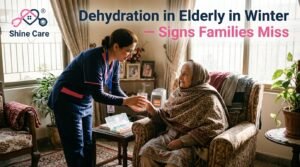
Elderly often drink 30 to 50% less in winter because they feel less thirsty and dislike cold water. Signs of dehydration:
- Dry mouth and tongue
- Low urine output or dark urine
- Constipation worsens
- Confusion or drowsiness
- Dizziness on standing
- Dry skin
- Falls
Encourage warm fluids — green tea, warm water with lemon, soups, warm milk where tolerated. Keep a water bottle visible. Attendants and family should remind rather than wait for the patient to ask.
Chest Infection Prevention
The commonest winter admission. Prevention is the whole game:
- Annual flu vaccine — ideally in October before smog season starts
- Pneumonia vaccine as advised
- COVID vaccine up to date per public health guidance
- Hand hygiene for all household members
- Visitors with respiratory infections — stay away or mask
- Avoid crowded indoor gatherings during flu waves
- Treat colds and coughs early
- Low threshold for seeking medical review — don’t let a cough become pneumonia
- Breathing exercises for patients with any lung condition
- Air purifier for respiratory patients
- Avoid smoke — cigarette, cooking, incense
For patients with COPD, asthma, chronic bronchitis, or previous pneumonia — specific winter plans with the doctor matter. Rescue inhaler availability, step-up medications ready, early antibiotic plans in some cases.
Blood Pressure and Cardiac Risk
Blood pressure rises in winter — sometimes significantly. Heart attacks and strokes peak in cold months. Watch for:
- Significant rise in home blood pressure readings
- New chest pain or heaviness
- Increased breathlessness on usual activity
- Palpitations
- Headache in morning
- Any suspected stroke signs — face droop, arm weakness, slurred speech
Early morning is the highest-risk window. Elderly cardiac patients should rise slowly, warm up before any exertion, delay outdoor morning walks until after the first warmth, and keep medications strictly on time.
Falls Prevention
- Non-slip bathroom mats
- Grab rails
- Good lighting at night
- Clear paths in bedroom, bathroom, corridors
- Secure carpets and rugs
- Comfortable supportive footwear with grip
- Warm clothes to prevent shivering (which affects balance)
- Walking stick or walker if advised
- Avoid rushing in cold morning stiffness
- Treatment of vitamin D deficiency
- Review of medications affecting balance
Mood and Social Life
- Short days reduce mood in some elderly — “winter blues”
- Encourage visitors and phone calls
- Religious gatherings where appropriate
- Regular contact with overseas children — WhatsApp video calls
- Hobbies — reading, light crafts, cooking participation
- Avoid isolation in a cold bedroom
- If low mood is persistent, discuss with the family doctor — treatable
Specific Patient Groups
Patients With Diabetes
- Blood sugar often rises slightly in winter — monitor closely
- Foot care — hot water bottle burns common in neuropathic patients
- Winter sweets portion control
- Flu vaccine especially important
Patients With Heart Failure
- Daily weight tracking — fluid overload easier to miss in winter clothing
- Early detection of worsening — before admission
- Strict medication timing
- Reduced outdoor activity does not mean no activity
Patients With COPD
- Rescue inhaler always with the patient
- Early response to colour change in sputum or new breathlessness
- Antibiotic plan agreed in advance with the pulmonologist
- Oxygen setup checked and functional
- Air purifier essential
Patients With Stroke History
- Secondary stroke prevention medications strictly on time
- Blood pressure monitoring
- Avoid sudden cold exposure
- Watch for new weakness or speech issues
Patients With Dementia
- Clearly accessible warm clothing
- Supervision for safety — hot water, heater burns
- Routine maintained despite shorter days
- Night-time safety — wandering out in cold is serious
Red Flag Signs — Call the Doctor Early
- New cough with coloured sputum or breathlessness
- Fever not responding to simple measures
- Blood pressure significantly up on home readings
- Confusion or drowsiness
- Chest pain or heaviness
- New weakness, slurred speech, or facial droop (suspected stroke — emergency)
- Significantly reduced appetite or fluid intake
- Significant weight gain or new leg swelling
- Signs of hypothermia — cold skin, confusion, slow pulse
- Falls
- Any sudden change in overall state
Where Home Nursing Helps in Winter
For many Lahore families, winter is when they first realise they need structured nursing care at home. Common engagements starting in winter:
- Trained attendant for elderly parent — ensuring warm clothing, hot meals, medications, activity, hydration
- Visiting nurse for chest infections and specific prescribed treatments
- Daily blood pressure and medication oversight
- Chest physio for COPD and bronchitis patients
- Scheduled flu vaccines at home
- Visiting doctor review where clinic travel is risky in smog
- Overseas family coordination — more worrying in winter from abroad
- Equipment arrangement — oxygen, nebuliser, BiPAP, air purifier
Families searching for a reliable home nurse near me during winter often engage us for 2 or 3 months of structured support that reduces admissions and keeps the parent through the worst season. For broader health at home plans in elderly parents with multiple conditions, winter is the most important season to have the plan running smoothly.
About Shine Care
Shine Care provides home nursing, trained attendants, visiting doctors, physiotherapists and medical equipment across Lahore. Our winter care plans for elderly focus on the four admission triggers — chest infection, falls, cardiovascular events, and hypothermia — through daily routines that prevent each. Coverage spans DHA Phase 1 to 10, Gulberg, Model Town, Garden Town, Johar Town, Faisal Town, Wapda Town, Valencia Town, Bahria Town, Lake City, Cantt, Askari and most Lahore residential areas.
For related services on this site, see our main home nursing services in Lahore page, elderly care at home, visiting doctor at home, physiotherapy at home, registered nurse in Lahore, and palliative care.
Call or WhatsApp 0344-9226778 to arrange winter care for an elderly parent in Lahore. First visit usually within 1 to 2 days.
Frequently Asked Questions
Is a gas heater safe for my mother’s room?
Only with proper ventilation and functional appliance. Carbon monoxide poisoning from unvented gas heaters kills Pakistani households every winter. Electric heaters are safer where power supply allows. Discuss specific set-up with the family.
Should my elderly father take flu vaccine every year?
Yes — annual flu vaccine is recommended for elderly, particularly those with heart, lung, kidney or diabetes conditions. Ideally in October before the season.
How much water should an elderly parent drink in winter?
Specific amount depends on their heart and kidney condition. In general, aim for pale yellow urine as the simple indicator — darker means more fluid needed. Monitor and encourage warm fluids throughout the day.
Can we take elderly for a short walk outside during smog?
Depends on air quality that day. Check Lahore AQI readings. Avoid outdoor walks when AQI is in the hazardous range. Indoor walking is safer during smog peaks.
Does Shine Care provide short-term winter engagements?
Yes — many families engage us for 2 or 3 months of winter support rather than permanent arrangements. Call 0344-9226778 to discuss specific needs.
How soon can a trained attendant arrive for a winter engagement?
Usually within 1 to 3 days across central Lahore. For urgent cases faster response possible.
This article is a general guide. All medical and medication decisions remain with your parent’s doctor. For acute emergencies — suspected stroke, chest pain, severe breathlessness, unconscious patient — call 1122 or go to the nearest hospital. External reference: NHS — Keep Warm, Keep Well.