

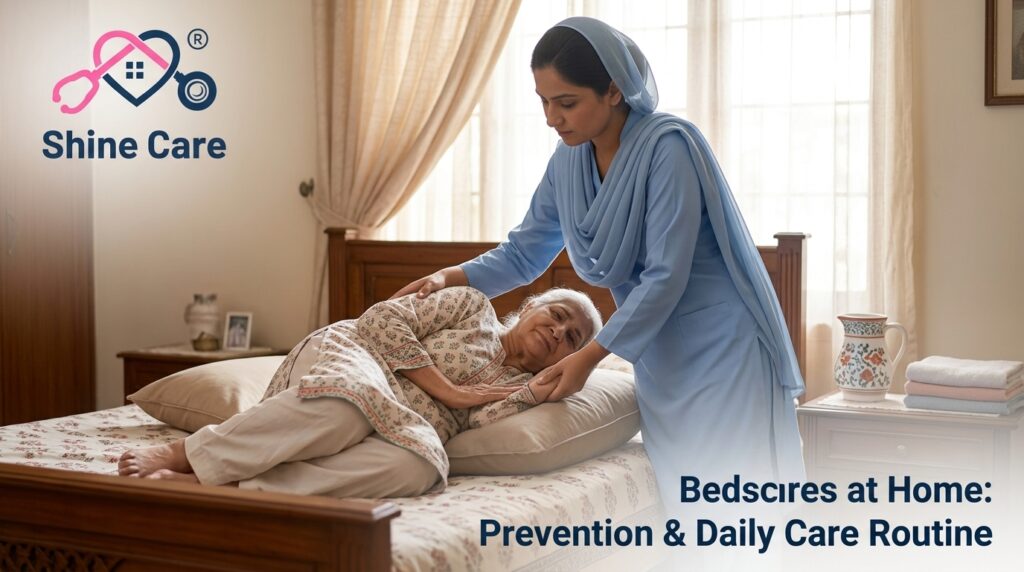
If someone in your family is bedridden or spends most of the day in a chair, bedsores are one of the most common problems families in Lahore worry about — and rightly so. What starts as a small red patch on the skin can turn into a painful, slow-healing wound within days if it isn’t caught early. The good news is that bed sores treatment at home is very manageable once you understand what causes them and build a simple daily routine around prevention.
This guide walks you through why bedsores happen, how to prevent them, and what a practical daily care routine looks like for a patient at home.
What Are Bedsores and Why Do They Happen?
Bedsores, also called pressure sores or pressure ulcers, develop when constant pressure on one part of the body cuts off blood flow to the skin. Without enough blood supply, the skin tissue in that area starts to break down. They most commonly form over bony areas — the tailbone, hips, heels, elbows, shoulder blades, and the back of the head — because there’s less muscle and fat to cushion the pressure there.
Three main forces cause bedsores:
- Pressure – Sitting or lying in the same position for too long without relief.
- Friction – Skin rubbing against bedsheets or clothing when a patient is moved or repositioned.
- Shearing – When skin stays in place but the tissue underneath shifts, such as when a patient slides down in bed.
Patients who are bedridden, use a wheelchair, have limited mobility, or live with conditions like diabetes, dementia, or paralysis are at higher risk. Poor nutrition, fragile skin, and incontinence also make the skin more vulnerable.
Who Is Most at Risk at Home?
Families providing elderly care at home in Lahore often deal with this concern directly, since elderly patients are among the highest-risk groups. Bedsores are especially common in:
- Elderly parents who spend most of the day in bed or a chair
- Stroke patients with limited movement on one side of the body
- Post-surgery patients recovering from major operations
- Patients with paralysis or spinal injuries
- Bedridden patients with dementia or Alzheimer’s who cannot reposition themselves
- Patients with diabetes, where poor circulation slows healing
Recognising the Early Signs
Catching a bedsore in its earliest stage makes a huge difference to how quickly it heals. Watch for:
- A red or discoloured patch of skin that doesn’t turn pale (blanch) when pressed
- Skin that feels warmer or cooler than the surrounding area
- Tenderness, pain, or itching over a bony area
- Skin that feels unusually firm or unusually soft
- Any blister, crack, or open area on the skin
If you notice any of these signs, the affected area needs immediate pressure relief. Left unattended, what looks like minor redness can progress into an open wound within a short time.
Daily Prevention Routine for Bedsores at Home
Preventing bedsores comes down to consistency. A structured daily routine matters far more than occasional effort. Here’s what a practical routine at home should include:
1. Regular Repositioning
This is the single most important step. A bedridden patient should be repositioned roughly every two hours, and a patient sitting in a chair should shift position at least every hour, if they are unable to do this on their own. Rotate between lying on the back and each side, and avoid leaving the patient directly on a reddened area.
2. Daily Skin Checks
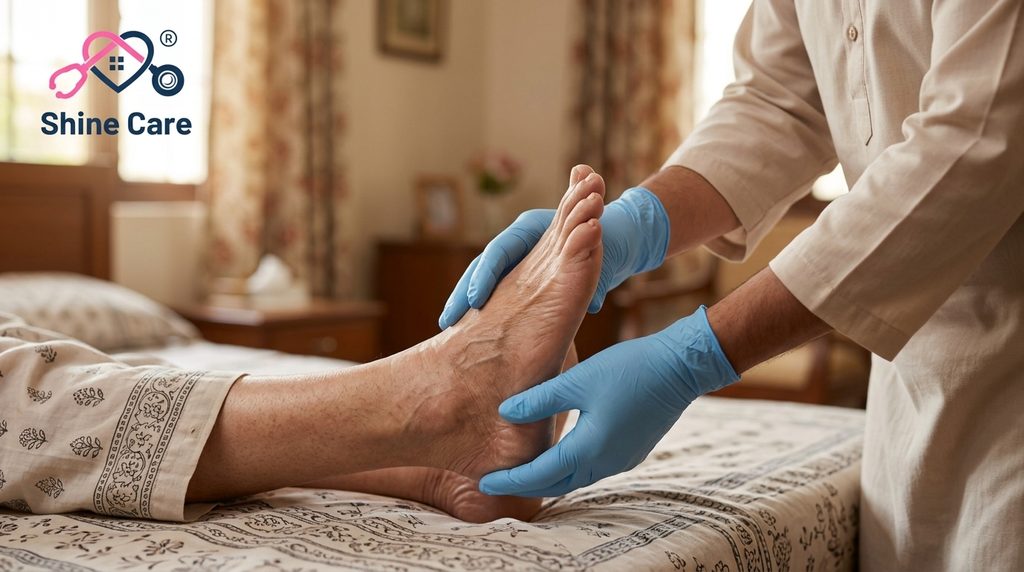
Inspect the skin every day, especially over bony areas — heels, hips, tailbone, elbows, and the back of the head. Look for redness, warmth, or any change in skin texture. Catching a problem on day one instead of day four can prevent it from becoming a serious wound.
3. Keep the Skin Clean and Dry
Moisture from sweat, urine, or spilled food breaks down skin faster. Clean the skin gently after any incontinence episode, pat it dry rather than rubbing, and use a mild moisturiser to keep skin from becoming too dry or cracked.
4. Use Proper Cushioning and Support
Foam cushions, pressure-relieving mattresses, and pillows placed strategically under the legs or between the knees help redistribute weight away from bony areas. Avoid donut-shaped cushions, as they can actually increase pressure around the edges.
5. Keep Bedding Smooth and Dry
Wrinkled or damp sheets increase friction against the skin. Change bedding regularly, keep it as smooth as possible, and avoid harsh fabrics that can irritate sensitive skin.
6. Maintain Good Nutrition and Hydration
Skin that isn’t getting enough protein, vitamins, and fluids heals more slowly and breaks down more easily. A balanced diet with adequate protein and hydration supports skin health, particularly for patients who are already at risk.
7. Gentle Movement and Physiotherapy Where Appropriate
For patients who are able to tolerate it, light movement or guided physiotherapy exercises help improve circulation. This is where a patient attendant trained in safe repositioning techniques can make daily care significantly easier and safer for both the patient and the family.
Treating Bed Sores at Home: What to Do at Each Stage
| Stage | What it looks like | Care at home | Doctor or nurse needed? |
|---|---|---|---|
| Stage 1 | Red skin that stays red when pressed; skin not broken | Take pressure off the spot, keep skin clean and dry, change position every 2 hours, use an air mattress | If it does not fade within a few days |
| Stage 2 | Shallow open sore or blister | Keep pressure off; clean and dress only as the nurse advises | Yes, to choose the right dressing |
| Stage 3 | Deeper wound into the fat layer | Nurse-led wound care | Yes, always |
| Stage 4 | Muscle or bone visible | Wound care under doctor supervision | Yes, urgently |
See a doctor promptly if there is spreading redness, pus, a bad smell or fever, because these are signs of infection.
Avoid: massaging red areas, drying wounds with a hair dryer, putting home remedies such as turmeric paste or toothpaste on open sores, and ring-shaped (doughnut) cushions.
For dressings, book wound dressing at home; to relieve pressure, rent an air mattress through medical equipment on rent.
What to Do If a Bedsore Has Already Formed
If you notice a bedsore has already developed, the first step is to completely relieve pressure from that area — do not let the patient continue lying or sitting on it. Keep the area clean and dry, and avoid massaging or rubbing a reddened or broken area, as this can cause further tissue damage. Early-stage sores (Stage I or II) may improve with consistent repositioning and proper skin care, but any open wound, blister, or sign of infection — such as pus, foul odour, or increasing pain — needs prompt medical attention rather than home treatment alone. According to MedlinePlus, a U.S. National Library of Medicine resource, pressure sores are staged from I to IV based on severity, with deeper stages involving damage that extends into muscle and bone — which is why early intervention matters so much.
Why Professional Home Nursing Support Helps
Preventing bedsores requires consistency that can be difficult for families to maintain alone, especially when juggling work, other responsibilities, or caring for a patient with complex needs. A trained caregiver or nurse who understands proper repositioning schedules, skin assessment, and hygiene routines can significantly reduce the risk of pressure sores developing in the first place. For families in Lahore managing a bedridden parent or relative, arranging support from a patient attendant alongside a structured elderly care at home plan often makes the difference between reactive treatment and genuine prevention.
Frequently Asked Questions
Bedsores are caused by prolonged pressure on the skin, usually over bony areas, combined with friction or shearing forces that reduce blood flow and damage the tissue.
Generally every two hours in bed and every hour if seated in a chair, though this can vary depending on the patient’s condition and risk level.
Early-stage bedsores can often be managed at home through consistent repositioning, skin care, and pressure relief. Open wounds or signs of infection need medical evaluation.
The tailbone, hips, heels, elbows, shoulder blades, and the back of the head are the most common areas, since these are bony points with less natural cushioning.
Yes, elderly skin is generally thinner and heals more slowly, and reduced mobility increases the risk of prolonged pressure on the same areas.
Redness that doesn’t fade when pressed, changes in skin temperature, tenderness, and any blistering or skin breakdown are early warning signs.
Yes, adequate protein, vitamins, and hydration play an important role in skin health and how quickly existing sores heal.
Yes, pressure-relieving mattresses and properly placed cushions help redistribute weight away from bony areas and reduce pressure buildup.
Any open wound, worsening pain, pus, foul odour, or signs of infection should be evaluated by a medical professional rather than managed at home alone.
Yes, a trained patient attendant can maintain a consistent repositioning schedule, monitor skin condition daily, and assist with hygiene — all of which are central to prevention.
If you’re caring for a bedridden parent or family member in Lahore and want support building a consistent prevention routine, Shine Care’s home nursing and patient attendant services can help. Reach out to discuss your loved one’s situation and the right level of care for their needs.