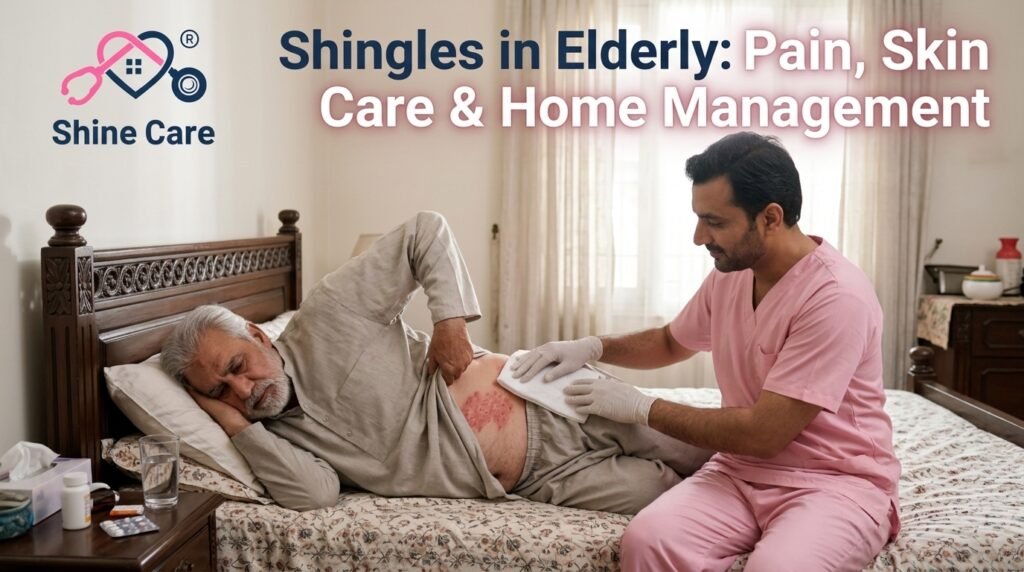
Your 72-year-old father complains of a strange burning pain down one side of his back. There is nothing to see at first — maybe a slight sensitivity to his kurta rubbing on the skin. Two days later a cluster of fluid-filled blisters appears in exactly the same strip, and the family finally understands what is going on. This is shingles in elderly patients — a reactivation of the chickenpox virus that has been quietly living in the nerves since childhood, waiting for an immune system weak enough to let it loose.
Shingles is painful, common after the age of 60, and sometimes leaves nerve pain behind for months or years. Lahore families manage most mild cases well at home, but there are red flags the family must know, and skin care in the first ten days decides how severe the long-term pain will be. This guide walks you through recognising shingles, managing it at home, and when to escalate. Nothing here replaces the treating doctor’s prescription — follow their plan first.
What Shingles Looks Like in an Elderly Patient
- Burning, tingling, itching or sharp pain on one side of the body — the first warning, often 1 to 3 days before any rash
- A band of red skin appears, following one nerve path — most often on the chest, back or abdomen
- Fluid-filled blisters in clusters along that strip
- Blisters break, weep clear fluid, then crust over within 7 to 10 days
- Pain usually sharp, burning or shooting — different from any ordinary ache
- Fatigue, mild fever, headache in some patients
- Only one side of the body affected — never crossing the midline
In elderly patients the pain is often more severe than the rash suggests. Patients describe it as “electric shocks”, “burning coal under the skin” or “fire following the ribs”. The rash itself may look mild while the suffering is intense.
Why Shingles Hits Elderly Patients Harder
The varicella-zoster virus stays dormant in nerve roots for decades. As we age, our immune system weakens — particularly after 60 — and the virus can reactivate. In elderly patients:
- Attacks are more severe and last longer
- Risk of post-herpetic neuralgia (long-term nerve pain) is much higher — up to 30 percent in patients over 70
- Complications in the eye, ear and nervous system are more common
- Healing of skin lesions is slower
- Secondary bacterial infection of the blisters is more frequent
- Shingles can trigger other health problems — poor sugar control in diabetics, heart stress in cardiac patients
This is why early medical review matters — not just for diagnosis, but to start antiviral treatment within 72 hours of the rash appearing, when it works best.
Immediate Home Care in the First Week
Most of the home work in shingles is skin care, pain control and preventing complications. These are the practical steps families in Lahore use.
Pain Relief
- Prescribed antiviral (acyclovir, valacyclovir or famciclovir) — most effective in first 72 hours
- Paracetamol for mild pain — follow doctor’s dose for the patient’s age and weight
- Prescribed stronger pain relief for severe cases — gabapentin, pregabalin or opioids as the doctor advises
- Cool compresses on the rash for 15 to 20 minutes several times a day
- Loose soft cotton clothing — the kurta or shirt should not rub on blisters
- Keep the room comfortable, not too warm — heat worsens the burning sensation
Skin Care
- Keep the rash clean and dry — gentle washing with cool water, pat dry (do not rub)
- Do not break the blisters deliberately — they heal faster intact
- Calamine lotion for itching, applied gently
- Loose non-stick dressings only if the blisters are weeping and may rub on clothing
- Change dressings daily with clean hands
- Watch for signs of secondary infection — redness spreading beyond the rash, yellow pus, worsening pain, fever
This stage of skin care is where a trained home nurse is useful for elderly patients, especially bedridden ones or those with widespread lesions. A nurse visit for dressing and skin assessment is a simple way to prevent the kind of secondary infection that lands the patient in hospital.
Protecting Others at Home
Shingles is not as contagious as chickenpox, but the fluid in the blisters contains live virus. For a person who has never had chickenpox or the vaccine, direct contact with the fluid can give them chickenpox (not shingles). Precautions matter especially around pregnant women, newborns and anyone immunocompromised in the home.
- Cover the rash with loose clothing or a non-stick dressing when others are around
- Patient should not share towels, bedsheets or clothing until lesions have crusted
- Hand washing after any contact with the rash
- Keep pregnant family members and infants away from the patient until the rash has fully crusted over
- Patient does not need to be isolated from everyone — just avoid skin-to-skin contact with the rash
When to Call the Doctor Urgently
Most shingles cases are managed well at home with antivirals and skin care. These signs mean the patient needs urgent medical review — same day:
- Rash near the eye, forehead, nose or scalp — risk of eye involvement that can damage vision
- Rash on the ear, with facial weakness, hearing changes or dizziness
- Severe headache, neck stiffness, confusion or drowsiness
- Spreading rash crossing to both sides of the body
- High fever that does not settle with paracetamol
- Rash becoming increasingly red, swollen or producing yellow pus — bacterial infection
- Severe pain not controlled by prescribed medication
- Any difficulty breathing or chest pain
Elderly patients deteriorate faster than younger adults. If something feels wrong, call the doctor — a video call or a visit from a home nurse to assess the patient costs little and prevents expensive hospital admissions.
Post-Herpetic Neuralgia — The Pain That Stays
The most troubling long-term problem in elderly shingles patients is post-herpetic neuralgia — nerve pain that continues after the rash has healed. It can last months, sometimes years, and is one of the hardest chronic pains to treat.
Risk factors in elderly patients include:
- Age over 60 — risk rises steeply with age
- Severe pain during the acute attack
- Severe rash with many blisters
- Rash on the face or torso
- Delay in starting antivirals beyond 72 hours
- Diabetes and other immune-weakening conditions
Starting antiviral treatment early is the single most important thing a family can do to reduce this risk. If pain continues more than four weeks after the rash heals, the patient needs a doctor review for specific nerve-pain medications — ordinary painkillers do not work well for this type of pain.
Daily Nursing Care Around a Shingles Patient at Home
Many elderly patients with shingles do not need a nurse round the clock — but the right health at home support in the first two weeks helps them recover better and spares the family exhaustion. This is where visit-based nursing care is often the right choice.
What a Trained Home Nurse Does for a Shingles Patient
- Skin assessment at each visit — checking rash progression, secondary infection signs
- Dressing changes if the lesions need covering
- Pain monitoring and reporting to the doctor if control is poor
- Help with bathing and gentle skin care without disturbing the rash
- Medicine timing — antivirals must be given on schedule for maximum effect
- Watching for complications — eye involvement, confusion, breathing problems
- Teaching family hygiene to protect children and pregnant women at home
- Supporting diabetic patients where sugars often go up during a shingles attack
Lahore families searching for a “home nurse near me” for a shingles patient are usually looking for someone who can visit twice a day for the first week — morning dressing and medication check, evening wound review. Shine Care arranges exactly this across Lahore, from DHA and Gulberg to Model Town and Bahria Town.
Diet and Lifestyle During Recovery
Nothing dramatic — but a few things speed recovery for an elderly patient:
- Plenty of water and fluids — dehydration worsens fatigue and skin healing
- Light, easily digested meals — soup, daal, boiled rice, soft fruit
- Protein in each meal — eggs, yoghurt, chicken, lentils — supports skin healing
- Vitamin C-rich fruits — orange, kinnow, guava, amla
- Limit sugar — poor sugar control worsens healing in diabetics
- Rest, especially in the first week — the body is fighting a serious viral infection
- Gentle movement around the house, avoiding bed rest for days on end
Preventing Future Attacks
Most people get shingles only once, but around 5 to 10 percent get it again, often years later. For elderly patients, prevention matters.
- Shingles vaccine — recommended for adults over 50, especially after 60. Reduces the risk and severity significantly. Discuss with the family doctor.
- Good control of underlying conditions — diabetes, blood pressure, chronic kidney disease
- Adequate sleep, stress management, balanced nutrition
- Regular physical activity suited to the patient’s ability
- Prompt treatment of other infections — not letting them run down the immune system
About Shine Care
Shine Care is Pakistan’s largest home nursing company serving Lahore, Islamabad and Rawalpindi. For elderly patients with shingles across Lahore, we provide trained home nurses for daily skin care and dressing visits, elderly caretakers for round-the-clock support, visiting doctors for home assessments, and physiotherapists for patients whose mobility has suffered during a long attack.
Our team supports families across DHA (Phase 1 to 10), Gulberg, Model Town, Garden Town, Johar Town, Faisal Town, Wapda Town, Valencia, Bahria Town Lahore, Lake City, Cantt, Askari, DHA Rahbar, Allama Iqbal Town, Muslim Town, Shadman and most other Lahore neighbourhoods. For families outside Lahore, our group also covers Islamabad and Rawalpindi.
Related services on shinecarepk.com:
- Home Nursing Services in Lahore
- Elderly Care at Home
- Registered Nurse in Lahore
- Visiting Doctor at Home
- Diabetes Care at Home
Call or WhatsApp us on 0344-9226778 for a home nurse visit for an elderly shingles patient in Lahore — usually dispatched the same day.
Frequently Asked Questions
Shingles itself cannot be caught from someone with shingles. However, the fluid in the blisters contains live virus — a person who has never had chickenpox or the vaccine can catch chickenpox (not shingles) from this contact. Covering the rash and avoiding direct contact with pregnant women and newborns is sensible until the lesions crust over.
The rash phase usually lasts 2 to 4 weeks. Pain often continues for 1 to 3 months after the rash heals, and in some elderly patients the post-herpetic nerve pain lasts much longer. Early antiviral treatment shortens the course and reduces the long-term pain.
Most patients are managed at home. Admission is needed only in specific situations — severe eye involvement, widespread rash in an immunocompromised patient, serious complications, uncontrolled pain, or when the family cannot safely manage daily care. Home nursing from a reliable provider usually prevents the need for admission.
Yes, continue the regular medications unless the doctor advises otherwise. Shingles often disturbs sugar control in diabetics, so sugar monitoring should be more frequent during the attack. Report any changes to the treating doctor.
Yes. Visit-based nursing care for shingles is one of our common services across Lahore — morning and evening visits for the first week for dressing, pain assessment and medicine timing. Call 0344-9226778 to arrange.
The shingles vaccine is available in Pakistan through major hospitals and some private clinics. Availability varies and the price is significant. For elderly patients, especially those over 60 or with diabetes, it is worth discussing with the family doctor.
This article is for general education. It does not replace a consultation with the patient’s doctor. For urgent symptoms — eye involvement, severe headache, confusion, difficulty breathing — contact your doctor or hospital at once. External reference: NHS — Shingles.