

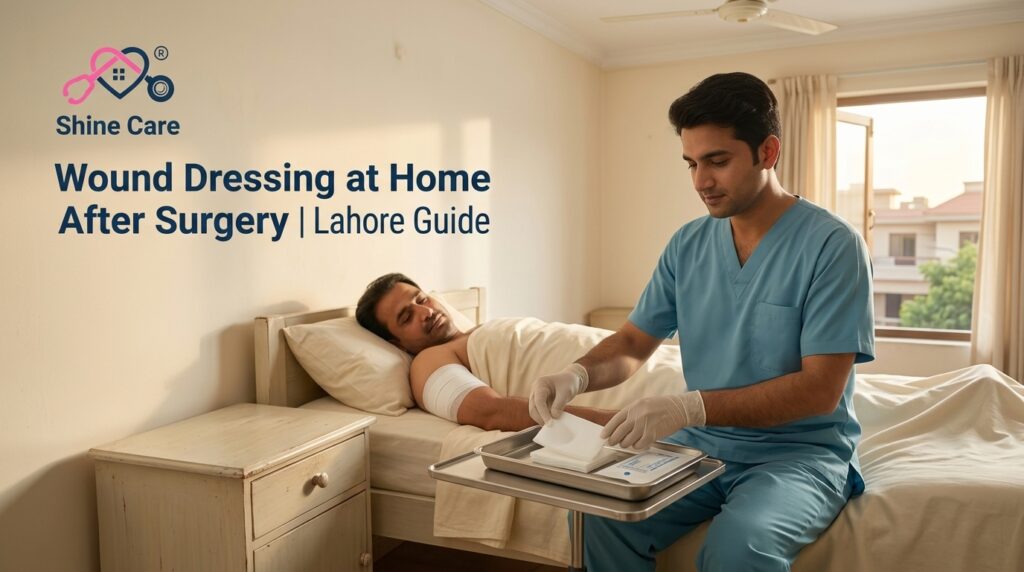
The operation went well. The patient is home. And now there is a dressing taped over a fresh surgical wound, a sheet of instructions nobody read properly in the discharge rush, and a family wondering whether they are supposed to touch it.
Wound dressing at home in Lahore goes wrong in predictable ways — dressings opened too early, wounds getting wet, home remedies applied with good intentions, and infections spotted three days later than they should have been. None of that is complicated to avoid. This guide covers what to do, what not to touch, and the signs that mean you call for help today.
The first 48 hours: leave it alone
This is the rule families break most often, usually out of care rather than carelessness. Somebody wants to check the wound, or thinks the dressing looks untidy, and opens it on day one.
NHS guidance from Cambridge University Hospitals on caring for a surgical wound is specific about this: the original dressing should stay in place for at least 48 hours, or as long as the doctor or nurse has instructed, provided the wound is not oozing. Within those 48 hours the wound must be kept dry. If the dressing does become wet with blood or any other fluid during that time, it needs changing rather than leaving.
The same guidance adds two habits that apply every single time a dressing is handled: wash your hands properly with soap and water first, and never touch the healing wound itself with your fingers.
That first sealed dressing is doing real work. Under it, the wound is closing. Opening it early breaks the barrier and introduces bacteria into a wound that had none.
Who should be changing the dressing
Some simple wounds can be managed by a family member once the surgeon has explained how. Many cannot.
A trained nurse should be doing the dressing when the wound is large or deep, when there is a drain in place, when the wound is oozing, when the patient has diabetes, when the surgeon has asked for a specific technique, or when the wound has already shown any sign of trouble.
The family’s role is to keep the area clean and dry, keep the patient from picking at it, look at the dressing daily without opening it, and know the warning signs. That last part is the most valuable thing you can do — you are the one in the room, and you will notice a change before anyone else.
One rule for everybody: if the surgeon said the dressing stays until the follow-up appointment, it stays until the follow-up appointment.
Keeping a wound dry in a Lahore summer
This deserves its own section because it is the practical difficulty here, and no international guide addresses it.
Surgical dressings are designed to stay dry. In Lahore between May and September, a patient lying in a room where the electricity has just gone will sweat — and sweat under a dressing softens the adhesive, lifts the edges, and creates exactly the warm, damp environment bacteria prefer.
What helps:
- Keep the patient’s room cool and moving air — a UPS-backed fan matters more than families expect during load-shedding hours
- Loose cotton clothing over the dressing area, never tight synthetic fabric
- Check the dressing edges daily. Lifting corners in hot weather are normal and need a nurse, not extra tape pressed on top
- Change bedsheets more often in summer than you normally would
- Keep the room dust-free. Windows open onto Lahore traffic and construction dust; use a screen or keep them closed during peak hours
If the dressing gets wet — from sweat, a spilled drink, or washing — it needs replacing rather than drying out. A wet dressing has stopped being a barrier.
Signs of infection, and when they appear
Most surgical wounds heal without any problem. A minority become infected, and the timing catches families out.
NHS guidance from Guy’s and St Thomas’ notes that a surgical wound infection can develop at any point from two or three days after the operation until the wound has healed, which is usually two to three weeks later — and occasionally an infection appears several months after surgery.
So the watching period is not two days. It runs for weeks.
Contact the doctor or nurse the same day if you notice:
- Redness spreading outward from the wound edges
- The skin around the wound becoming hot, swollen or increasingly painful
- Green or yellow discharge, or pus of any kind
- A bad smell from the wound or the dressing
- Fever, particularly with shivering
- The wound edges opening or separating
- Pain that is getting worse rather than better as the days pass
That last one is the most reliable early signal. Post-surgical pain should reduce a little each day. Pain that starts climbing again after several days of improvement is a wound telling you something.
When it becomes an emergency
A wound infection can spread into the bloodstream and become sepsis, which is a medical emergency requiring immediate treatment.
Seek emergency medical care immediately if the patient shows:
- High fever with shivering, or a temperature that will not come down
- Confusion, slurred speech, or unusual drowsiness
- Very fast breathing or breathlessness
- Passing much less urine than usual, or none for a day
- Skin that is mottled, blue-tinged or unusually cold and clammy
- Heavy bleeding from the wound that does not stop with firm pressure
Do not wait until morning to see whether these settle. In elderly patients particularly, sudden confusion is often the first sign of a serious infection, and it appears before the fever does.
What should never go on a surgical wound
Every family means well, and this is where good intentions cause the most damage in our households.
Nothing goes on a surgical wound except what the surgeon prescribed. That means no turmeric paste, no toothpaste, no ash, no mustard or coconut oil, no honey unless a doctor specifically prescribed a medical-grade dressing, no antiseptic bought on somebody’s advice at the pharmacy, and no talcum powder.
These substances are not sterile. Applied to a closing surgical wound, they introduce bacteria directly into it, and several of them also hide the early signs of infection — so by the time anyone realises there is a problem, it has had days to develop.
Also avoid:
- Picking at scabs or pulling loose stitch ends. Loose ends get trimmed by a nurse, not by hand
- Extra tape pressed over a lifting dressing. It traps moisture and does not fix the problem
- Cotton wool directly on the wound. Fibres stick to healing tissue
- Leftover antibiotics from a previous illness, or a family member’s prescription
- Scratching around the wound, however much it itches as it heals
Bathing and washing
Ask the surgeon exactly when the patient may shower, because it depends on the operation and the type of closure.
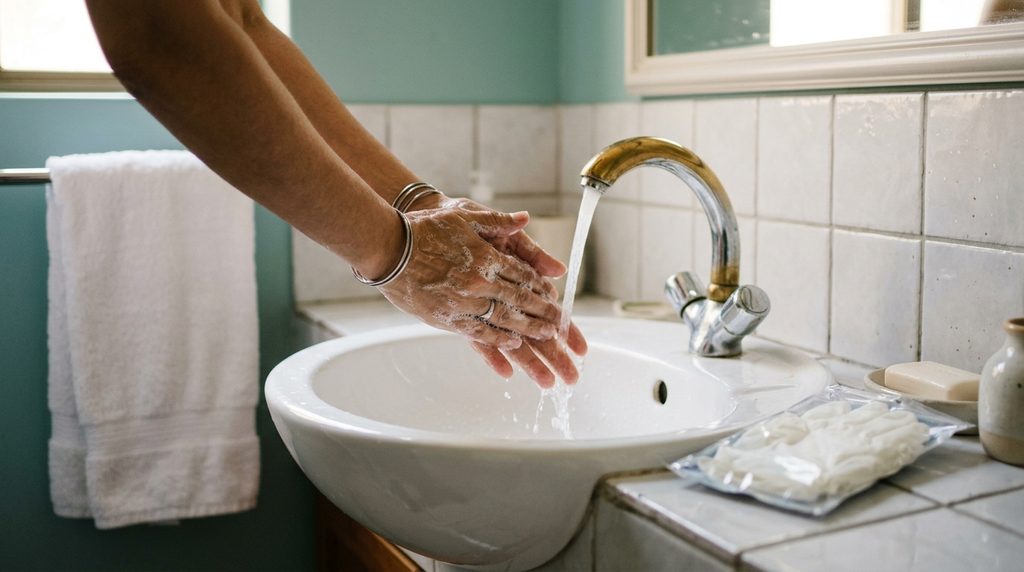
In general terms: the wound stays dry for the period the surgeon specified. After that, showering is usually preferred over bathing, since sitting in water soaks the wound. Do not scrub the area, do not use soap directly on the wound, and pat the surrounding skin dry with a clean towel rather than rubbing.
Once the wound has healed and the dressing is off, many wounds can be left uncovered. Some patients prefer to keep a light dressing on for protection, particularly where clothing rubs against the site.
What actually helps the wound heal
Dressing technique is only part of the picture. These matter as much:
- Protein and food. Wounds are rebuilt from protein. Eggs, daal, meat, milk and yoghurt genuinely speed healing, and patients who barely eat after surgery heal slowly
- Blood sugar control. For a diabetic patient this is the single biggest factor in whether the wound heals cleanly. High sugar slows healing and raises infection risk sharply
- Fluids, unless the doctor has restricted them
- Not smoking. Smoking reduces blood supply to healing tissue. If there was ever a moment to stop, this is it
- Gentle movement as the surgeon allows. Lying completely still brings its own risks, including chest infection and clots
- Sleep. Repair happens overnight, and pain that stops a patient sleeping should be reported rather than tolerated
Stitches, staples and follow-up
Some stitches dissolve on their own. Others, along with staples and clips, need removing — usually somewhere between five days and two weeks after surgery, depending on the operation and where on the body the wound is.
Ask before leaving hospital: do these stitches dissolve, and if not, when do they come out and who removes them? Write the date down. Stitches left in beyond their time can cause irritation and marking.
Removal is a clinical procedure and should be done by a trained nurse, not at home with household scissors — something we are asked about more often than you would expect.
Arranging wound care at home in Lahore
Most families managing a surgical wound at home fall into one of two situations.
Where the wound is part of a wider recovery — the patient is weak, on several medicines, needs help with mobility and hygiene, and has follow-up appointments to attend — that whole picture is post-surgery care at home. A nurse handles the dressing alongside everything else the recovery needs.
Where the patient is otherwise managing well and only the dressing itself needs a trained pair of hands, that is a short procedure at home — a nurse visits, changes the dressing properly, checks the wound and leaves.
Either way, having someone trained look at the wound regularly is what turns a small problem into a small problem, instead of a hospital readmission.
Frequently asked questions
Follow the schedule the surgeon set. It varies by operation and wound type. A dressing that is wet, dirty, loose or soaked through needs changing regardless of the schedule — but changing it more often than instructed does not help and increases the infection risk.
Yes. Itching usually means the wound is healing. Do not scratch it, and do not apply anything to relieve the itch without asking the doctor first.
A little clear or slightly blood-stained fluid in the first few days after surgery is common. Discharge that is thick, green, yellow or bad-smelling is not, and needs medical assessment the same day.
Only if the doctor prescribed one. Antiseptics bought over the counter can irritate healing tissue and are not a substitute for proper dressing technique.
Do not touch the wound. Cover it with a clean, dry dressing if you have one, keep the area dry, and arrange for a nurse or the treating team to look at it. Note the time it came off — the doctor will ask.
Most surface wounds close within about two to three weeks, though deeper tissue continues healing for months and the scar keeps changing for up to a year. Diabetes, smoking, poor nutrition and age all slow this down.
Ask the surgeon — for some operations it is fine, for others it is specifically not. Pressure on a fresh wound can slow healing and cause the edges to separate.
This guide is general information for families and does not replace the instructions given by the patient’s own surgeon or hospital. Dressing schedules, bathing advice and stitch removal are decided for each individual operation — always follow the plan your medical team provided. Never apply anything to a surgical wound that has not been prescribed. For high fever with shivering, sudden confusion, breathlessness, heavy bleeding or a rapidly worsening wound, seek emergency medical care immediately.