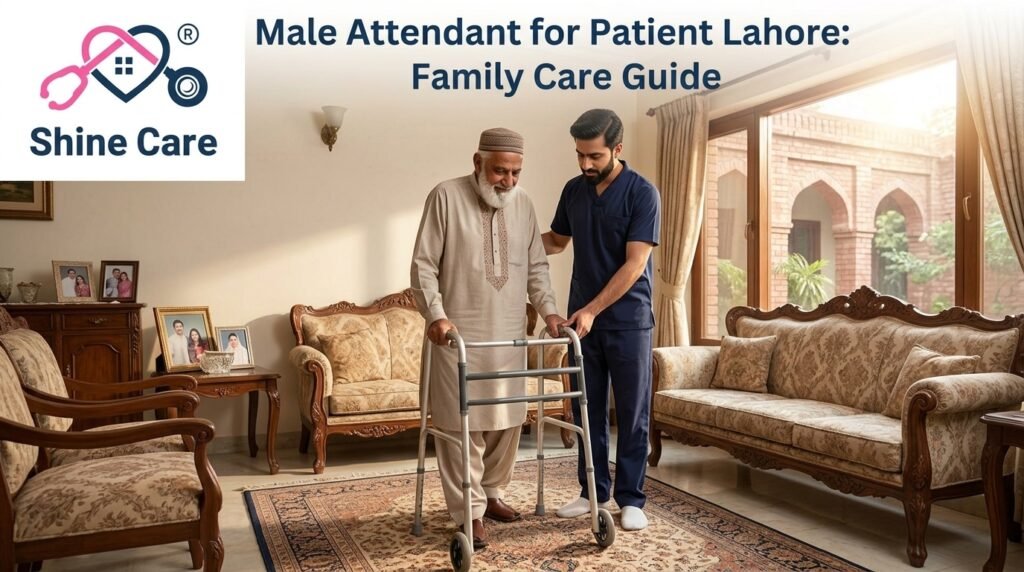
The family needed an attendant for the elderly father. He was 82, post-stroke, needed help with bathing, transferring, and going to the bathroom several times a day. Adult daughters had been managing but were exhausted, and the traditional Pakistani modesty considerations meant they were reluctant to help with intimate care beyond a certain point. The obvious answer was a male attendant. The agency, however, kept offering female attendants — cheaper, more available, easier to place. The family wondered if they were being unreasonable. Then they realised the question was not about being unreasonable — it was about matching the right attendant to what the patient actually needed, in dignity as much as in skill.
Choosing between a male and female attendant is one of the practical questions Pakistani families face when arranging home care, and it is a question the industry often does not address openly. This guide walks families through male attendant for patient Lahore realities — when a male attendant is essential, when a female attendant fits, and how to build an arrangement that respects both patient dignity and family comfort. Nothing here replaces the treating doctor’s clinical direction; this is the practical layer around gender-appropriate care.
Why the Gender Question Matters
Home care involves intimate physical contact — bathing, dressing, toileting, catheter care, wound care in private areas. In Pakistani households, cultural expectations about modesty are strong, and for many patients same-gender care preservation of dignity is not a luxury but a basic requirement. When the gender match is wrong:
- Patients refuse necessary care from a caregiver of the opposite gender
- Bathing, toileting, and personal hygiene are neglected
- Skin problems and pressure sores develop
- Patients become withdrawn and depressed
- Family conflict about care arrangements
- The whole arrangement fails
Getting the gender right at the start avoids all of these.
Who Does What at Home
- Doctor / Physician: Confirms the level and type of care needed. Not usually involved in gender decisions but may weigh in for specific care needs.
- Registered Nurse: Handles clinical tasks — medications, injections, wound care, catheter management. A trained home nurse comes in either gender, though same-gender matching is preferred for intimate clinical care.
- Attendant: Provides personal care — bathing, dressing, transfers, feeding, toileting support. This is where the gender question matters most.
- Family: Discusses openly with the patient (where possible) and among themselves what arrangement respects the patient’s dignity and needs.
For families in Lahore arranging attendant support, structured home health care services from a reputable provider should be able to supply male or female attendants matched to the patient’s needs — not just whichever is available.
When a Male Attendant Is Essential
Male Patients Requiring Intimate Physical Care
The most common scenario. An elderly male patient who needs bathing, toileting, catheter care, or perineal wound dressing changes usually requires a male attendant for the intimate care aspects. Cultural expectations aside, many male patients specifically refuse female attendants for these tasks — and that refusal is legitimate, not something to talk them out of.
Male Patients With Cognitive Changes
Dementia patients or those with cognitive impairment may become agitated with cross-gender intimate care in ways they cannot articulate. Same-gender attendant reduces distress.
Male Patients With Modesty as a Long-Standing Personal Value
Religious observance, cultural upbringing, or personal preference — patients who have lived their lives with strong modesty values deserve to continue that in illness.
Physical Transfer Needs
For heavier male patients needing lifting or complex transfers, a male attendant is often physically better suited. Not always necessary — modern transfer techniques and equipment reduce the strength requirement — but for very heavy patients or complex transfers, male strength helps.
Post-Prostate or Urological Surgery Recovery
Genital area care during recovery. Male patients almost always prefer male attendants for this.
Situations With Family Absence
When the patient’s own family cannot supervise intimate care (family working full-time, family abroad), a same-gender attendant provides the trust and appropriateness that would otherwise depend on family presence.
When a Female Attendant Fits
Female Patients Requiring Intimate Physical Care
The mirror image of the male case. Female patients needing bathing, toileting, or perineal care almost always require female attendants — cultural expectations in Pakistani households make this fairly universal.
Postnatal Mothers
New mothers recovering from delivery. Care includes wound care, breastfeeding support, personal hygiene. Almost always female attendants.
Gynaecological Patients
Post-hysterectomy, post-surgery, or during specific women’s health care.
Female Patients With Cognitive Impairment
Distress from cross-gender care in disoriented patients.
Elderly Widowed Female Patients
Living alone or with adult children. Female attendant maintains the modesty the patient has kept her whole life.
Male Patients Where Intimate Care Is Not the Primary Need
For male patients whose care needs are mainly medication support, feeding assistance, mobility support, and companionship, female attendants sometimes fit — with the family and the patient having discussed and accepted this. Not universal.
Situations Where Either Can Work
Non-Intimate Daily Support
Meal preparation, medication reminders, companionship, help with sitting up, light mobility assistance — often gender-neutral if the patient is comfortable.
Nursing Tasks by Registered Nurses
Some families accept a nurse of any gender for clinical tasks (wound dressings, injections, monitoring) even where they would want a same-gender attendant for personal care. Different task, different considerations.
Companionship Only
For patients whose primary need is presence and conversation — a common arrangement for elderly patients — gender is often less critical.
Where the Patient Is Comfortable
Ultimately, patient comfort is a large factor. Some patients are entirely comfortable with cross-gender care for all tasks. Others are not. Ask the patient where they can be asked; observe carefully where they cannot.
The Practical Realities
Male Attendants Are Less Available
The home care workforce in Pakistan is majority female. Male attendants specifically trained for patient care are less common. This does not mean unavailable — reputable providers maintain male attendant capacity — but families may face:
- Slightly longer wait to start
- Fewer candidates to choose from
- Sometimes higher cost due to demand
- Need to be more specific in what you request
Male Attendants in Certain Care Types
For very heavy patients, physically demanding transfers, or specific male-patient needs, male attendants are worth waiting for rather than accepting a female attendant who cannot manage the physical requirements safely.
Family Comfort Matters
Beyond the patient, the family’s comfort with a stranger (of any gender) in the house also matters. An unmarried adult daughter alone at home may prefer a female attendant. Elderly parents may prefer female attendants for cultural reasons even for male patients. These considerations are legitimate.
Live-In vs Day-Shift Arrangements
Live-in attendants require additional consideration — where do they sleep, how does the household routine accommodate them, does the gender make sense for continuous presence in a household with mixed family members.
Common Care Combinations
Male Patient With Male Attendant + Female Nurse
Common arrangement. Male attendant handles daily personal care. Female nurse (or male, depending on availability) handles scheduled clinical tasks. The attendant provides continuity; the nurse provides clinical skill.
Female Patient With Female Attendant Only
For female patients with less complex clinical needs, a female attendant alone with periodic nurse visits often works well.
Elderly Couple With Two Attendants
Some families arrange one male attendant for the husband and one female attendant for the wife, both supporting the elderly couple through the day.
Male Patient With Female Nurse Plus Male Attendant
Nurse for clinical tasks (often less intimate), male attendant for personal care.
Rotating Attendant Coverage
For 24-hour needs — day attendant of appropriate gender, night attendant may be the same or different depending on the household setup.
Task-by-Task Gender Considerations
Bathing
Most gender-sensitive task. Same-gender almost always preferred.
Toileting Support
Same-gender for intimate care aspects. Cross-gender sometimes acceptable for stable patients using commode chairs where the attendant provides support but not intimate contact.
Catheter Care
Same-gender for meatal cleaning and any manipulation. Cross-gender sometimes acceptable for bag emptying.
Perineal Wound Dressings
Same-gender strongly preferred.
Dressing and Undressing
Same-gender preferred, especially for fully-clothed changes involving underwear.
Transfers and Mobility
Physical support only — gender-neutral for most patients. Physical capacity matters more than gender for heavy transfers.
Feeding Assistance
Gender-neutral for most patients.
Medication Administration
Gender-neutral. Trained skill matters.
Companionship and Conversation
Gender-neutral for most patients. Some elderly prefer companionship from a specific gender based on their comfort.
Overnight Positioning
Gender-neutral for most tasks. Same-gender preferred where any exposure is involved.
Coordinating With Coexisting Conditions
Attendant arrangements sit alongside management of coexisting conditions. Coordinated care for elderly at home usually addresses multiple factors together — attendant support alongside ongoing management of hypertension care and diabetes care. The gender-appropriate attendant handles personal care; a coordinated visiting doctor arrangement handles clinical review.
Common Situations at Home
Post-Stroke Elderly Male Patient
Male attendant essential for intimate care. Physiotherapy may be either gender depending on availability and comfort. Nurse visits either gender.
Postnatal Mother
Female attendant essential. Baby nurse also female typically. Female obstetrician or gynaecologist follow-up.
Elderly Widowed Woman Living Alone
Female attendant, ideally similar background so conversation and cultural expectations align.
Bedridden Elderly Male
Male attendant for personal care. May need physical strength for turning and transfers. Female nurse for scheduled clinical tasks acceptable.
Terminal Care Male Patient
Male attendant for personal care. Female family members or nurse present for emotional support and non-intimate tasks.
Post-Surgery Female Patient
Female attendant for personal care and wound-adjacent hygiene. Male doctors and nurses may still be involved in the medical care with usual professional norms.
Elderly Male Patient in Household With Adult Daughters
Male attendant handles intimate care, sparing the daughters from having to do it themselves. Preserves family relationships alongside patient dignity.
Discussing With the Patient
Where the patient is cognitively able to participate:
- Ask directly what they prefer
- Respect the answer even if it seems to make the arrangement harder
- Explain the practical considerations openly
- If a preferred arrangement is not feasible, discuss compromises
- Do not pressure the patient into accepting something they are uncomfortable with
- Where the patient cannot participate, family decides based on what they know of the patient’s values
Discussing With the Family
Different family members may have different comfort levels. Common discussions:
- Adult daughters uncomfortable providing intimate care to elderly fathers
- Adult sons uncomfortable providing intimate care to elderly mothers
- Elderly spouses unable physically to provide the care their partner needs
- Household with children where a male attendant’s presence changes the household dynamic
- Unmarried adult woman living with elderly parents where a male attendant creates comfort considerations
Open family discussion about these before hiring produces sustainable arrangements. Discomfort raised after the arrangement starts causes disruption.
Working With the Provider
Be Specific About Gender Requirements
“We need a male attendant” is a clear request. “Someone available” invites whatever the provider has.
Ask About Availability
Male attendants may take longer to arrange. Plan ahead where possible.
Confirm the Match
Before the attendant starts, confirm gender, background, and specific experience.
Meeting First Where Feasible
Ideally meet the attendant before day one. Confirms fit and comfort.
Trial Period
First two weeks effectively a trial. Ability to change if the fit is not right.
Written Confirmation
Contract confirms the gender agreed. Prevents surprise substitutions.
What Reputable Providers Offer
- Both male and female attendant options
- Genuine attendants trained in patient care, not general helpers
- Ability to match gender to patient needs
- Backup arrangements maintaining gender consistency where possible
- Transparent discussion of availability and any wait times
- Respect for family cultural and personal preferences
- No pressure to accept inappropriate matches
Providers who consistently offer whatever attendant is available regardless of patient need are worth reconsidering.
Common Mistakes Families Make
Accepting Whoever Is Available
Convenience over appropriateness. Leads to patient distress and often to arrangement failure within weeks.
Not Asking the Patient
Where the patient can express preference, family sometimes overrides based on their own assumptions. Ask.
Assuming Family Members Can Manage Long-Term
Adult daughter doing intimate care for elderly father because “we cannot get a male attendant”. Sometimes necessary short-term; often unsustainable long-term. Persist in finding appropriate attendant support.
Not Being Specific With the Provider
Vague requests get vague fulfilment. Specific requests get specific matches.
Not Discussing Openly With Family
Different family members’ comfort levels not aired. Conflict later.
Not Reviewing the Arrangement
Initial arrangement may not fit patient’s evolving needs. Regular review.
Accepting Cross-Gender Care for Uncomfortable Patient
Because “she should accept help” or “he is being difficult”. Patient discomfort about intimate care is not stubbornness — it is dignity.
Not Building Backup Plans
Preferred attendant unavailable one day — is there a backup of the same gender? Ask providers.
The Cost Consideration
Male attendants sometimes cost slightly more, particularly for specialised needs or if male attendants are locally scarcer. The cost difference is usually modest and worth paying for appropriate care. Trying to save by accepting a female attendant for a patient who really needs a male one usually costs more in terms of care quality, patient wellbeing, and arrangement stability.
Special Considerations
Elderly Couples
Two patients, different genders, different needs. Two attendants (one male, one female) is often the appropriate arrangement rather than one attendant expected to manage both.
Overseas Adult Children
Coordinating from a distance. Discuss with local family or trusted contacts about what arrangement respects the parent’s values. Do not assume from abroad without local input.
Live-In Attendants
Additional considerations about household layout, sleeping arrangements, presence of children and other family members.
Patients With Complex Trauma History
Some patients — abuse survivors, patients with specific past experiences — have strong preferences for one gender of caregiver. Respect this without requiring explanation.
Non-Muslim Households
Cultural expectations vary across communities. Same principles apply — respect patient and family preferences.
Younger Patients
Adults in their 30s, 40s, 50s with disability or illness. Cultural expectations similar to elderly patients. Gender-appropriate care usually preferred.
Red Flags: When the Attendant Match Is Not Working
Signs the current arrangement needs review:
- Patient refusing personal care
- Patient becoming withdrawn or distressed around the attendant
- Family conflict about the arrangement
- Personal hygiene deteriorating
- Skin problems developing from inadequate care
- Patient asking for changes but being overridden
Any of these deserves conversation with the provider and, if not resolved, arrangement change.
For medical emergencies, contact the doctor or take the patient to the emergency room / call 1122 immediately. For patient-friendly background on home care and personal care support, general home care resources cover the practical dimensions.
FAQs
For non-intimate tasks yes, if the patient and family are comfortable. For intimate care (bathing, toileting, catheter and perineal care), most Pakistani families and patients prefer same-gender attendants. Respect the preference.
Generally yes — the home care workforce is majority female. Reputable providers maintain male attendant capacity but availability may be slightly less flexible. Plan ahead where possible.
For intimate clinical tasks yes, ideally. For general clinical tasks (medication administration, monitoring, wound care in non-intimate locations), cross-gender is often acceptable. Depends on the specific task and patient comfort.
Family decides based on what they know of the patient’s values and cultural background. For most Pakistani elderly, same-gender attendants for intimate care is a safe default.
Both options exist. Hiring directly gives more control but places verification and backup responsibility on the family. Reputable agencies handle verification, backup, and provide accountability. Both have advantages.
Discuss with reputable providers about their male attendant pipeline. Interim family arrangements while waiting for the right attendant. Do not permanently accept an inappropriate arrangement for the sake of immediate availability.