If you’re reading this, chances are someone in your family needs care right now, or will soon, and you’re trying to figure out who to trust with that responsibility. Maybe it’s a father recovering from surgery, a mother whose memory has started slipping, or a grandparent who’s simply become too frail to manage alone. Whatever brought you here, the question you’re really asking isn’t just “which is the best home nursing service in Lahore” — it’s “who will actually take proper care of my family member the way I would, if I had the training and the time.”
That’s a fair question, and it deserves a fair, honest answer rather than a sales pitch dressed up as an article. So this piece is going to walk through what actually matters when choosing home nursing in Lahore, what different providers typically offer, and how to evaluate one against another — including where Shine Care fits into that picture.
Why Home Nursing Has Become So Common in Lahore
A decade ago, hiring a nurse to come to your house was something most families in Lahore only did as a last resort, usually arranged quietly through a hospital contact or a relative’s recommendation. That’s changed noticeably. More Lahori households now have adult children working abroad, more elderly parents are living independently rather than under one roof with extended family, and hospitals discharge patients earlier than they used to once the acute risk has passed, with the expectation that recovery continues at home.
At the same time, awareness has grown. Families have started to understand that “someone at home to help” and “a trained nurse actively managing a real medical need” are two very different things — and that treating them as interchangeable can have real consequences, from a missed medication dose to an infected wound that goes unnoticed a day too long.
This is the backdrop against which home nursing Lahore families are searching for has grown from a niche service into something much closer to mainstream healthcare.
What “Home Nursing” Actually Covers
Before comparing providers, it helps to understand the range of services that typically fall under home nursing, since not every provider offers the same breadth, and not every patient needs all of it.
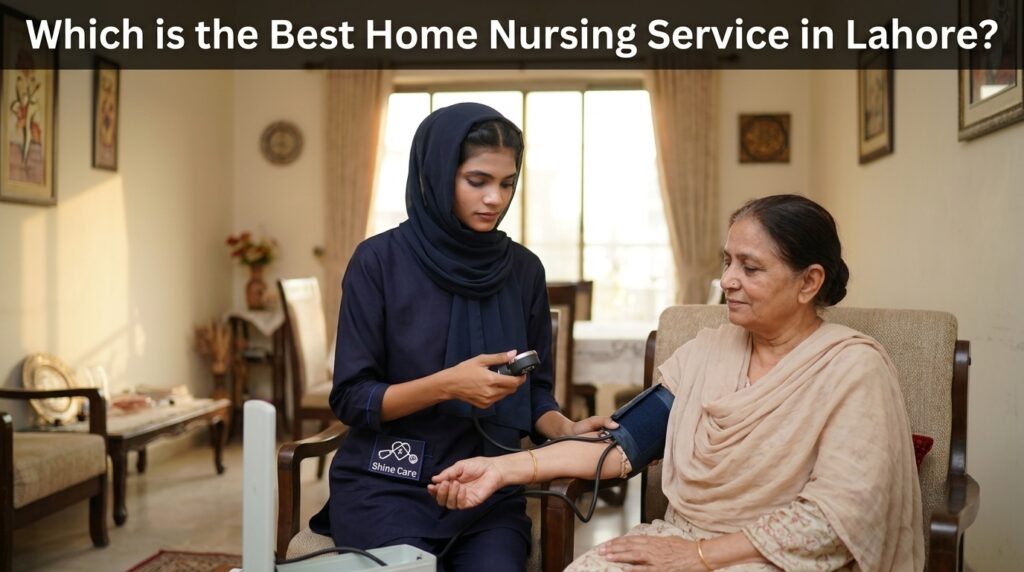
Home Nursing and General Patient Care This is the foundation — a trained nurse managing daily medical needs: medication administration, vitals monitoring, and general clinical oversight for a patient recovering or living with an ongoing condition.
Elderly Care Support for aging patients that combines medical awareness with daily living assistance — mobility help, medication reminders, and companionship, often for patients who are medically stable but can no longer manage independently.
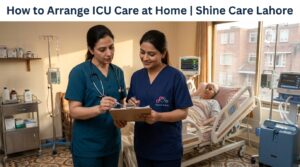
ICU Care at Home For patients who need intensive monitoring — ventilator support, oxygen management, continuous vitals tracking — brought into the home environment instead of an extended hospital stay, where clinically appropriate.
Doctor Visit at Home Coordinated visits from a physician for patients who can’t easily travel to a clinic, particularly useful for routine check-ups or urgent assessments without the stress of a hospital trip.
Physiotherapy On-site physical therapy sessions supporting recovery from surgery, stroke, or mobility-limiting conditions, often working alongside the nursing care plan rather than as a separate, disconnected service.
Injection Services and IV Drip At-home administration of prescribed injections and intravenous drips, handled with the same clinical precision expected in a hospital setting.
NG Tube and Catheter Care Specialized management for patients who need nasogastric feeding tube support or catheter maintenance — tasks that require real clinical training, not general caregiving.
Wound Dressing Regular, properly technique-driven wound care, critical for preventing infection during post-surgical recovery or for patients with chronic wounds.
Medical Equipment Rental Access to hospital beds, oxygen concentrators, wheelchairs, and other equipment needed to make home care safe and practical, without a family having to purchase expensive equipment outright.
Dementia Care, Stroke Care, and Parkinson’s Care Each of these conditions comes with its own specific caregiving demands — memory-related communication approaches for dementia, mobility and feeding support for stroke recovery, and precise medication timing for Parkinson’s. Treating them as one generic “elderly care” category tends to miss what actually matters for each condition.
Diabetes Care Ongoing monitoring and management for a condition that requires daily consistency — blood sugar checks, medication timing, and dietary awareness.
Mother & Baby Care Postpartum support for new mothers and newborn care in the first weeks after delivery, when both physical recovery and round-the-clock infant needs can overwhelm a household.
Bedridden Patient Care Comprehensive support for patients who cannot move independently — positioning to prevent bedsores, hygiene care, feeding assistance, and constant monitoring for complications that immobility can cause.
How to Compare Home Nursing Providers in Lahore
This is really the core of the decision, and it’s worth being deliberate about it rather than choosing based on whoever answers the phone fastest.
| Comparison Factor | What to Look For | Why It Matters |
|---|---|---|
| Staff verification | Background checks, reference verification before placement | You’re trusting someone in your home, often alone with a vulnerable family member |
| Condition-specific matching | Staff assigned based on relevant experience with the specific condition | A nurse experienced in post-surgical wound care isn’t automatically right for a dementia case |
| Replacement policy | A clear plan if the assigned nurse is unavailable | Care shouldn’t simply stop because one person had an emergency |
| Range of services | Ability to cover multiple needs (nursing, physiotherapy, equipment) under one coordinated plan | Reduces the burden of managing multiple separate vendors |
| Ongoing communication | Regular check-ins and willingness to adjust the care plan | Patient needs change over time; a fixed arrangement can stop making sense within weeks |
| Transparency | Clear answers about pricing, staff qualifications, and what’s included | Vague answers to direct questions are a warning sign |
| Local presence | Actual coverage of your specific area in Lahore | A provider unfamiliar with your locality may struggle with logistics and response times |
| Honesty about limitations | Willingness to say when a hospital or specialized facility is the safer option | A provider that accepts every case regardless of fit isn’t necessarily acting in the patient’s best interest |
Walking through this table with any provider you’re considering — including us — is a reasonable and fair way to make the decision, rather than relying on advertising claims alone.
Questions Worth Asking Before You Hire Anyone
- How exactly do you verify your nursing staff before placement?
- What happens if the assigned nurse can’t come on a particular day?
- Can you match staff based on my family member’s specific condition, or is it a general assignment?
- Do you offer a trial period or an initial assessment before committing to a long-term arrangement?
- What is genuinely included in the quoted price, and what would cost extra?
A provider that answers these clearly and specifically, rather than vaguely, is usually one worth taking seriously.
Where Shine Care Fits Into This
Shine Care operates as a home nursing service in Lahore built around a fairly simple principle — that the level of coordination and professionalism families expect from a good hospital shouldn’t disappear once care moves into the home.
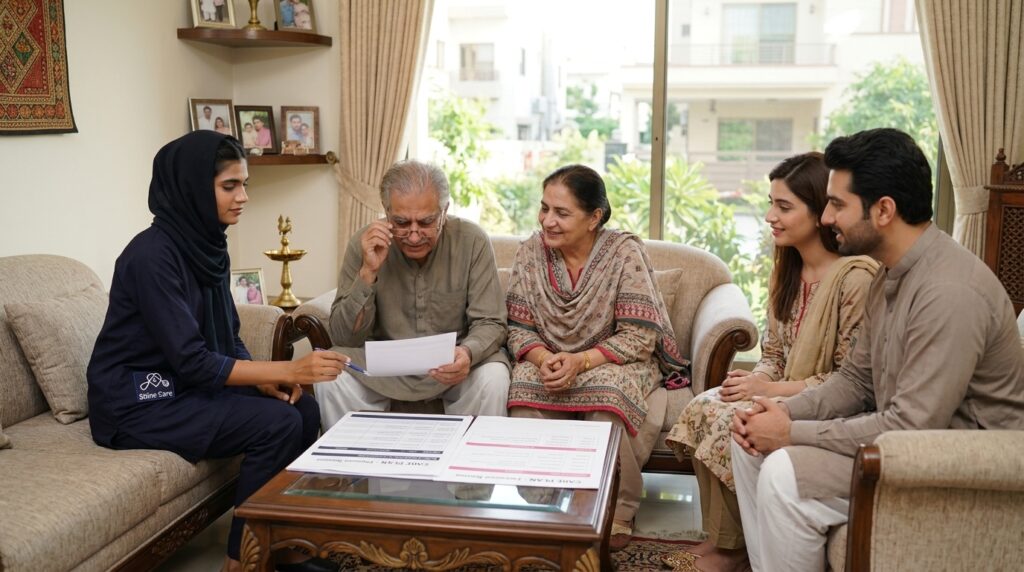
In practice, this means every case starts with an actual conversation about the patient’s condition, medical history, and daily routine, rather than a generic intake form. Nurses are placed based on relevant experience with the specific situation — whether that’s post-operative wound care, diabetes management, dementia-specific communication, or general elderly support — and every staff member goes through background verification before being introduced to a family.
We also maintain a replacement system, so a family isn’t left without coverage if a nurse has an emergency, and we stay in touch throughout the care period, adjusting the arrangement as needs shift, which they typically do over time, especially with progressive conditions like Parkinson’s or dementia.
We’re not going to claim to be the only option in Lahore, or make promises we can’t actually back up. What we can say is that our approach is built around matching real expertise to real needs, and being honest with families about what level of care their situation actually requires — including telling a family when a hospital setting is the safer choice, rather than accepting every case regardless of fit.
Areas We Serve in Lahore
Shine Care provides home nursing and elderly care services across Lahore, including DHA, Gulberg, Model Town, Johar Town, Bahria Town, Valencia Town, Faisal Town, Wapda Town, Cantt, Askari, and Garden Town. If your area isn’t listed here specifically, it’s worth reaching out directly to confirm coverage, since service areas do expand over time.
Common Mistakes Families Make When Choosing Home Nursing
Choosing based on price alone. The cheapest option sometimes reflects lower staff training standards or no real verification process. This doesn’t mean the most expensive option is automatically best either — it means price should be one factor among several, not the deciding one.
Not asking about condition-specific experience. A nurse capable of general elderly care isn’t automatically equipped for stroke recovery or dementia-specific communication. Always ask directly.
Assuming all providers have a replacement policy. Many don’t, and families only discover this the day their nurse doesn’t show up. Confirm this upfront.
Treating the first arrangement as permanent. Patient needs change, especially with progressive conditions. A good provider revisits the care plan regularly rather than assuming the initial setup will work indefinitely.
When Home Nursing Is the Right Choice — and When It Might Not Be
Home nursing works well when a patient is medically stable enough to be managed outside a hospital setting but still needs consistent clinical attention — post-surgical recovery, chronic disease management, elderly care, or supervised recovery from a stroke, for instance.
It may not be the right fit, at least temporarily, for patients who are medically unstable and need continuous, complex monitoring only a hospital or ICU can safely provide. An honest provider will tell you this directly rather than accepting a case that isn’t appropriate for a home setting.
Frequently Asked Questions
If there’s an active medical need — medication management, wound care, monitoring for complications — a nurse is the right choice. If the main requirement is daily support like bathing, mobility, and companionship without medical tasks, a caregiver or attendant may be sufficient. A good provider will help you work through this distinction during an initial conversation.
Costs vary depending on the type of care, shift length, and the patient’s specific condition. Rather than relying on a fixed number that may be outdated by the time you read this, it’s best to request a direct quote based on your actual situation.
For patients who are medically stable and past the acute risk period, yes, generally. For patients who are unstable or need continuous intensive monitoring, a hospital or ICU setting remains the safer option, and a responsible provider will say so.
This depends on current availability, but most reputable providers can usually arrange an assessment call and match a nurse within a short timeframe, with urgent post-discharge cases typically prioritized.
Most established providers, including Shine Care, accommodate family preferences for male or female nursing staff wherever possible — this is worth confirming directly.
A reliable provider will have a replacement system in place so care isn’t interrupted. This is one of the most important questions to ask before committing to any provider.
Yes, meaningfully so. Dementia care requires a specific communication approach suited to memory-related confusion, and staff should have relevant experience beyond general elderly caregiving.
Yes, many home nursing providers, including Shine Care, coordinate physiotherapy sessions alongside the broader nursing care plan, particularly important for stroke or post-surgical recovery.
Confirm directly with the provider whether they cover your specific locality, since coverage areas vary. Established providers typically list their service areas clearly and can confirm quickly over a call.
Yes, this is one of the practical advantages of choosing a provider with a broad service range — it reduces the burden of coordinating multiple separate vendors for what is often an interconnected recovery process.
Making the Decision
There isn’t a single, universally “best” home nursing service in Lahore that fits every family’s situation identically — what matters is finding a provider whose staff verification, condition-specific matching, communication, and honesty align with what your family member actually needs. Walking through the comparison factors above with any provider you’re considering, including Shine Care, is a reasonable way to make this decision with confidence rather than guesswork.
If you’re currently trying to figure out the right care arrangement for a family member in Lahore, reach out to Shine Care for a direct, honest conversation. We’ll talk through your specific situation, help you understand what level of care genuinely makes sense, and be upfront about what we can and can’t offer — because the goal isn’t just to fill a booking, it’s to make sure your family member is actually well cared for.