
When a loved one is unconscious or cannot swallow, families usually focus on the big things: oxygen, feeding, medicines, turning. The mouth gets forgotten. Within a few days it can become dry, cracked, coated and painful, and germs from the mouth can travel into the lungs.
Our nurses look after many unconscious and bedridden patients in Lahore homes, and mouth care is one of the first things they check on a new visit. Done gently and correctly, it takes about ten minutes, protects the lungs and keeps your loved one comfortable and dignified.
This guide explains what you need, the safe method step by step, how often to do it and when to call a nurse or doctor.
In short: clean the teeth and gums gently twice a day with a soft toothbrush, keep the mouth and lips moist every few hours, keep the head raised or turned to the side, and never let fluid pool in the mouth.
Why Mouth Care Matters So Much
A person who cannot eat, drink or swallow normally loses the natural cleaning that saliva and chewing provide. Mouth breathing and oxygen therapy dry the mouth even more. As a result:
- Plaque builds up quickly on teeth, gums and the tongue
- Infections like oral thrush (white patches) become common
- Germs can be breathed into the lungs, which raises the risk of chest infection and aspiration pneumonia
- Cracked lips and ulcers cause pain the patient cannot tell you about
In the UK, the NICE guideline on oral health in care homes asks care staff to include mouth care in every resident’s daily care plan, because people who depend on others for care are at higher risk of mouth problems. The same thinking applies at home.
What You Need Before You Start
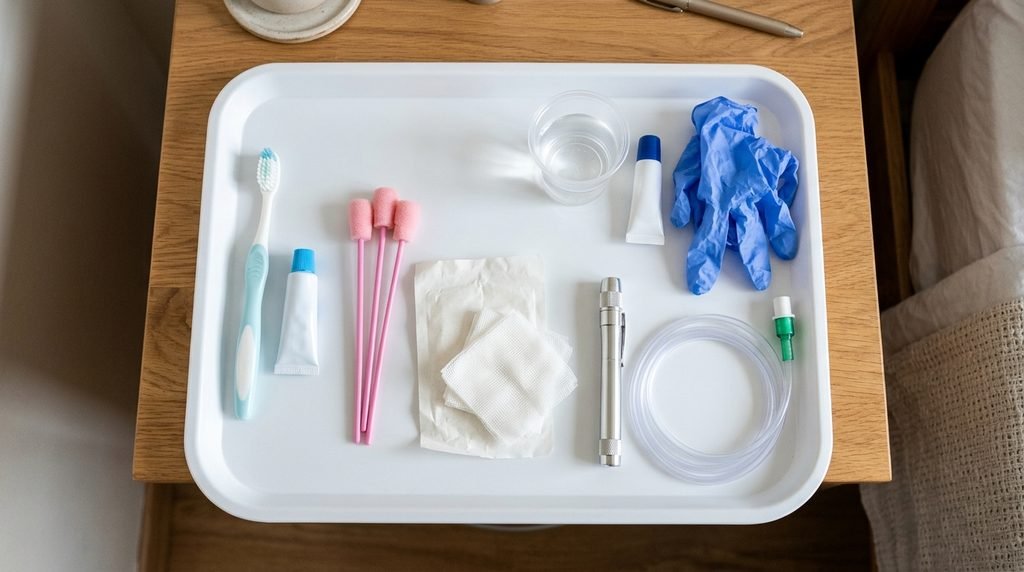
Keep a small tray with these items next to the bed:
- Disposable gloves
- A soft, small headed toothbrush (a child size brush works well)
- A tiny smear of fluoride toothpaste, or as advised by the doctor
- A small cup of clean water (boiled and cooled)
- Mouth swabs or soft gauze wrapped around a finger of a gloved hand, used only on the outside of the teeth
- A towel or tissue under the chin
- A suction machine with a soft suction catheter, if the patient has a lot of secretions
- Water based lip moisturiser
- A torch to look inside the mouth
Avoid lemon and glycerine swabs. They can dry the mouth further. Use a mouthwash only if the doctor has prescribed one.
Step by Step Mouth Care for an Unconscious Patient
- Talk to the patient. Many unconscious patients may still hear. Say their name and explain what you are about to do.
- Wash your hands and wear gloves.
- Position safely. Raise the head of the bed to about 30 to 45 degrees and turn the head to one side, or lay the patient on their side. This lets fluid drain out instead of going down the throat.
- Look inside the mouth with a torch. Check for bleeding, white patches, ulcers, loose teeth or food stuck in the cheeks.
- Remove dentures if present, and clean them separately.
- Brush gently. Dip the toothbrush in water and shake off the extra. Brush the outer surfaces of the teeth and the gum line with small circular movements, then the inner surfaces and the tongue. Use only a very small amount of toothpaste so there is little foam.
- Clear the mouth. Use a swab or gauze to wipe away loosened debris from the cheeks and gums. If secretions collect, use gentle suction.
- Moisten the mouth with a damp swab, not by pouring water in.
- Care for the lips. Apply a thin layer of water based moisturizer.
- Dispose of used items, remove gloves and wash hands. Note in the daily chart anything unusual you saw.
Our suctioning at home service teaches families how to clear secretions safely if this step worries you.
Safety Rules You Must Follow
- Never put your fingers between the teeth of an unconscious patient. A reflex bite can cause a serious injury.
- Never pour water into the mouth. Use a damp brush or swab only.
- Always keep the head raised or turned to the side during and after mouth care.
- Avoid petroleum jelly on the lips if the patient is on oxygen. Use a water based product instead.
- Stop and suction if you hear gurgling or the patient starts to cough or choke.

How Often Should Mouth Care Be Done?
| Task | How often |
|---|---|
| Brushing teeth, gums and tongue | Twice a day, morning and night |
| Moistening the mouth with a damp swab | Every 2 to 4 hours, more often if on oxygen |
| Lip moisturiser | Every few hours and after each mouth care |
| Denture cleaning | Every day, store dry or as advised overnight |
| Mouth check with a torch | At least once a day |
Patients on oxygen, on a ventilator or breathing through the mouth often need more frequent moistening. Your nurse can set the right routine as part of the daily care checklist for a bedridden patient.
Special Situations
Patients with a feeding tube
Patients fed through an NG or PEG tube still need full mouth care, even though nothing goes into the mouth. In fact, their mouths often get dirtier because saliva flow drops. See our guide to feeding tube care at home for keeping the tube itself clean.
Patients with a tracheostomy or on a ventilator
These patients need careful positioning and often suction during mouth care. A trained nurse should do it or supervise it until the family is confident. Our tracheostomy care at home nurses include mouth care in every shift.
Patients with dentures
Take dentures out of an unconscious patient’s mouth, as they can slip and block the airway. Clean them daily, label the case, and keep them safely for when the patient wakes or the doctor allows them back.
Patients with bleeding gums or low platelets
Use an extra soft brush or soft swabs and ask the doctor before brushing if platelets are very low.
Warning Signs: When to Call a Nurse or Doctor
Call your nurse or doctor if you notice:
- White patches that do not wipe off easily, which may be thrush
- Bleeding that does not stop
- Swelling in the gums, cheek or jaw
- Bad smell that does not improve with cleaning
- Ulcers or sores that last more than a few days
- Fever, fast breathing or rattling in the chest, which may mean a chest infection
If breathing suddenly becomes difficult, call 1122 or go to the nearest hospital emergency.
Mistakes Families Commonly Make
From what our nurses see on home visits, the same few mistakes come up again and again:
- Cleaning only the front teeth and skipping the gums and tongue
- Using too much toothpaste, which creates foam the patient cannot spit out
- Doing mouth care with the patient lying flat
- Stopping mouth care because “he is not eating anything”
- Using hard cotton sticks that scratch the gums
None of these come from carelessness. Families are simply never shown how. A single demonstration by a nurse usually fixes them.
How Shine Care Can Help
Mouth care is part of every bedridden and unconscious patient’s routine with our team. Our nurses provide bedridden patient care at home, patient hygiene care and post ICU care at home across Lahore. They also train family members so care continues properly between visits. Learn more about our home nursing services in Lahore.
Frequently Asked Questions
Brush the teeth, gums and tongue twice a day and moisten the mouth with a damp swab every two to four hours, more often if the patient is on oxygen or breathes through the mouth.
Yes, but only a very small smear so that little foam forms. Keep the head raised or turned to the side and wipe away any excess.
Yes. Patients fed through an NG or PEG tube still need full mouth care twice a day because their saliva flow drops and plaque builds up quickly.
Use a water based lip moisturizer. Avoid petroleum jelly if the patient is on oxygen.
They can dry out the mouth and irritate the gums. A soft toothbrush, plain water and a damp swab are safer for daily care.
This article is general health information. Follow the advice of your doctor or nurse for your loved one’s specific condition.