
Your mother’s BP machine shows 150/90 in the morning. By evening it says 128/78. Which number is right, and is it normal for her age?
Our nurses hear this question in Lahore homes almost every week. Many families believe a higher reading is fine once someone crosses 60. That belief feels comforting, but it is one of the most common reasons high BP goes untreated in older parents.
This guide explains normal blood pressure by age in plain words, shows you a chart you can keep on the fridge, and tells you when a reading needs a doctor today.
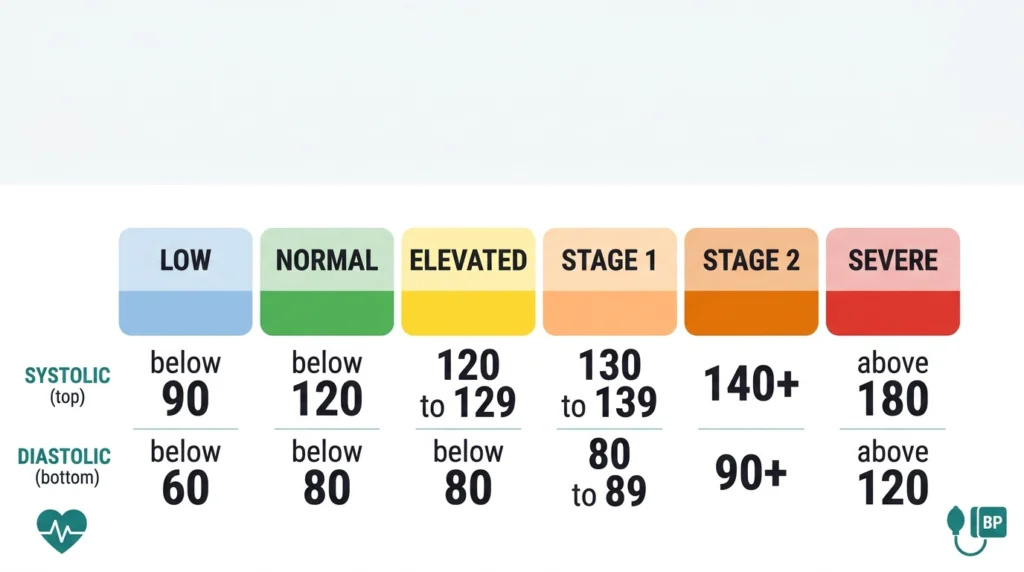
Quick answer: For every adult, including elderly parents, normal blood pressure is below 120/80 mmHg. A top number of 120 to 129 is elevated. 130/80 or higher is high blood pressure. Below 90/60 is low. Age changes the target a doctor sets for treatment, not the meaning of normal.
What the Two BP Numbers Mean
Every reading has two numbers, written like 120/80.
- Systolic (top number): the pressure in your arteries when the heart squeezes and pushes blood out.
- Diastolic (bottom number): the pressure when the heart relaxes between beats.
Both are measured in mmHg (millimetres of mercury). A digital machine also shows a third number, usually marked PR or Pulse. That is the heart rate, not blood pressure.
If one number looks normal and the other does not, go by the higher category. A reading of 118/92 counts as high, even though 118 looks perfect.
Normal Blood Pressure Chart for Adults
These categories come from the latest American Heart Association and American College of Cardiology guideline, published in 2025. The 2025 high blood pressure guideline kept the same cut points used since 2017.
| Category | Top number (systolic) | Bottom number (diastolic) | What it means at home |
|---|---|---|---|
| Low | below 90 | or below 60 | Watch for dizziness, weakness or fainting |
| Normal | below 120 | and below 80 | Keep healthy habits, check regularly |
| Elevated | 120 to 129 | and below 80 | Early warning, cut salt and walk daily |
| High, stage 1 | 130 to 139 | or 80 to 89 | Discuss with a doctor, recheck often |
| High, stage 2 | 140 or higher | or 90 or higher | Needs a doctor’s plan, usually medicine |
| Severe | above 180 | and/or above 120 | Recheck after 5 minutes; see the urgent section below |
Normal Blood Pressure by Age: Does It Really Change?
As we age, arteries become stiffer. Because of this, the top number often creeps up after 50, while the bottom number may stay the same or even fall a little. So yes, readings tend to rise with age.
But common does not mean healthy. A 70 year old with 150/90 carries a higher risk of stroke, heart attack, kidney damage and memory decline than one with 125/75. The 2025 guideline also points out that keeping BP under control in middle and older age lowers the risk of dementia.
Here is how doctors usually think about it by age group:
| Age group | Normal reading | Usual treatment target set by doctors | What families should watch |
|---|---|---|---|
| 18 to 39 | below 120/80 | below 130/80 if treated | Stress, weight, salty fast food |
| 40 to 59 | below 120/80 | below 130/80 for most people | Diabetes, cholesterol, smoking |
| 60 to 79 | below 120/80 | below 130/80 for most, if tolerated | Dizziness after tablets, kidney health |
| 80 and above, frail or bedridden | below 120/80 | set individually by the doctor | Falls, low BP on standing, missed doses |
For a very old or frail parent, a doctor may accept a slightly higher number to avoid dizziness and falls. That is a medical decision for the patient, not a new definition of normal. Never change or stop BP medicine on your own because of one reading.
Children are different. Their normal range depends on age, height and sex, so a paediatrician uses special charts.
Normal BP for Women and Men
The same chart applies to both. Men tend to develop high BP earlier. Women often see a rise after menopause. Pregnancy has its own rules, so any reading of 140/90 or higher in pregnancy should be shown to the gynaecologist the same day.
Low Blood Pressure in Elderly Parents
Low BP is usually defined as a reading below 90/60 mmHg. The NHS guidance on low blood pressure says it only needs attention when it causes symptoms.
Signs to look for:
- Feeling dizzy or light headed, especially when standing up
- Blurred vision
- General weakness or feeling sick
- Sudden confusion
- Fainting or near falls
In older people, BP often drops for a minute or two after getting up from bed. This is called postural hypotension. In Lahore summers we see it more often, because many elderly parents drink too little water during the heat. Too many BP tablets, diabetes and long bed rest can also cause it.
A simple habit helps: sit on the edge of the bed for a minute before standing. You can read more in our guide on low BP in elderly.
How to Check Blood Pressure at Home the Right Way
A wrong method can add 10 to 15 points to the reading. Follow these steps every time:
- Avoid tea, coffee, smoking and exercise for 30 minutes before checking.
- Empty the bladder first.
- Sit on a chair with back supported and both feet flat on the floor. Do not cross the legs.
- Rest quietly for 5 minutes. No talking, no phone.
- Rest the arm on a table so the cuff sits at heart level.
- Wrap the cuff on bare skin, two finger widths above the elbow crease.
- Take two readings, one minute apart, and write down both.
Upper arm machines are more reliable than wrist ones. If your parent’s readings keep jumping, our step by step guide on checking BP correctly at home covers common mistakes in more detail.

Why Morning and Evening Readings Are Different
BP changes through the day. It is often highest in the early morning and lower at night. Readings also go up with pain, a full bladder, anger, cold weather, salty food or a missed dose.
That is why one reading means very little. Doctors trust a pattern. Keep a simple BP diary for 7 days:
- Two readings every morning before medicine and breakfast
- Two readings every evening before dinner
- Note any symptom, missed dose or unusual event
Take this diary to the next doctor visit. It is far more useful than saying “BP was high yesterday.”
Some people show high readings only at the clinic because they feel nervous. This is called white coat hypertension. Home readings help the doctor spot it.
When a BP Reading Needs Urgent Care
Call 1122 or go to the nearest hospital emergency if the reading is above 180/120 and your parent has any of these:
- Chest pain or tightness
- Shortness of breath
- Sudden severe headache
- Weakness or numbness on one side of the body
- Trouble speaking, or the face droops
- Sudden blurred or lost vision
If the reading is above 180/120 but there are no symptoms, let them rest for 5 minutes and check again. If it stays that high, call their doctor the same day.
Low BP with fainting, confusion or cold clammy skin also needs urgent medical help.
Daily Habits That Keep BP in a Healthy Range
Medicine works best when daily habits support it. These changes make a real difference in Pakistani homes:
- Cut hidden salt. Achar, papad, chips, packet masalas, nimko and bakery items carry a lot of salt. Add less salt while cooking and keep the salt shaker off the table.
- Walk daily. Even 20 to 30 minutes in the park or around the lawn helps. For a weak parent, short walks inside the house still count.
- Watch weight. A small loss around the belly can lower BP.
- Stop smoking, hookah and naswar. All of them push BP up.
- Sleep well. Loud snoring with pauses in breathing should be shown to a doctor.
- Take medicines at the same time every day. Use a weekly pill box so missed doses are easy to spot.
How a Home Nurse Helps with Blood Pressure Care
Many families we support have a parent on three or four BP medicines, plus diabetes tablets or insulin. Readings go up and down, and nobody is sure whether the machine, the method or the medicine is the problem.
A trained nurse checks BP the correct way, keeps a written chart and notices patterns. For example, a nurse may see that a patient becomes dizzy every day about an hour after the morning tablets. The family shares that chart with the doctor, who can then adjust the timing or dose. The nurse does not change medicine, but gives the doctor the clear picture needed to decide.
If your parent needs regular checks, Shine Care offers vital signs monitoring at home and dedicated hypertension care in Lahore. You can also book a nurse visit just for blood pressure monitoring at home. For bedridden or post stroke patients who need more support, our home nursing services in Lahore cover day, night and 24 hour care.
Blood pressure is only one number. If your parent is diabetic, also keep an eye on the normal blood sugar level, and use a pulse oximeter to track the normal oxygen level during illness.

Frequently Asked Questions
The same as any adult: below 120/80. For a 60 year old on treatment, most doctors aim to keep it below 130/80.
Normal is still below 120/80. In practice, the doctor sets a target based on overall health. A fit 70 year old is usually treated to below 130/80, while a frail one may get a gentler target.
Yes. 140/90 is stage 2 high blood pressure at any age. It needs a doctor’s review, even if your parent feels fine.
Check both arms once. If one arm is regularly higher, use that arm for all future readings.
They are less reliable because wrist position changes the reading. An upper arm machine with the right cuff size is a better choice for elderly parents.
Yes. This is white coat hypertension. A 7 day home BP diary helps the doctor see the true pattern.
This article is for general information and does not replace advice from your doctor. In an emergency, call 1122 or go to the nearest hospital.