


Getting older doesn’t come with a manual, and neither does figuring out how to care for an aging parent once things start changing. One week your mother is managing fine on her own. A few months later, she’s forgetting her medicine, or she’s had a small fall in the bathroom that scared everyone. That’s usually the point where families in Lahore start looking into hiring a nurse for elderly care at home.
Here’s what actually goes into elderly home nursing, laid out simply, so you know what you’re signing up for before you hire anyone.
Common Reasons Families Hire an Elderly Care Nurse
| Situation | Why a Nurse Helps |
|---|---|
| Mobility has become risky | Walking, standing, or getting out of bed alone is no longer safe |
| Memory issues have started | Missed doses, repeated questions, confusion about time or place |
| Recent fall or hospital stay | Recovery needs more hands-on help than family can give around the clock |
| Chronic condition (diabetes, BP, heart) | Needs daily monitoring that’s easy to miss in a busy household |
| Main caregiver lives abroad or works long hours | No one is physically present enough to manage daily care |
None of these mean the family has failed. They mean the level of care needed has gone beyond what’s realistic without support.
What Elderly Home Nursing Actually Involves Day to Day
“Home nursing” sounds like one thing, but it’s really a full routine built around the patient’s condition.
| Time of Day | What the Nurse Does |
|---|---|
| Morning | Helps patient get up safely, assists with hygiene and dressing, checks vitals (BP, sugar), gives first medication round |
| Daytime | Supports mobility, supervises meals, keeps patient mentally engaged, watches for withdrawal or low mood |
| Evening/Night | Final medication round, monitors condition, stays alert for falls, breathing issues, or sudden confusion |
The point isn’t just “someone is in the house.” It’s someone trained to notice small changes before they turn into emergencies — a patient going quiet for a few days, appetite dropping, or slight confusion that wasn’t there last week.
Signs Your Elderly Parent May Need a Home Nurse
If you’re still deciding, these signs usually mean it’s time:
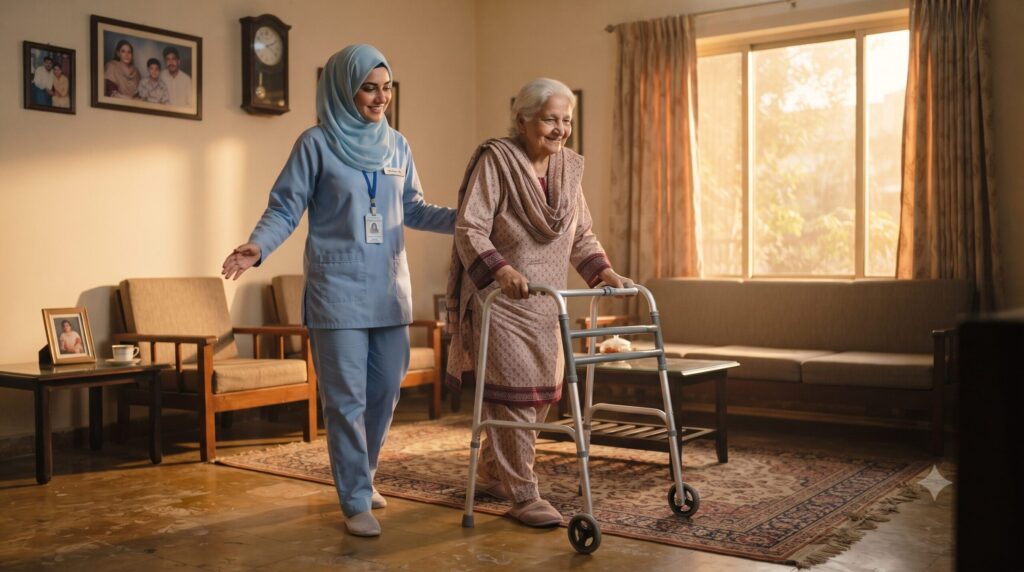
- Falls happening more than once, even minor ones
- Medications missed, doubled up, or taken at wrong times
- Confusion about dates, people, or familiar places
- Difficulty with basic tasks — bathing, dressing, using the bathroom
- The family caregiver is exhausted or making mistakes out of fatigue
That last point is easy to overlook, but it’s real. Caregiver burnout affects the quality of care the patient gets too. Recognizing you need support isn’t a failure — it’s the responsible call.
Qualifications to Look for in an Elderly Care Nurse
Not every nurse is equipped for elderly care specifically. General training doesn’t automatically cover what aging patients need.
| What to Check | Why It Matters |
|---|---|
| Experience with elderly-specific conditions | Dementia, arthritis, and age-related illness need different handling than general patient care |
| First-aid and emergency response training | Elderly patients are at higher risk of sudden complications |
| Patience and communication skills | Especially critical with memory-related confusion |
| Verified background and references | You’re letting someone into your parent’s home daily — this shouldn’t be assumed |
At Shine Care, every nurse is screened before placement, with priority given to those who have handled elderly and chronic-condition patients before — not just general nursing experience. It’s a detail families often don’t ask about until they see the difference in how a nurse handles a confused or anxious patient.
How Shine Care Supports Families with Elderly Patients
When a family contacts us, we start by actually understanding the patient:
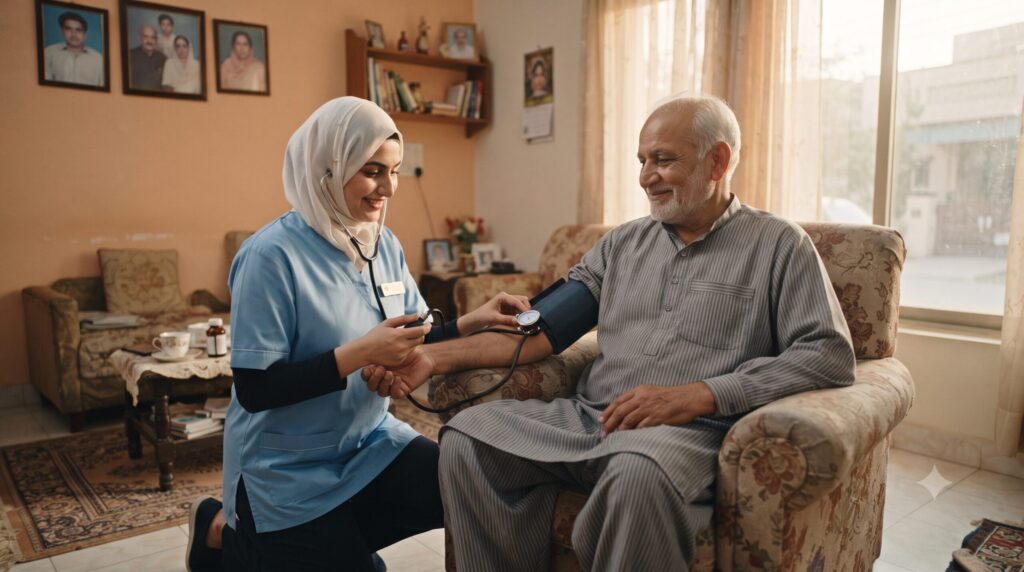
- We ask about the parent’s condition, mobility level, memory concerns, and medication schedule
- We match a nurse whose background fits that specific situation
- Once care begins, we check in regularly and adjust if the patient’s needs change over time
Elderly needs rarely stay the same for long, so ongoing check-ins matter as much as the initial match.
Nurse vs. Home Attendant — Which One Does Your Parent Need?
This is one of the most common points of confusion for families, so here’s the difference in one table:
| Nurse | Home Attendant | |
|---|---|---|
| Medication management | Yes | No |
| Monitoring vitals | Yes | No |
| Wound care (if needed) | Yes | No |
| Bathing/dressing help | Yes | Yes |
| Mobility support | Yes | Yes |
| Companionship | Yes | Yes |
| Best suited for | Medical conditions needing monitoring | Daily living support without medical complexity |
Many elderly patients need a mix of both — this is worth discussing openly with whoever you hire, rather than assuming one option covers everything.
Frequently Asked Questions
A nurse handles medical tasks like medication, vitals, and recognizing warning signs. An attendant supports daily living tasks like bathing and mobility, without medical training. See the table above for a full comparison.
Yes, but it needs specific experience in memory-related conditions — different communication approach, more patience with repetition and confusion. Always confirm this experience directly before placement.
We assess the patient’s condition, mobility, and routine first, then match a nurse whose background actually fits — for example, diabetes management experience for a diabetic patient, rather than a general placement.
A qualified replacement is arranged so care isn’t interrupted. Confirm this policy with any provider before hiring — an unreliable replacement plan is one of the most common complaints families have with home nursing services.
If you’re trying to figure out the right kind of care for your parent, get in touch with Shine Care for an assessment call — we’ll talk through the situation and help you understand what level of support actually makes sense before you commit to anything.